
1500s/1600s
1524
Giovanni da Verrazzano visits New York Bay
 Giovanni da Verrazzano, an Italian explorer, becomes the first European to visit New York Bay. He arrives there while exploring the New World’s Atlantic coast at the behest of the King of France.
1609
Henry Hudson Anchors in New York Bay
 The Half-Moon, captained by Henry Hudson and sailing under the Dutch flag, anchors in New York Bay. Hudson had been hired by the Dutch East India Company to help find a northeast passage that would provide a shorter route to India.[1]
[1] Ellis, David M., et al, A Short History of New York State, Cornell Univ. Press, 1957, p. 19.
1614
Albany Founded
Albany, then called Fort Nassau, is founded as a trading post.
1621
Charter Granted to the Dutch West India Company
The Dutch government grants a charter over the lands of New Netherland to the Dutch West India Company on June 3, 1621. “New Netherland” includes lands located on the east coast of North America between the Demarva Peninsula (including most of Delaware and portions of Maryland and Virginia) and southwestern portions of Cape Cod. It incorporates areas of New York, New Jersey, Delaware, Connecticut, Rhode Island, and Pennsylvania. The Dutch West India Company is a commercial corporation chartered by the Dutch government to found colonies and develop sources of commerce on the African and North American coasts and in the West Indies. The Company is given a trade monopoly in the Americas[2] and is invested with comprehensive powers, including authority to employ soldiers and fleets; to build forts; to make treaties; to appoint governors and other public officers; and to take steps necessary to maintain order and administer justice.
[2] Ibid.
1623
New Netherland Colony Established
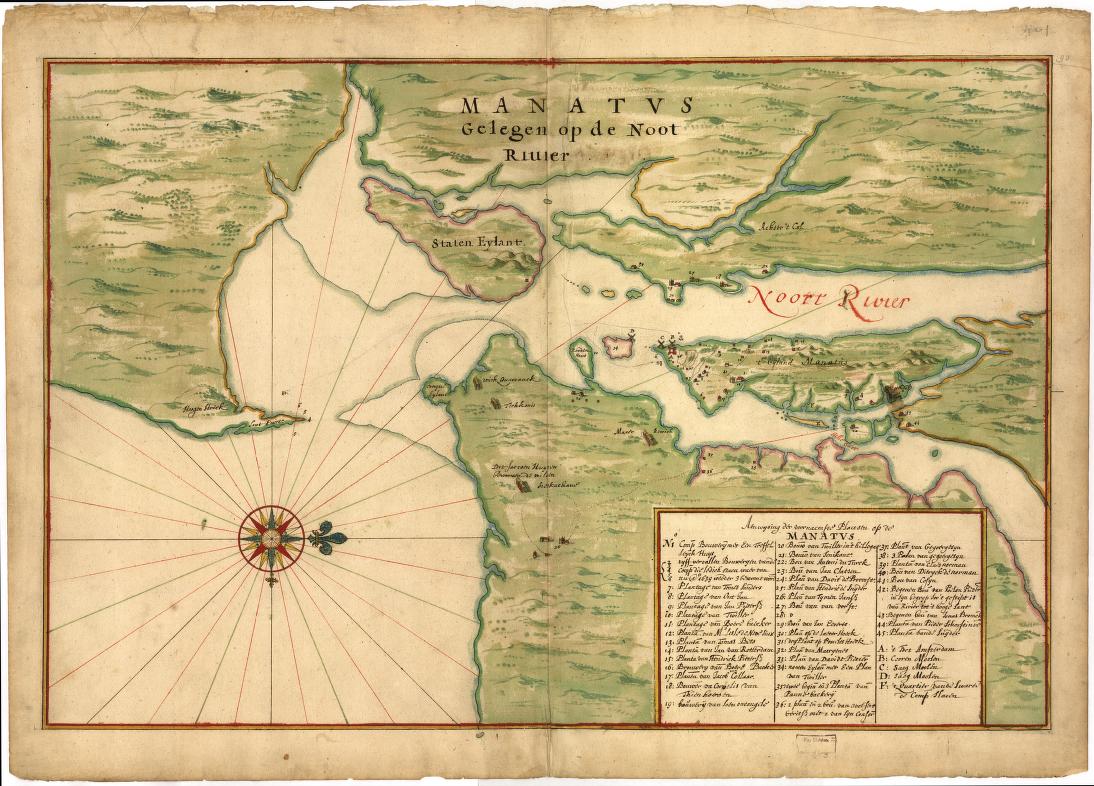 The New Netherland Colony is formally organized by the Dutch and a settlement is established in what later becomes known as Manhattan. The first colonial Director is Cornellis Jacobsen May, who serves for only a short period and is then succeeded by Willem Verhulst who, likewise, serves but a year or two.[3] At the time, the number of colonists is so small that there is no need for institution of any formal justice system.[4]
[3] The colonial directors are appointed by the Board of Directors of the Dutch West India Company. A council of four is created to assist each director – giving him advice, voting on local regulations, and serving as a court in those few instances where one is necessary. Ibid., p. 22.
[4] Lincoln, Charles Z., Constitutional History of New York, Vol. 1, The Lawyers Co-Operative Publishing Company, 1906, p. 455.
1624
Fort Nassau Becomes Fort Orange
Fort Nassau (site of future Albany) becomes Fort Orange. It is the first permanent Dutch settlement in New Netherland, becoming home to some 34 Dutch families who had been recruited by the Dutch West India Company. A majority of these first settlers are Walloons, exiles from what is today Belgium. They are Protestants from part of the Netherlands then under the rule of Catholic Spain and they are seeking religious freedom in the new colony.[5]
[5] Shorto, Russell, The Island at the Center of the World, Random House (Vintage Books), 2004, pp 40, 45; Macy, Harry, Jr., The Original Families of New Netherland, New York Genealogical and Biographical Society (1999).
1626
Peter Minuit Becomes Director of New Netherland
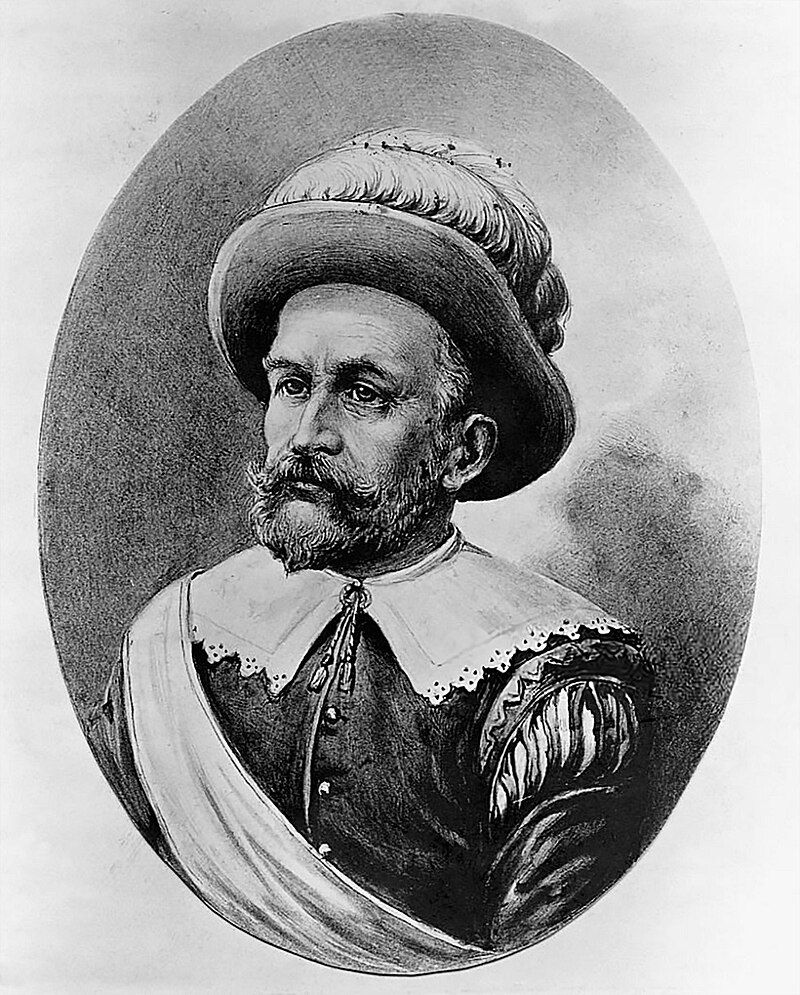 Peter Minuit becomes Director of the New Netherland Colony. Such governmental authority for the Colony as is put in place is built on a Dutch model. Together with his council (including Dutch West India officials and two colonists), Minuit exercises all legislative, executive, and judicial powers in the Colony. Collectively, these officers are referred to as the New Netherland Court of Justice and their judicial authority extends to civil, criminal, and admiralty matters. And from 1629 on, following introduction of the patroon system in the Colony, the New Netherland Court of Justice also exercises appellate jurisdiction over decisions of the patroon courts and other local courts. Along with the Schout (an office, sometimes referred to as the Schout-Fiscal, that combines the powers of a prosecutor and a sheriff), these officers are subject to the appellate jurisdiction and supervision of Dutch authorities in Amsterdam.
1626
Minuit Purchases Manhattan Island
In November, Director Minuit purchases Manhattan Island from the Lenape Indians. While a myth persists that the purchase price was $24 worth of beads and other trinkets, the actual price is for 60 guilders worth of trade goods (or slightly more than $1,000 today).[6]
[6] As reported to the Directors of the Dutch West India Company by Peter Schaghen, a representative of the Dutch States General, following the arrival in Holland of a ship from New Netherland in the late summer of 1626. The present-day value of 60 guilders has been calculated by the International Institute of Social History, Amsterdam.
1629
Dutch West India Company Grants Charter of Freedoms and Exemptions
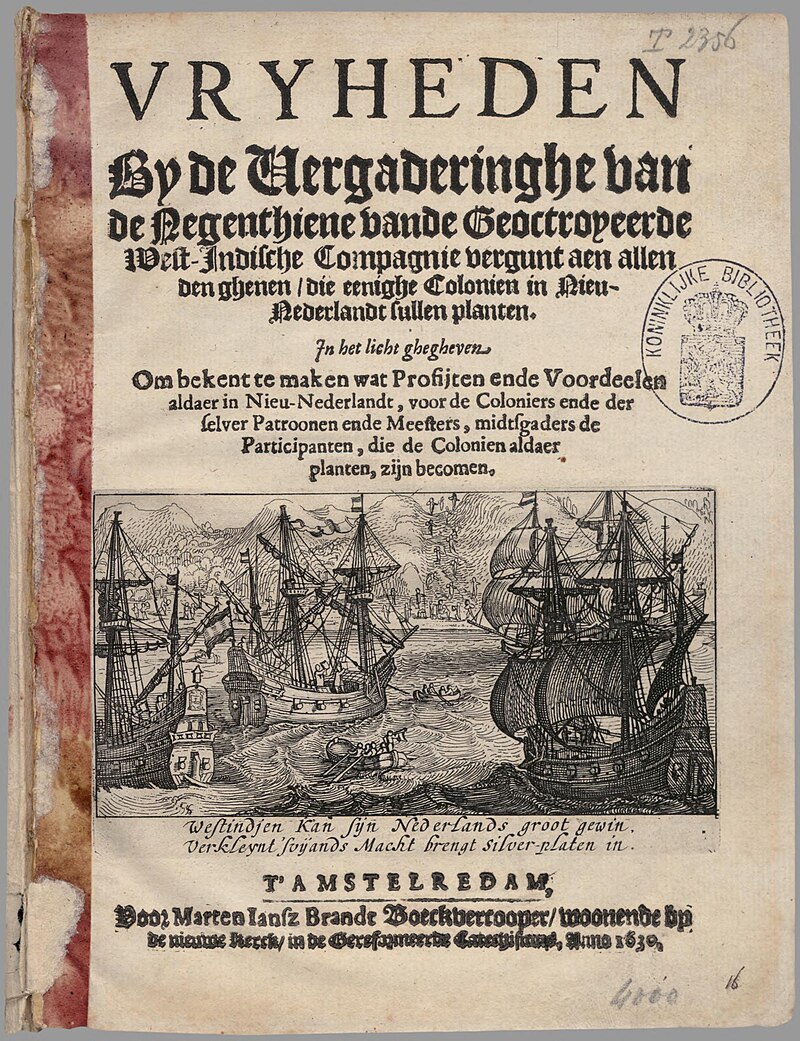 On June 7, 1629, the Dutch West India Company grants a Charter of “Freedoms and Exemptions” (sometimes referred to as the Charter of “Privileges and Exemptions”), introducing the patroon system into the New Netherland Colony. In addition to providing land grants to the patroons, the Charter sets forth rules for the governance of their lands. These rules establish each patroon as chief magistrate of his lands.[7]
[7] Lincoln, Charles Z., Constitutional History of New York, Vol. 1, The Lawyers Co-Operative Publishing Company, 1906, p. 8. See also Scott, Henry, The Courts of New York State, Wilson Publ. Co., 1909, pp 329-332. While several patroonships were established in New Netherland, only one — Kilianen Van Rensselaer’s Rensselaerwyck — proved to be successful. The 1629 Charter. Of Freedoms and Exemptions, Historical Society of the New York Courts.
1631
New Netherland Receives New Directors
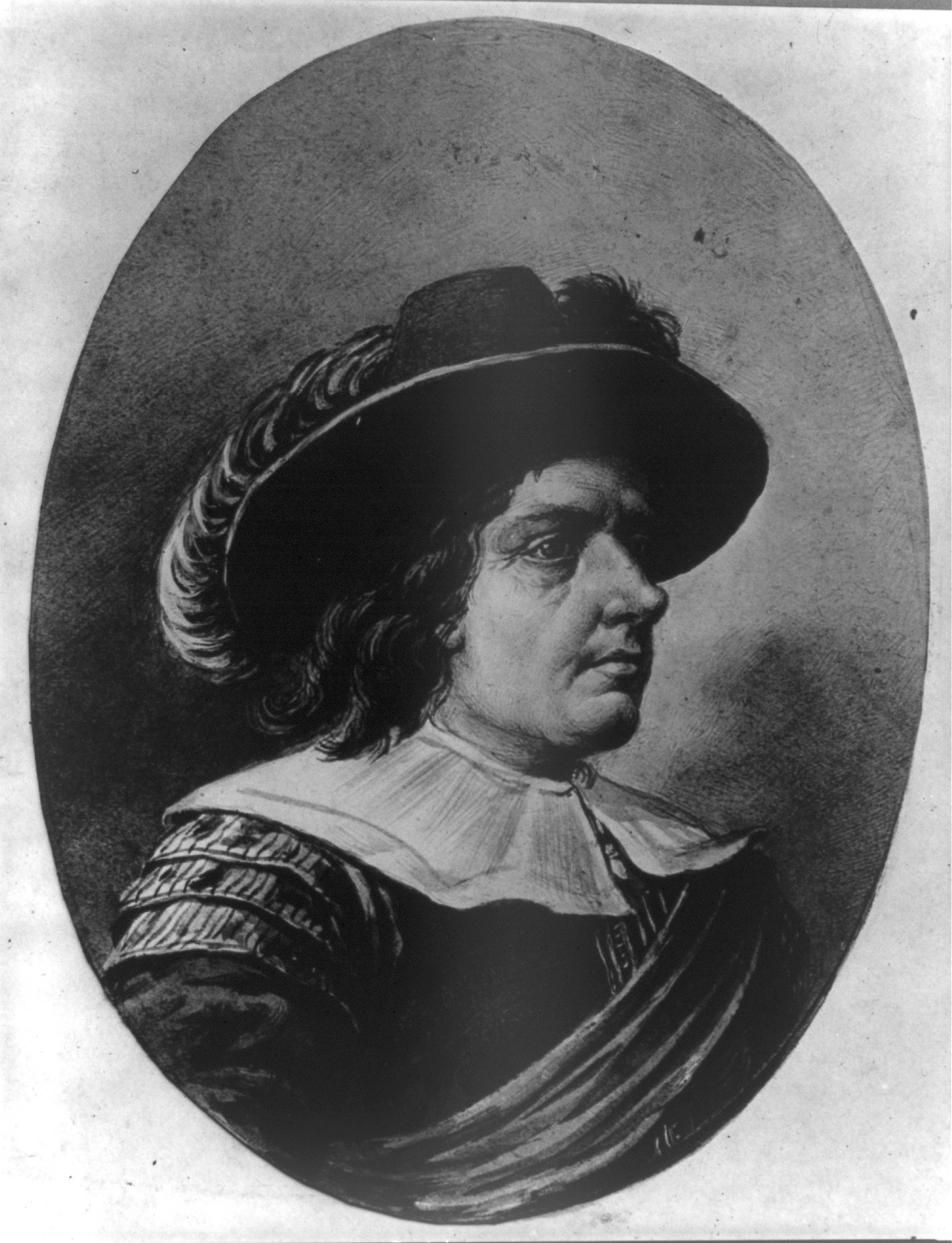 Peter Minuit is recalled to Holland. He is succeeded as Director of the Colony by Wouter van Twiller (1633) and then by Willem Kieft (1638). By the time Kieft arrives, New Amsterdam is a collection of 80-90 structures and perhaps 400 people. Principal colonial officials include Director Kieft, the provincial secretary, and the Schout-Fiscal. The Director makes the rules by fiat and, with his appointed council (consisting of two members of which he is one),[8] sits as a court to hear both civil and criminal cases brought by the Schout.
Kieft is a reckless and ineffective leader. The colonists react by demanding the establishment of judicial and municipal tribunals like those they had enjoyed in Holland. There, for more than a century, every town and village had had its own local tribunal. This tribunal combined the attributes of a court and a municipal government. It consisted of several magistrates (called the burgomaster [a kind of mayor], the schepens [a kind of alderman], and the schout [the prosecutor/sheriff]). While there was no formal system of popular representation, generally a town’s propertied individuals would annually elect men who then would choose the burgomaster and schepens. Kieft responds by creating a council of 12 men nominated by the colonists. This is the first popularly chosen body in what later becomes New York State.[9]
[8] Shorto, Russell, The Island at the Center of the World, p. 114.
[9] Ibid., p. 121.
1640
Second Charter of Freedoms and Exemptions Adopted
The Dutch West India Company adopts a further Charter of Freedoms and Exemptions for the New Netherland Colony. In part, this Charter expressly directs that the colonial Director (now being referred to as the “Governor”) and his council act as a court to determine all questions concerning the Company’s rights and all other complaints; and, also, that they act as an orphan’s and surrogate’s court (where they are to observe the customs of Amsterdam and the principles of Roman Dutch law)[10], and as judges in criminal and religious matters. Provision is also made for appeals from local tribunals to the Governor and his council from judgments for more than 100 guilders and from criminal sentences.[11]
[10] Setaro, Franklyn C., The Surrogate’s Court of New York: Its Historical Antecedents, 2 N.Y.L. Sch. L. Rev. (1956), p. 286..
[11] Lincoln, Charles Z., Constitutional History of New York, Vol. 1, pp 10-11.
1641
Adriaen Van der Donck Arrives at New Netherland
Adriaen Van der Donck arrives at New Netherland. Hired by the patroon Killian Van Rensselaer as a schout for Rensselaerwyck, Van der Donck becomes the first lawyer in the colony.[12]
[12] Shorto, Russell, The Island at the Center of the World, p. 103.
1647
Peter Stuyvesant Becomes Governor
 Peter Stuyvesant becomes the colonial Governor, replacing Willem Kieft who had been recalled to Holland the previous year. Governor Stuyvesant establishes a court of justice to decide all civil and criminal cases, with himself as the presiding justice and the colonial Vice Director and two local citizens he selects to assist him. He also establishes a board of nine men to serve as a permanent advisory body[14] and to assist the court of justice by providing a source of arbitrators to whom civil cases might be referred.[15] This arbitral service reflects a common feature of Dutch jurisprudence. Decisions of the arbitrators (who serve in rotating panels of three) are binding on the parties to the affected proceedings, subject to appeal to the Governor and his council.
The members of the tribunal of nine men are chosen by the Governor from 18 men selected by the colonists. This tribunal is created in response to continuing public discontent with the absence of popular government and provides a vehicle for some limited input from the colonists.
In 1649, Adrien Vander Donck, the first lawyer in the Dutch Colony, serves as the president of the nine men. A political activist, he is an antagonist to Governor Stuyvesant, leading disaffected colonists in efforts to campaign for representative government in New Netherland.
[14] Some regard this board as the first legislative government in New Amsterdam. See Lankevich, George J., New York City: A Short History, New York University Press, 1998, pp 12-13.
[15] Ellis, David M., et al, A Short History of New York State, Cornell Univ. Press, 1957, p. 24.
1650
Third Charter of Freedoms and Exemptions Issued
The Dutch governing body in Holland, the States-General, issues a revised Charter of Freedoms and Exemptions[16] and orders that a new court be established in the Colony consisting of a Schout, two Burgomasters, and five Schepens, all to be elected popularly. This order is a further response to continued colonial protests about the dictatorial management of the New Netherland Colony and to provide an effective forum for the adjudication of debts, especially those owed local merchants by the Dutch West India Company.[17] The Schout, Burgomasters, and Schepens Court mandated by the States-General is modeled after the judicial system in place in Holland.
When this court is first established by Governor Peter Stuyvesant in 1653, he determines to make all appointments to it.
Formally known as the “Worshipful Court of the Schout, Burgomasters and Schepens,” this court enjoys unlimited civil and criminal jurisdiction (in non-capital cases), and usually decides cases before it without a jury. It also acts at times as a court of admiralty and as a probate court (exercising jurisdiction over wills and the estates of widows and orphans).[18] While referred to as a “court” and effectively constituting the first regularly sitting formal court system for the Colony, the body also discharges executive and legislative responsibilities: although their duties are nominally judicial, the Schout combines the offices of a sheriff and a district attorney; the Burgomasters are like mayors; and the Schepens are like aldermen. At this point, New Amsterdam is still so small that sharp governmental divisions remain unnecessary.
On the civil side, the Court follows fairly simple procedures and makes frequent use of arbitrators chosen by the litigants or appointed by itself. On the criminal side, the Schout serves as a prosecutor.
Shortly after the Court is established in New Amsterdam, similar courts are set up in Breuklin (Brooklyn) and elsewhere on Long Island (in the area of the so-called “five Dutch Towns”).[19] Also, in 1652, Governor Stuyvesant, acting on his own prerogative, establishes a court in Albany that is independent of the patroon courts.[20]
From all these courts, appeal may be taken to the Governor and his council at New Amsterdam (the colonial seat).
[16] Lincoln, Charles Z., Constitutional History of New York, Vol. 1, p. 12.
[17] Klein, Milton M. (ed), The Empire State: A History of New York, p. 99.
[18] Scott, Henry, The Courts of New York State, pp 333-340.
[19] Ibid.
[20] Ibid.
1653
New Amsterdam Becomes a City
With the signing of a municipal charter, New Amsterdam becomes a city.
1655
Court of Orphan Masters Established
A separate court, the court of orphan masters, is created to exercise jurisdiction over matters involving orphans. This court, a forerunner of today’s Surrogate’s Court, is established because the Schout, Burgomasters, and Schepens Court is overwhelmed with the number of children orphaned during a recent Native American war in the Colony.
1657
Flushing Remonstrance Delivered to General Stuyvesant
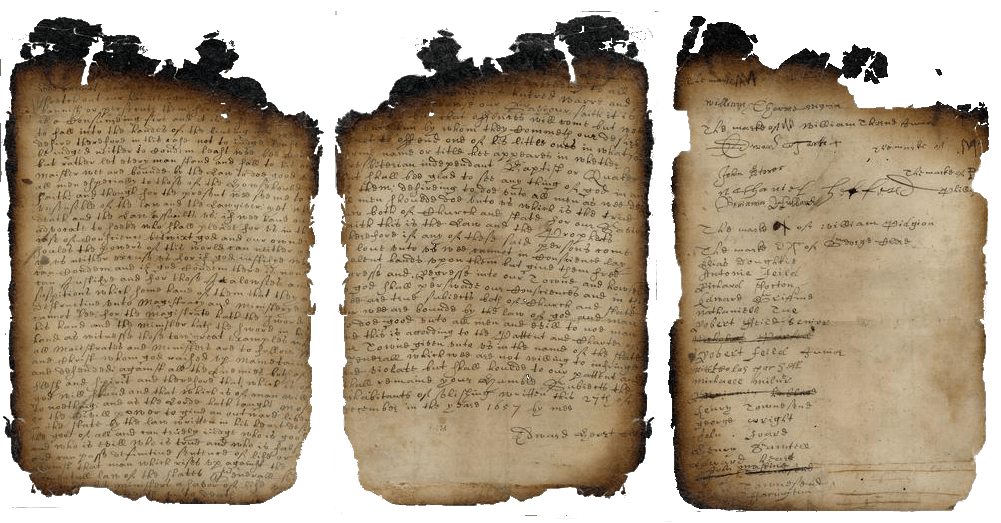 The Flushing Remonstrance–a plea for religious toleration for Quakers in New Netherland–is delivered to Governor Stuyvesant following his imposition of a law against the hosting of Quaker missionaries in the Town of Vlissingen (later Flushing). The Remonstrance declares that the people of Flushing will not obey this law. It is an early, if somewhat incomplete, effort to recognize some liberty of conscience among the Dutch colonists; and it is regarded by many as a precursor of the First Amendment of the United States Constitution.
Governor Stuyvesant, along with members of the Colony’s orthodox Calvinist clergy, does not react well to the Remonstrance. They spend the next four years trying to root out Quakerism in the English towns of Long Island.[21]
[21] Klein, Milton M. (ed), The Empire State: A History of New York, p. 86.
1664
Colonial Judicial Structure Expands
By this time, the Colony’s judicial structure consists of:
- The patroon courts;
- The Burgomaster, Schepens, and Schout Court in New Amsterdam;
- The Burgomaster knockoffs on Long Island, in Albany, Canorasset, and Middleburgh; and
- The Appellate Court of Amsterdam.
1664
New Netherland Becomes New York
 The British seize New Netherland and rename it New York.[22] King Charles II, by royal patent, gives his brother James, the Duke of York and presumptive heir to the British throne, property rights granting him the entire Atlantic coast, from Maine to the Allegany Mountains and that portion bounded on the east by the Connecticut River and on the west by the Delaware River. Under this patent, James enjoys virtually unlimited authority, including plenary power to make laws provided they are not inconsistent with the common law of England.[23] To help implement this authority, he appoints Colonel Richard Nicolls to serve as colonial Deputy-Governor and his agent.[24]
The formal transfer of power from the Dutch to the British is effectuated through the Articles of Capitulation (or, as they are also known, the Articles of Surrender[25]). These Articles form the basis for Dutch surrender of the Colony. Their terms, agreed to between Peter Stuyvesant (who, thereafter, retires from public life) and Deputy-Governor Nicolls, provide that:
- Dutch colonists may, if they wish, return to Holland;
- Dutch colonists who wish to remain in New York may do so, and, if they do, continue to enjoy their own customs and rights to inheritance;
- Contracts made during Dutch rule will continue to be subject to Dutch law;
- Past judgments of Dutch courts may not be called into question;
- Inferior Dutch civil officers/magistrates may remain in office for the duration of their existing terms;
- All newly-selected magistrates must take an oath of allegiance to the British Crown; and
- Dutch colonists will enjoy liberty of conscience.[26]
At the time of Stuyvesant’s surrender to the British, New Netherlands consists of only about 8,000 colonists occupying small settlements on New York Bay and along the banks of the Hudson.[27]
[22] At the same time, New Amsterdam is renamed “New York” and Beverwijck is renamed Albany (recognizing that the James, the Duke of York, is also the Duke of Albany). Shorto, Russell, Taking Manhattan, W. W. Norton Pub. Co, 2025, p. 271.
[23] Ibid., p. 30.
[24] Nicolls is designated “Deputy-Governor”, and not “Governor”, because, as the new owner of the province, the Duke of York is technically the Governor. Shorto, Russell, Taking Manhattan, p. 271.
[25] Shorto, Russell, Taking Manhattan, p. 265.
[26] Ibid., p. 28. See also Chester, Alden, Courts and Lawyers of New York, A History: 1609-1925, Vol. I, p. 289.
[27] Ibid., p. 18.
1665
Duke’s Laws Ratified
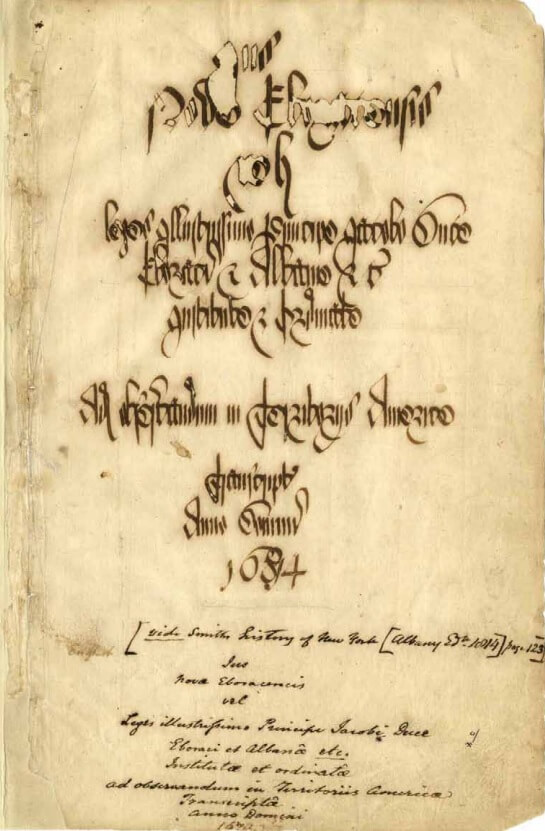 The Duke’s Laws, delivered by James, the Duke of York, to Deputy-Governor Nicolls and intended to serve as New York’s first legal code, are ratified at a convention of delegates from each of 17 towns in the English-controlled areas of the Colony held at Hempstead, Long Island.[28] Although they were not formally excluded from the convention, there are very few Dutch delegates in attendance.[29] This is because there is a perception that Deputy-Governor Nicolls did not intend that the Duke’s Laws, although nominally framed for the governance of the entire colony, should supersede Dutch law in those areas; and that they should only apply in the formerly British-controlled areas (eastern Long Island and parts of Westchester).
The Duke’s Laws, which are based on English law, Roman-Dutch law, and the laws and regulations of Britain’s New England colonies,[30] provide for a new judicial organization in the province. This includes creation of the office of Justice of the Peace (commissioned for various towns) and institution of the following courts:
- A local court for each town to be held every few weeks by the town constable and the town’s overseers for the trial of small (under £5) civil actions. While these courts are provided in response to calls for self-government–the overseers are subject to popular election by freeholders–they can also be presided over by Justices of the Peace appointed by the Governor. Appeals from the judgments of these courts are to be taken to a Court of Sessions.
- A Court of Sessions originally for each of the three main three districts, or ridings (east, west, north), into which the Colony had been divided (the Towns of Long Island, Westchester, and Staten Island, respectively), but later also for New York City and plantations in the upper Hudson Valley. Meeting twice annually and presided over by all the Justices living in the riding, the Court of Sessions is the workhorse of the system, exercising non-capital criminal jurisdiction and civil jurisdiction in cases involving more than £5 but less than £20. All actions except those involving equity jurisdiction are to be tried by juries (comprised of the overseers of the towns in each riding). The Court of Sessions, which will sit continuously in New York until 1894,[31] also sits as a probate court, exercising jurisdiction today entrusted to Surrogate’s Court — provided that the Governor or one of his councilors should be present on such occasions. Appeals from judgments of a Court of Sessions can be taken to the Court of Assizes.
- A Court of Assizes (or General Assizes) for the entire colony. This court sits once annually in New York City in late October (although the Governor could call it into session more frequently) and is presided over by the Governor and his council, plus any of the provincial Justices of the Peace wishing to attend. The court is primarily an appellate forum to which appeals from all inferior tribunals can be taken but it also enjoys original jurisdiction of all cases, typically taking cognizance of equity cases, capital crimes, and civil actions involving more than £20. Notably, this Court exercises executive and legislative powers as well as judicial authority.[32]
In addition to establishing these courts, the Duke’s Laws empower the Governor to provide for a Court of Oyer and Terminer, presided over by judges that he names, to exercise jurisdiction over a capital case where the next sitting of the Court of Assize is more than two months away.
Notably, there is no provision for a formal Court of Chancery under the Duke’s Laws. All the established courts enjoy equity jurisdiction (to be exercised by their judges sitting without juries) within the limits otherwise applicable to them.
Finally, the Duke’s Laws also introduce the jury system in New York.
[28] Ibid. p. 30.
[29] See http://moglen.law.columbia.edu [Chapter 1. Beginnings 1664-1691, at pp 7-8].
[30] Scott. Henry Wilson, The Courts of the State of New York: Their History, Development and Jurisdiction (1909).
[31] Scott, Henry, The Courts of New York State, pp 347-352. The Courts of Sessions will be abolished under New York’s 1894 Constitution except in New York County, where it will continue to serve until its abolition in 1962.
[32] Ibid, pp 345-346.
1665
New Municipal System Established in NYC
In June 1665, Deputy-Governor Nicolls abolishes the remaining Dutch forms of government in New York, including the Court of Schout, Burgomasters, and Schepens in New York City.[33] At the same time, he establishes a new municipal system for the City — including a Mayor, Aldermen, and a Sheriff — in keeping with English custom. This new system includes a court to be known as the Mayor’s Court, the members of which are to be the Mayor, the Aldermen, and the Sheriff. This Court is to exercise civil jurisdiction. [34] At first, introduction of the Mayor’s Court is more a matter of form than substance. There is no radical departure from the Court of the Schout, Burgomasters, and Schepens except that regular trial by jury is introduced.[35] By and large, over the next several years, Dutch law continues to be followed.[36]
[33] Nelson, William E., Legal Turmoil in a Factious Colony: New York, 1664-1776, 38 Hofstra Law Rev., p. 19.
[34] Scott, Henry, The Courts of New York State, pp 341-344.
[35] Ibid.
[36] Over the next 156 years, however, the Mayor’s Court will serve as the Municipal Court for New York City. See Chester, Alden, Courts and Lawyers of New York, A History: 1609-1925, Vol. I, p. 336.
1667
Second Anglo-Dutch War Ends
The second Anglo-Dutch War ends with the Treaty of Breda pursuant to which the Dutch Republic formally cedes New Netherland to the British.
1673
Dutch Rule Restored to New York
There is a brief hiccup in British rule. Dutch warships sail into New York harbor and the British surrender to them whereupon Dutch rule is restored in the province. This proves to be but a brief restoration, however, as British rule returns the following year (1674) with the signing of the Treaty of Westminster (ending the third Anglo-Dutch War).
1674
British Rule Returns to New York, Andros Named Governor
 With the return to British rule, Edmund Andros is named Governor of the province of New York. He commences negotiations for the handover of Dutch territories with the Dutch Governor, Anthony Colve. This handover takes place in late 1674. By its terms, existing property holdings are left undisturbed, and the province’s Dutch inhabitants are permitted to maintain their Protestant religion.
The people of the colony call for a legislative assembly.[37]
[37] Lincoln, Charles Z., Constitutional History of New York, Vol. 1, p. 27.
1678
Court of Admiralty Established
The Duke of York directs Governor Andros to establish a Court of Admiralty. This Court will not be a regularly sitting tribunal; rather, the Governor can call it into being on an ad hoc basis upon issuance of a special commission. Even with introduction of this Court, most admiralty matters are actually heard in the Mayor’s Court.
1681
Thomas Dongan Becomes Governor
 Governor Andros is recalled to England. He is replaced by Thomas Dongan in 1682. It is a time of fiscal crisis and much discontent in the province. In his commission from the Duke of York, Governor Dongan is given responsibility for erecting such a court structure as he deems necessary, which structure should be operative until the Duke directs otherwise. Governor Dongan also is instructed to call a representative assembly. This is largely in response to widespread public unrest across New York and general resistance to the collection of import duties.[38]
[38] Ellis, David M., et al, A Short History of New York State, p. 32.
1683
New York’s Provincial Assembly Convenes
New York’s provincial Assembly is convened in October by Governor Dongan at Fort Amsterdam (or, as it is later known, Fort James), sitting at the southern tip of Manhattan near the present Battery. This body is empowered to pass laws subject to approval by the Governor and by the Duke of York.[39]
[39] Lincoln, Charles Z., Constitutional History of New York, Vol. 1, p. 430.
1683
Assembly Adopts Charter of Liberties and Privileges
The Assembly adopts a Charter of Liberties and Privileges, which provides for religious toleration and outlines a form of government that, with minor modifications, remains in place until the American Revolution. Many have regarded this Charter, which closely resembled modern constitutions in form and substance, as New York’s original constitution.[40]
[40] Ibid., p. 433.
1683
Assembly Reorganizes Provincial Courts
Also in 1683, the provincial Assembly enacts “An Act to settle courts of justice”. This Act continues the office of Justice of the Peace while recognizing four distinct tribunals:
- A Town Court for each town for the trial of small (up to 40 s) causes but having no criminal jurisdiction.
- A Court of Sessions in each county to sit quarterly or half-yearly (except in Albany, where it is to sit three times each year, and in New York City, where it is to sit four times each year) and to have unlimited civil and criminal jurisdiction.
- A Court of Oyer and Terminer and General Gaol Delivery for the entire province to exercise both original and general appellate jurisdiction and to replace the Court of Assizes. There are two judges of this Court commissioned by the Governor each of whom, together with four local Justices of the Peace, is to hold a circuit of the court in every county in the colony twice yearly.
- A Chancery Court colony-wide to be held by the Governor or his council, with the Governor empowered to appoint a Chancellor to serve in his stead. Sitting bi-monthly and considered to be the highest provincial court, Chancery Court has jurisdiction over all matters in equity.
Governor Dongan makes only one change in relation to the act creating this court structure. He establishes a Court of Judicature (or Court of the Exchequer), which is to be held monthly by the Governor and his council for the purpose of determining suits or matters arising between the King and inhabitants of the province concerning lands, rents, rights, profits, and revenues.
1684
New York City Mayor and Aldermen Petition Governor Dongan
The New York City Mayor and aldermen together petition Governor Dongan for a City charter. They also request that the Governor and his council appoint a Recorder to serve as a judge and to assist the Mayor and the aldermen in managing the City. Governor Dongan complies with this last request and the Recorder presides over the City’s Court of Sessions.[41]
[41] Chester, Alden, Courts and Lawyers of New York, A History: 1609-1925, Vol. I, pp 413-414.
1684
Assembly Abolishes Court of Assizes
The Assembly abolishes the Court of Assizes. The Governor acts as Surrogate and he and his council constitute the Court of the Exchequer.
1685
James, Duke of York Becomes King James II
Upon the death of Charles II, the Duke of York becomes King James II of England. Henceforth, New York is no longer the private possession of a royal English subject but, instead, an American province of the Crown.[42] King James proceeds to veto the 1683 Charter of Liberties and Privileges approved by the provincial Assembly.
[42] Lincoln, Charles Z., Constitutional History of New York, Vol. 1, p. 31.
1685
Governor Dongan Receives a New Commission
King James issues a new commission to Governor Dongan, retaining him in office with the title, “Captain General and Governor in Chief”.[43] No provision is made for a colonial Assembly. Under Dongan’s new commission, appeals in court cases can be taken to the Governor and his Council where the amount involved exceeds £100; and further appeal can be taken to the King and his Privy Council where the amount involved exceeds £300. The new commission also provides the Governor and his council with exclusive legislative power in the province; that exercise of this power is subject to approval by the King and his Privy Council; that the Governor may create courts of law or equity, as needed; and that the Governor is to appoint Judges and Justices of the Peace.
[43] Ibid.
1686
New York City & Albany Receive New Municipal Charter
Governor Dongan grants New York City a new municipal charter, which, among its provisions, includes several modifying the local court structure. At the same time, Dongan grants a charter conferring municipal status upon Albany (for the next 100 years, or until 1785, Albany and New York City remain the only cities in New York). This Albany charter (referred to locally as the Dongan Charter) is almost identical to the one awarded to New York City.[44]
The most significant aspect of New York City’s new charter is its clear separation of the legislative and judicial functions. Before this charter, these functions had been combined in the City’s Mayor’s Court. Under the new charter, however, while the same officers will discharge both functions, they will do so in discrete settings. Also separated under the charter are civil and criminal judicial powers. The result is that there now are three tribunals for the City:
- A Common Council, in which the officers sit to discharge legislative duties;
- The Mayor’s Court (technically, a Court of Common Pleas, although it is popularly referred to at the time by its Dutch title, the “Mayor’s Court”), in which civil actions are tried; and
- The Court of Oyer and Terminer (and later the Court of Quarter Sessions) for the trial of criminal cases. In addition, the City’s new charter establishes a Court of Chancery and a Court of the Exchequer. [45]
Later, after the American Revolution and New York’s attainment of statehood, the Mayor’s Court will become the Court of Common Pleas for the City and County of New York.[46]
The new charter for Albany establishes the first municipal officers for the city (at that time, the northernmost outpost in the New York province), which include a mayor, a recorder, and two aldermen plus two assistant aldermen from each municipal ward. Together these officers comprise the Common Council, and all of them, except the assistant aldermen, exercise judicial powers along with their legislative authority.
[44] Ibid., p. 33.
[45] Chester, Alden, Courts and Lawyers of New York, A History: 1609-1925, Vol. I, pp 416 et seq. See also Scott, Henry, The Courts of New York State, pp 341-344.
[46] Scott, Henry, The Courts of New York State, pp 341-344.
1688
James II Dethroned
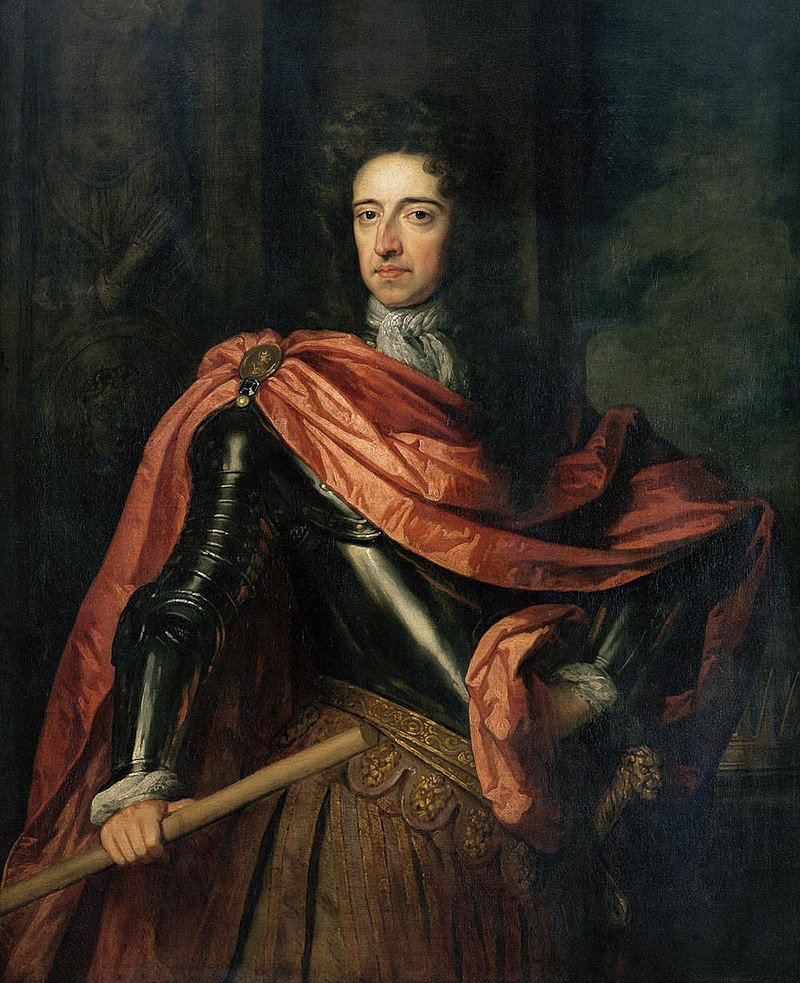 With the coming of England’s Glorious Revolution, James II is dethroned and succeeded by William of Orange who becomes King William III of England.
1688
Andros Becomes Governor of the Dominion of New England
Governor Edmund Andros returns to New York two years following his appointment as Governor of the Dominion of New England. The Dominion is a short-lived union of English colonies in New England and the mid-Atlantic region. Before he is deposed, King James had ordered the inclusion of New York in that Dominion.
There is some evidence that changes in the Dominion’s judiciary, made two years before, may perhaps have been imported into New York upon its entry into the Dominion. These changes include institution of quarterly Sessions Courts to exercise criminal jurisdiction and inferior Courts of Common Pleas with very limited civil jurisdiction. There also is a Superior Court of Judicature, which has broad civil jurisdiction and limited appellate authority, and a Court of Chancery.
1689
Governor Andros Arrested Following Boston Revolt
In the wake of the so-called Boston Revolt — an uprising following King James’ deposition and sparked by public discontent with the administration of Governor Andros and English rule in the Dominion — Governor Andros is arrested and returned to England for trial. Shortly thereafter, Joseph Dudley, the Chief Judge of the Dominion, is likewise arrested and returned to England.
1689
Leisler’s Rebellion Occurs
 Andros’s deputy in New York, Francis Nicholson, is very unpopular. His delay in recognizing the new Protestant British monarchs, William and Mary, furthers local fears of a French invasion and that there is a plot afoot to restore Catholic power in New York. These fears lead to an insurrection and the informal formation of a Committee of Safety to defend the province against any invasion and Catholic efforts to destroy Protestantism in its territory. This Committee is headed by a wealthy merchant, Jacob Leisler, who earlier had served as a judge of the Admiralty Court and Justice of the Peace. Leisler declares himself to be the acting Lieutenant-Governor of the province. During his tenure (which comes to be known as Leisler’s Rebellion), New York’s representative assembly is reconstituted and other steps are undertaken to weaken the ruling oligarchy of patroons, merchants, and landlords for the benefit of the province’s lower classes.[47] Also, property is purchased to establish a French Huguenot settlement north of Manhattan, which later becomes the city of New Rochelle.[48]
[47] Lincoln, Charles Z., Constitutional History of New York, Vol. 1, p. 34. See also Wikipedia, “Jacob Leisler”, last edited 1/28/2025, https://en.wikipedia.org/wiki/Jacob Leisler.
[48] Id.
1691
Henry Sloughter Becomes Governor
Governor Henry Sloughter arrives in New York. Sloughter, whose commission designates him as Captain-general and Governor-in-Chief of New York, immediately has Leisler arrested on a charge of treason. After trial by a special court of Oyez and Terminer, Leisler is convicted and sentenced to hang.[49]
[49] Ellis, David M., et al, A Short History of New York State, p. 35.
1691
Provincial Assembly Meets
Sloughter’s commission also authorizes him to call a provincial Assembly. This Assembly first meets on April 9, 1691. It proves to be the first permanent representative body in New York.[50] At this point, the province consists of fewer than 20,000 people.[51] The Assembly’s first major act is to enact a new Charter of Liberties recognizing the rights of people of the province and setting forth the manner of provincial government.[52]
[50] Ibid.
[51] Ibid.
[52] Lincoln, Charles Z., Constitutional History of New York, Vol. 1, p. 439.
1691
Assembly Enacts Statute to Organize the Province’s Courts
Prodded by Governor Sloughter, New York’s provincial Assembly enacts a statute prescribing the provincial court system. Entitled “An act for the Establishing Courts of Judicature for the Ease and benefitt of each respective Citty, Town and County within this Province”, this statute includes provisions creating a court structure that largely continues courts then in operation and that is in most respects generally modeled after the English court system.[53]
Of particular note is the fact that the new provincial court structure is the result of legislative action. Prior to this time, English tradition had uniformly dictated that court structures be decreed by the King and his subordinates. Sloughter’s commission as Governor exemplified this tradition, leaving creation of the provincial courts to him subject to specific directions that he not establish any courts that had not theretofore been created. Governor Sloughter, however, perhaps in response to public calls for more representative government, disregards his commission and, instead, recommends that the Assembly enact legislation erecting the provincial courts. The resulting statute provides for:
- Justice of the Peace Courts (to replace existing Town Courts). Presided over by lay people appointed by the Governor, these courts serve as the principal provincial courts. Ordinarily they sit individually, in panels of two or three Justices of the Peace, although occasionally — twice yearly in all counties except New York and Albany; four times yearly in New York City, where it is colloquially referred to as “Quarter Sessions”; and three times yearly in Albany — they sit together as a Court of Sessions. Individually, Justices of the Peace have power to try small civil cases (involving damages of up to 40 s) and certain criminal matters, and to enforce a wide variety of local administrative regulations (e.g., game laws, fire regulations, licensing ordinances). Also, where specially commissioned (in each county except Albany and New York), Justices of the Peace can sit as a Court of Common Pleas to hear civil matters. In less populated areas of the province, they also can be charged by the Governor to hold Courts of Common Pleas to hear probate and intestate succession cases — cases that might otherwise be heard by the Governor himself. Sometimes Justices sitting as a Court of Common Pleas can be joined by a Supreme Court Justice. When sitting as a Court of Sessions, Justices of the Peace exercise criminal jurisdiction — although they also can exercise criminal jurisdiction out of Sessions Court over relatively small criminal matters. Also, in the Court of Sessions, which is substantially modeled after the English Quarter Sessions’ Courts, Justices exercise executive, legislative, and administrative responsibilities. For instance, they oversee maintenance of jails, stocks, and whipping posts; discharge certain social welfare-related tasks like supervising the local overseers of the poor; and promulgate various regulatory ordinances (bearing on such matters of county concern as tax collections, liquor retailing, and, more generally, the morals, manners, health, and welfare of the community). Various laws adopted by towns must be confirmed in the Court of Sessions. From time to time, beyond their roles in and out of this Court, Justices will sit in Mayor’s Courts in Albany and New York City. These Courts are known as Courts of Common Pleas and they hear particular commercial cases.
Conferring civil jurisdiction over relatively small matters upon the provincial courts represents a significant departure from English practice, which then has no uniform system for handling such matters. Not so with criminal jurisdiction, where the provincial courts — in which Justices exercise broad powers — fairly well follow English institutions. - A Supreme Court of Judicature, to serve as the highest trial court of general civil and criminal jurisdiction in the province (general jurisdiction being understood to mean all the jurisdiction exercised by three distinct British trial courts, i.e., Kings Bench, Common Pleas, and Exchequer). This Court enjoys power to establish rules and ordinances, and to regulate practice before it. Originally established to sit only in New York City, the provincial Assembly soon changes the law so that, once each year, one of the Court’s Justices will ride circuit to hear cases around the province. This is done to accommodate litigants outside the City, who otherwise must bring witnesses and even jurors sometimes great distances so that they can have their cases tried before Supreme Court. When on circuit, a Justice is sometimes assisted by local Justices of the Peace. In all cases, however, a Justice may only conduct trials. Commencement of a lawsuit and filing of the pleadings therein still must be done in New York City; and, likewise, judgment in the case must be rendered in the City before the Supreme Court sitting there en banc. Occasionally, a Supreme Court Justice is required to preside over a Special Court of Oyer and Terminer and General Jail Delivery — in New York City, Albany, and sometimes elsewhere — to try persons who have been arrested and jailed between regular Supreme Court sessions. This Court of Oyer and Terminer should not be confused with the pre-existing Court of Oyer and Terminer, which had been established by the provincial Assembly in 1683. This 1691 Court becomes the criminal branch of Supreme Court while the original Court (which was presided over by two Justices commissioned by the Governor to ride circuit twice a year to hear civil and criminal cases and appeals) is abolished. To be sure, however, the Supreme Court, sitting en banc, does not hear many criminal cases. Those are most often heard by the circuit judges, in the Sessions Courts, or by Justices of the Peace.
Appeals from judgments of the Supreme Court are rare as the distances involved, and the related expense and delay, are prohibitive. There is provision, however, for appeals to the Governor in cases involving more than £100; and to the King of England in cases involving more than £300. There is no provision for appeal from Supreme Court in a criminal case, although occasionally, where exceptionally large fines are involved, appeal to the King is permitted.
There are originally five Supreme Court Justices (a Chief Justice plus four Associates also known as puisne justices) all of whom are appointed by the Governor. The first Chief Justice of the Supreme Court of Judicature is Joseph Dudley, a native of Roxbury, Massachusetts. Ten years later, the number of Justices is reduced to three. The Justices of the Supreme Court hold office at the King’s pleasure. - A Court of Chancery consisting of the Governor and the Council (although the Governor could appoint a Chancellor to sit in his stead) to handle equity matters. In practice, however, this Court seldom sits. Instead, equity matters, along with other matters such as probate and intestate succession, generally are handled by other courts, including the Supreme Court of Judicature.
- A Court of Errors consisting of the Governor, the Council, and the principal judges to hear appeals in civil cases involving £100 or less. Where a greater amount is in controversy, appeal must be taken to the King and his Privy Council.
Beyond these statutory courts, there also is a Court of Admiralty — established by the Executive. This court does not sit very often because admiralty jurisdiction also lies in the Supreme Court and the Mayor’s Courts (dating from the era of Dutch rule), and those courts generally hear such admiralty cases as arise.
This court structure incorporates many of the main features of the Dominion Act. Most significantly, the structure ensures a significant degree of central control over the courts — by the appellate process it creates and through the broad jurisdiction of the Supreme Court.
The statute establishing this court structure is effective for only two years but is renewed several times by the colonial Assembly, expiring finally in 1698.
[53] L. 1691, c. 4 (found in vol. 1 of the Colonial Laws of New York).
1692
Assembly Passes Act to Regulate the Probate of Wills
The provincial Assembly passes an act regulating the probate of wills and providing for the administration of intestate estates. The Assembly also directs that Supreme Court sit twice annually for New York and Orange Counties together, and once annually for all other counties. Further, it provides that a single Supreme Court Justice should “goe the circuit”, i.e., hold court while being assisted by two or more of the local Justices of the Peace in the county where court is being held.
Originally, the Duke’s Laws (ratified in 1665) had vested jurisdiction over decedent’s estates in the Courts of Sessions and the Mayor’s Court. Gradually, beginning during the tenure of Governor Nicolls (1664-1668), this jurisdiction was assumed by the Governor and, through his delegation (i.e., at his prerogative), by the Governor’s Secretary. Over time, this practice is continued, and the delegation becomes formalized to the point where, under Governor Sloughter, it is settled, and the institution of a prerogative office is made official. The Assembly’s 1692 enactment largely memorializes this practice, with the Governor’s delegate recognized as the Prerogative Court, except that, in more remote counties of the province, the Courts of Common Pleas can act to take proof of wills and transmit the record of their findings to the Prerogative Court. Also, the Assembly’s enactment authorizes the designation of freeholders in towns to take charge of the estates of those dying intestate. Ultimately, this class of officials takes the name “surrogate”, which title has survived to this day.
Introduction of circuit riding for the Supreme Court may have suggested a contemporary legislative intent to decentralize the Court. It is unclear, however, whether, in so doing, the Assembly was striving to make the Supreme Court into a county institution or merely into a circuit bench.
The Circuit Court’s criminal jurisdiction is exercised through commissions conveying distinct powers to the affected judges. An assize commission would give authority to the Circuit Judge to conduct trial; a gaol delivery commission would authorize the judge to deliver a defendant from jail for trial in a venue on the basis of indictments already found by a lower court of inferior jurisdiction; an oyer and terminer commission would require empanelment of a grand jury to return an indictment, which then could be tried. In combination, these instruments confer upon the circuit-riding judge all necessary original jurisdiction over felonies and misdemeanors.
1698
Governor & Assembly Engage in Power Struggle Over New York’s Courts
The original statute fixing the colonial court structure expires but, in the following year, the Assembly passes an act to revive it. Governor Bellamont, however, declines to approve this act.
These events play out during an ongoing power struggle between the Assembly and the Governor. Ostensibly, the failure to continue statutory authorization for the courts leaves the province without a lawful court system. But the Governor believes that, inasmuch as all of his predecessor’s commissions had included a general provision authorizing them to erect and establish courts, he, too, enjoys such authority. And, so, in May 1699, with this legal understanding and driven generally by the view that courts and their operations fall squarely within the King’s (and his delegates’) prerogative, and with his Council’s concurrence, the Governor by ordinance directs that all the courts previously established and continued until 1698 should be re-established. For many years thereafter, the provincial judiciary continues to exist by such executive fiat. The Governor’s ordinance also clarifies that Supreme Court should remain a centralized institution, situated in New York City; and that when single Justices sit outside the City, they are riding circuit.
Following its acts of 1691 and 1692, and the several acts of the later 1690’s continuing the 1691 court structure, the provincial Assembly is never again able to effect major revisions of New York’s court structures. It is not for want of trying, however. Throughout the 18th century, many efforts are made to change the courts but, in the main, they are rebuffed by the Governor and the Crown; and the Assembly is only able to affect operations in the lowest courts. Even there, the changes it makes are only modest. Any important changes made to the larger court structure and operations invariably are the result of ordinances issued by the Governor and his Council.
1700s
1701
Court of Chancery Established
English authorities order creation of a Court of Chancery, to be held monthly and presided over by the Governor and his Council. While such a court had been established by the provincial Assembly in 1691, it never sat. In 1701, however, there begins an extended period of debate and controversy in New York concerning Chancery’s use. The English government very much wants such a court to exercise jurisdiction over the Crown’s many claims for provincial revenue that are in arrears. At the same time, the public resists such claims and efforts to facilitate their collection. Indeed, the provincial Assembly quickly passes resolutions declaring the Court to be illegal. Over the ensuing decades, there will be a continuing tug of war on this issue.[55]
[55] See generally, NYS Court of Chancery, Historical Society of the New York Courts.
1702
Court of Chancery Suspended
The Court of Chancery is suspended by the Governor’s Council pending study and report by two Supreme Court Justices. It is revived two years later (1704) through exercise of the gubernatorial prerogative power.[56]
[56] Nelson, William E., Legal Turmoil in a Factious Colony: New York, 1664-1776, 38 Hofstra Law Rev., p. 25.
1704
Supreme Court’s Annual Terms Increases
The number of annual terms of the Supreme Court is increased to four.
1708
Court of Chancery Challenged
Local opposition to the Court of Chancery is renewed. The Assembly position is that, unless it has consented thereto, executive effort to create such a Court is ultra vires.
1712
Controversy Ensues as Governor Robert Hunter Becomes Chancellor
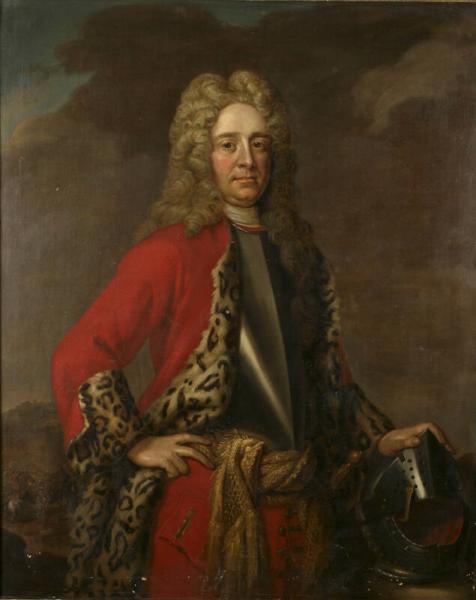 Governor Robert Hunter assumes the role of Chancellor. This action rekindles public disagreement over the King’s assertion of a prerogative to establish courts for the province. It leads to an Assembly resolution condemning the Governor’s action: “Resolved, That the erecting of a Court of Chancery without consent in general assembly is contrary to law, without precedent, and of dangerous consequence to the liberty and property of the subjects [and] That the establishing of fees, without consent in general assembly is contrary to law.” It is suggested that one of the root reasons for the strong provincial opposition to Chancery Court lies in the fact that many large landowners in New York — beneficiaries of significant land grants from Governors (who had incentive to sell lands, often as frauds on the crown, to boost their compensation through the fees they could collect upon these transactions) — are concerned that the legitimacy of their holdings could later be challenged in that Court.
After deliberation of the issue in the Governor’s Council and consultation with London, the Governor continues to sit as Chancellor. The controversy remains, however, and persists for many years thereafter.
1727
Assembly Resolves that the Court of Chancery is Illegal
The Assembly passes a resolution declaring Chancery Court to be illegal. This action is likely inspired by the Assembly Speaker, Adolph Phillipse, who recently had lost a suit in that Court. Following passage of this resolution, Governor William Burnett, who then served as the Chancellor and who in that capacity had signed the decree against Phillipse, dissolves the Assembly. The next year, in response to these events, the Governor’s Council undertakes to promote reforms of many of the Chancery Court’s abuses — reforms that are adopted.
1731
Assembly Enacts Montgomerie Charter For New York City
The Assembly enacts the Montgomerie Charter for New York City. Under this charter, several changes are made in the City’s court structures. They include:
- Addition of authority for local Justices of the Peace to exercise jurisdiction over felonies at large, and
- designation of the Mayor, Deputy Mayor, Recorder, and Aldermen as ex officio Justices of the Peace.
This basic structure will define municipal administration for over a century.[57]
[57] Ellis, David M., et al, A Short History of New York State, p. 46.
1735
Seditious Libel Trial of John Peter Zenger Held in New York City
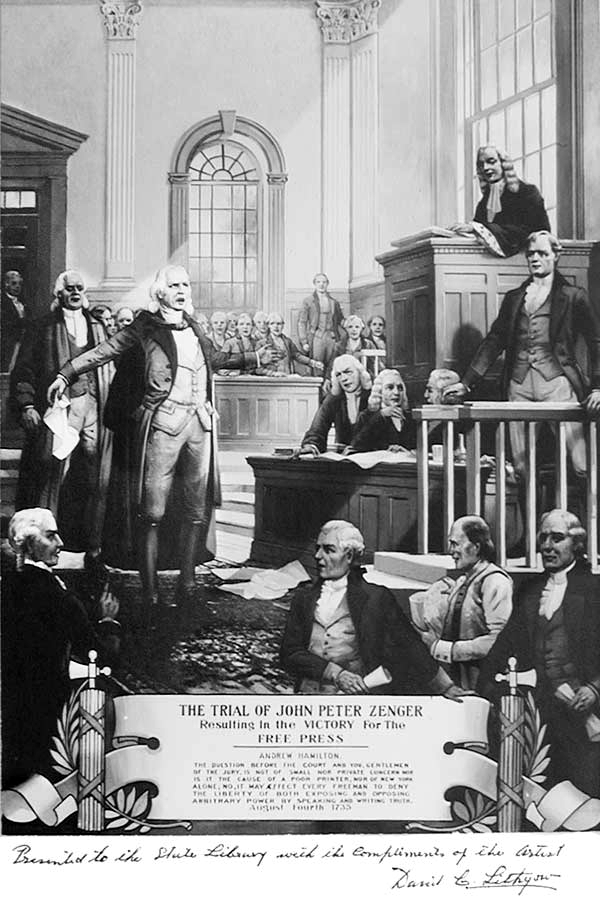 The trial of John Peter Zenger is held in New York City. Zenger is a printer who publishes a weekly journal that harshly criticizes New York’s incumbent governor, William Cosby. While Zenger does not actually write the offending material — it is the work of others — he is charged by the authorities with seditious libel. At first, it appears to be an open and shut case, the truth of the offending material being irrelevant under prevailing law (i.e., English common law, which seeks to punish not just false accusations against the government but simply any accusation against the government that is intended to hold it in “hatred or contempt” or to promote discontent or hostility among British subjects or to incite efforts to change Church or state law other than by lawful means). Zenger’s lawyer, Andrew Hamilton, however, convinces the jury that the dispositive issue should be whether, in fact, the allegedly libelous material is true. Thereupon, Zenger is promptly acquitted and several of the cornerstone principles of American law — freedoms of speech and of the press — are thereby inspired.
1737
Jurisdiction of Justices of the Peace Expands
By a further statute enacted by the provincial Assembly, Justices of the Peace are given jurisdiction over actions involving damages of 40 shillings or less.
1741
Supreme Court Justice Daniel Horsmanden Charged with Revising New York’s Judicial Laws
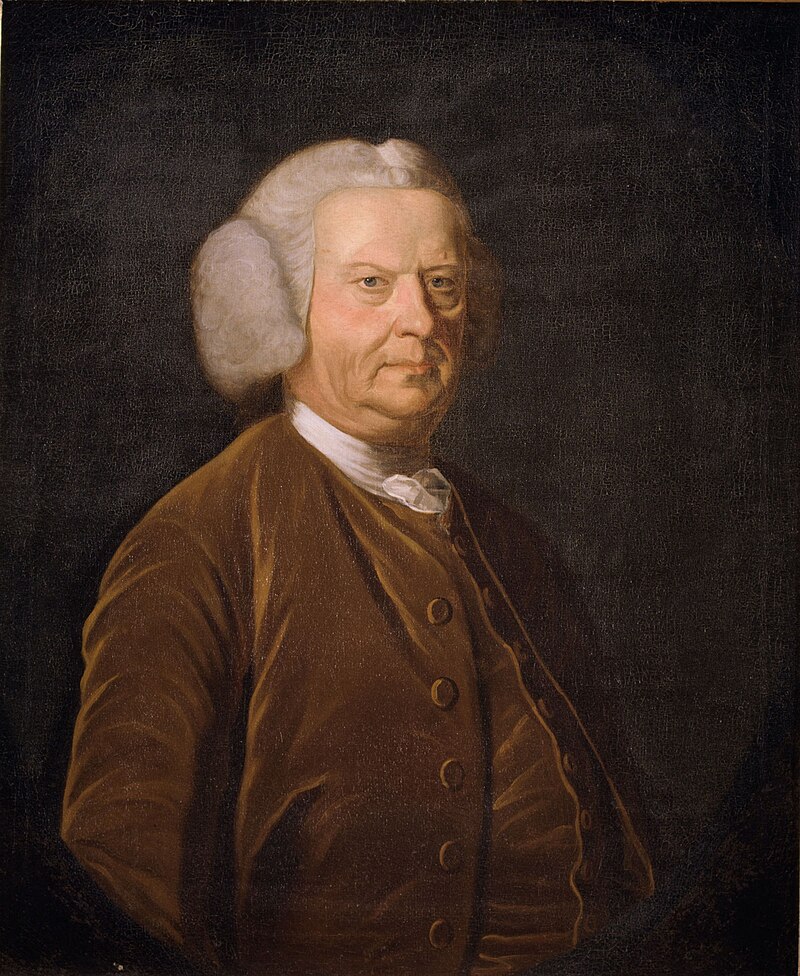 A Supreme Court Justice, Daniel Horsmanden, is commissioned to prepare a revision of laws in force affecting the colonial system of justice. Also, by colonial statute, the Supreme Court is given nisi prius jurisdiction ex officio.
The Horsemanden revision of the laws is never completed. Some blame this on the fact that Justice Horsmanden is quite old when he undertakes his commission; and it is suggested that later efforts to impose a mandatory retirement age for judges are prompted by his example.
The nisi prius system, which originated in England, had been established in the colony toward the end of the 17th century. It allows for the trial of a case in the venue where the parties and witnesses reside (and jurors can be drawn), while leaving jurisdiction over preliminary proceedings and final judgment in the hands of a New York City-situated Supreme Court. This system saves the expense and inconvenience in the trial of matters arising at a distance from the City while assuring that the more technically and, potentially, politically challenging initial and final proceedings in such matters remain subject to the oversight of judges who are better-trained and, coincidentally, apt to be more sensitive to the Crown’s concerns. Historical evidence suggests that, despite its early establishment, the nisi prius practice actually takes many years to evolve, with greater reliance upon it depending upon population growth in the counties outside New York City and greater use of the information procedure in prosecuting regional crime.
1761
Debate Over Commissions of Supreme Court Justices Ensues
In the early 1760s, there is a serious debate in New York on the question whether its Supreme Court Justices should be appointed by the Royal Governor to serve at his pleasure or to serve during good behavior (as is then the case with English judges).[58] In the wake of this debate, the provincial legislature enacts a statute providing that Justices should hold their commissions during good behavior. Governor Colden refuses to assent, however. The incumbent Justices then petition the Governor in Council to renew their commissions during good behavior. The Governor postpones consideration of their petition pending instruction from England. The Justices threaten not to act unless their wishes are granted. The issue of tenure then becomes linked to judicial salaries. Ultimately, several Justices agreed to accept commissions for service at the Governor’s pleasure.
[58] Ellis, David M., et al, A Short History of New York State, pp 45-46.
1764
Forsey v. Cunningham Decision Upholds Right to Trial by Jury
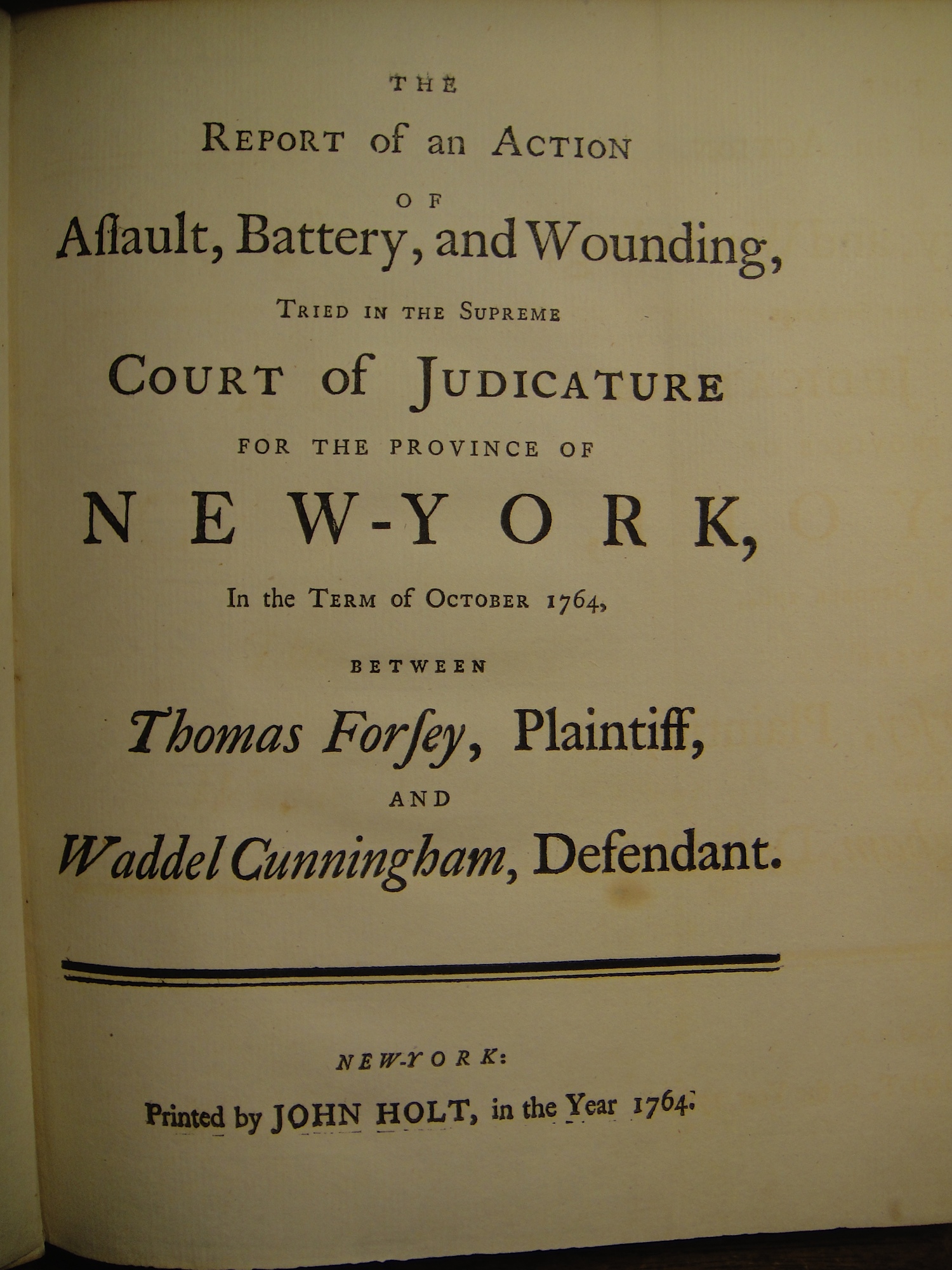 The case of Forsey v. Cunningham — a civil suit for assault in the Supreme Court of Judicature — results in a jury verdict and judgment for the plaintiff. The losing defendant then attempts to overturn the judgment by bypassing a writ of error in the courts and appealing directly to the Acting Governor. The provincial council, however, rules that any appeal from a jury verdict must proceed through the courts. This ruling is seconded by the English Attorney General and Solicitor General. The decision in Forsey is regarded as pivotal in upholding the right to trial by jury and in establishing that, in New York, the law was not what the Governor or even the Assembly by statute commanded; rather it was what local people, either jurors or trial judges beholden to local constituencies, or in the case of Supreme Court justices, to the bar, declared the law to be.[59]
[59] Nelson, William E., Legal Turmoil in a Factious Colony: New York, 1664-1776, 38 Hofstra Law Rev., pp 37-39.
1772
Somerset v. Stewart Ends Slavery in England
Lord Mansfield writes the decision in Somerset v. Stewart, a case understood by many to have ended slavery in England. Somerset holds that, in order for there to be slavery in England, it must be authorized by positive law. At the time of the decision, slavery had never been authorized by statute within England and Wales; nor supported in England by the common law.
1776
American Revolution Creates Disarray in New York’s Courts
With the coming of the Revolution, the provincial courts fall into disorder. Many are presided over by loyalists to the Crown; and the American patriots often openly ignore or oppose their efforts to execute the duties of office. In September, as the British take New York City, the British commander, General William Howe, shuts down civil courts in the City and elsewhere within the British lines.
1776
New York’s First Constitutional Convention Opens & New York Ratifies the Declaration of Independence
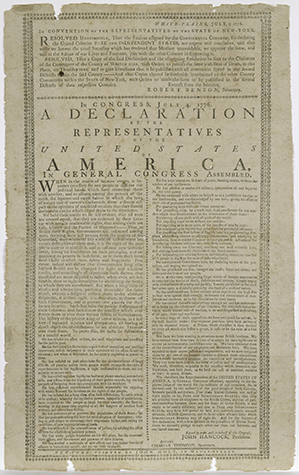 In response to urging by the Continental Congress that, in the wake of independence, each colony establish its own form of government, New York’s first Constitutional Convention opens in New York City.
On June 30, 1776, anticipating an attack by the British, New York’s fourth provincial congress adjourns to White Plains, where, in the courthouse on July 9, it ratifies the recently issued Declaration of Independence. This congress includes 104 delegates from the State’s 14 counties and sits as the State’s first Constitutional Convention (called the “Council of Representatives”). Its task is to produce a State Constitution for the new state of New York.
1777
New York Adopts Its First Constitution
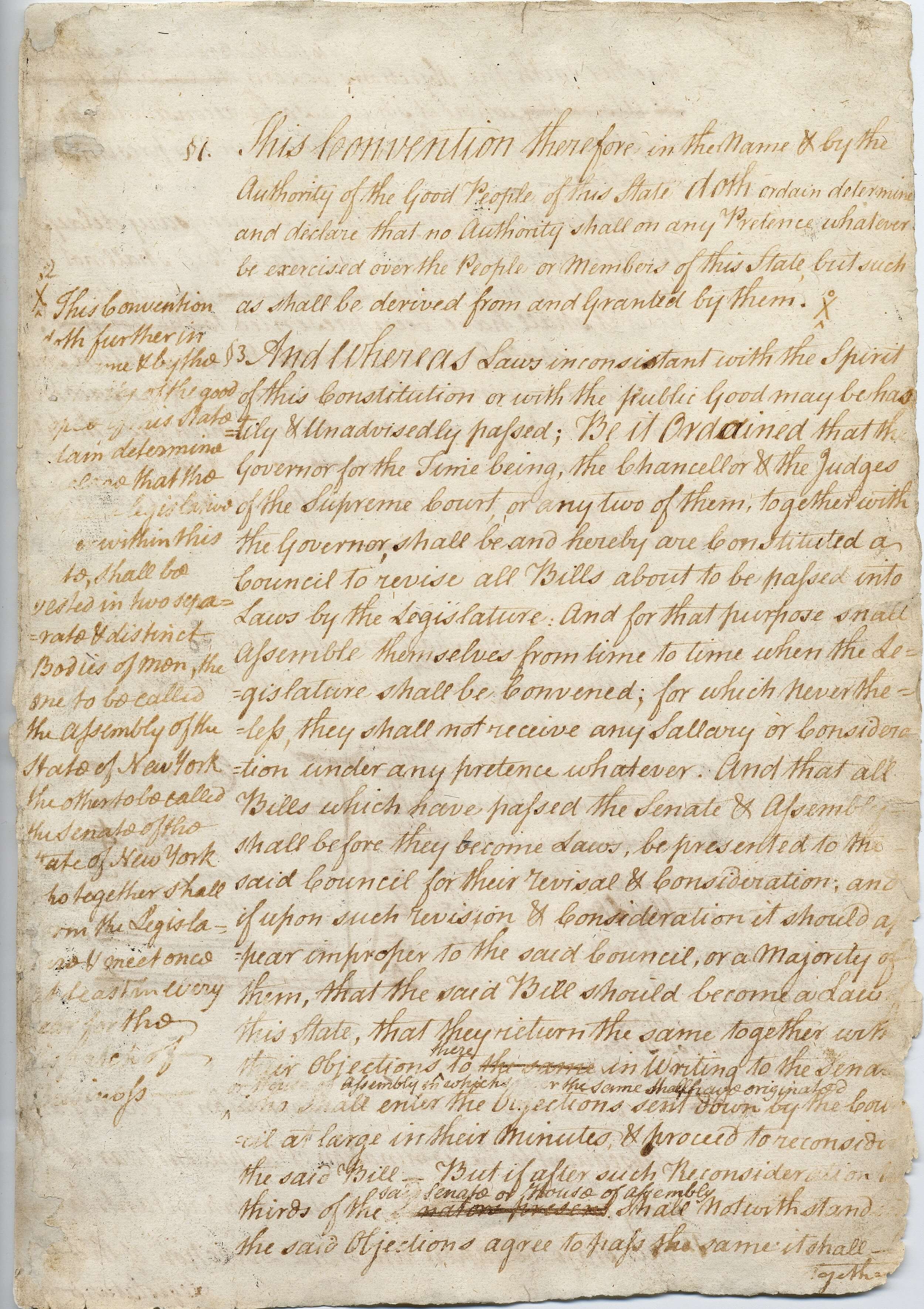 New York’s first Constitution is adopted in Kingston, to be effective April 20, 1777. It is written under the most trying circumstances, i.e., while working on the Constitution, the members of the Convention must scramble up the Hudson River (from White Plains to Harlem, then to King’s Bridge, Philipse Manor, Fishkill, Poughkeepsie, and Kingston) to elude the invading British army. Given these circumstances, it is not possible for the people of the new state to vote on their new constitution — so the Convention merely calls it into being.
The new Constitution, which is primarily the work of John Jay, George Clinton, Alexander Hamilton, Robert Livingston, and Gouverneur Morris, includes no separate article devoted to the Judiciary, and just a few provisions regulating the courts — in effect carrying over the provincial judicial system, which, at the time the Constitution is adopted, consists of a Court of Chancery, a Supreme Court, a Court of Common Pleas, and Justice Courts.[60] The few provisions of the new Constitution that affect the courts address:
- Judicial selection, providing that all the primary judicial officers (i.e., Supreme Court Justices, the Chancellor, and certain County Judges) shall be selected by a Council of Appointment (made up of the Governor and four Senators selected by the Assembly).
- Terms of judicial office and mandatory retirement, providing that judges will hold office during good behavior subject to mandatory retirement at age 60.
- Impeachment and the Court for the Trial of Impeachments and the Correction of Errors, establishing a single forum to (1) act as an impeachment court, and (2) serve as New York’s appellate forum of last resort.
In serving as an impeachment court, this Court will consist of the President of the Senate (i.e., the Lieutenant Governor) as presiding officer, all State Senators, the Chancellor, and the Supreme Court Justices (or a major part of them). Impeachment and conviction by this Court will be the sole means by which an errant judge may be removed from office.
In serving as an appellate court, the Court for the Trial of Impeachments and the Correction of Errors is modeled after the English House of Lords. While the Chancellor and the Supreme Court Justices are to be active members of the Court, the constitutional framers carefully exclude them from playing any role in the decision of appeals before the Court where those appeals are from their decisions (although the constitutional text makes plain that, even under those circumstances, the Justices may participate in the deliberative process — at least to the extent of explaining the reasons for their judgments). - Council of Revision, providing that the Governor, Chancellor, and Supreme Court Justices shall sit together as a Council of Revision to determine the constitutionality of legislative enactments before they can become law. Each bill that passes the Senate and Assembly must be presented to this Council for its approval; and should the Council find the bill objectionable, it may return the bill to the Legislature within ten days in which event it will not become law unless it is re-passed by the Legislature with a two-thirds supermajority vote. With this Council of Revision in place, there is little reason for the Court for the Trial of Impeachments and the Correction of Errors to sit to determine the constitutionality of laws. Indeed, between 1777 and 1847, the Court declares only three statutes unconstitutional. Another reason that the Court for the Trial of Impeachments and the Correction of Errors declares so few statutes unconstitutional lies in the obvious fact that the Court is dominated by members of the Senate who likely would be disinclined to overturn statutes that they themselves already had approved.[61]
- Judges holding other offices, barring Supreme Court Justices and the Chancellor from holding other offices except that of delegate to the General Congress; and, likewise, certain County Judges from holding other offices except those of Senator and delegate to the General Congress.
- Continuation of the common law and colonial legislative enactments in effect on April 19, 1775 (the date on which the battle of Concord was fought), and the acts of the subsequent colonial and state legislatures in force on April 10, 1777 (ten days before adoption of New York’s Constitution), not inconsistent with the new Constitution. By expressly adopting the common law of England, however, the Constitution incorporates the English Bill of Rights of 1689 into the law of New York.
- Bar admission, providing for court regulation and supervision of the admission of attorneys to the Bar.
In fact, no rules regulating bar admission are actually adopted by the courts until 1797, when Supreme Court adopts a rule requiring that, to be admitted to the bar, one must serve a regular clerkship of seven years’ duration with a practicing attorney of the court to which a person seeks admission (although four years of classical studies undertaken after a person attains age 14 could be substituted). No examination is needed for admission.
The State’s first Constitution contains no Bill of Rights. Only the right to trial by jury is guaranteed.
[60] Article XXXV of the 1777 Constitution provides, in relevant part: “That such parts of the common law of England, and of the statute law of England and Great Britain, and of the acts of the legislature of the colony of New York, as together did form the law of the said colony on the nineteenth day of April in the year of our Lord, one thousand seven hundred and seventy-five, shall be and continue the law of this state, subject to such alterations and provisions as the legislature of this state shall, from time to time, make concerning the same . . .” (emphasis added)
Inasmuch as the 1777 Constitution included no provision specifically addressing court structure (e.g., nothing enabling a Supreme Court), it may be concluded that its framers intended that the Supreme Court of Judicature, which had been created in 1691 by an early act of New York’s colonial legislature, simply be continued as part of the law of the new State.
[61] Lincoln, Charles Z., Constitutional History of New York, Vol. 1, p. 162.
1777
John Jay Becomes New York State’s First Chief Justice
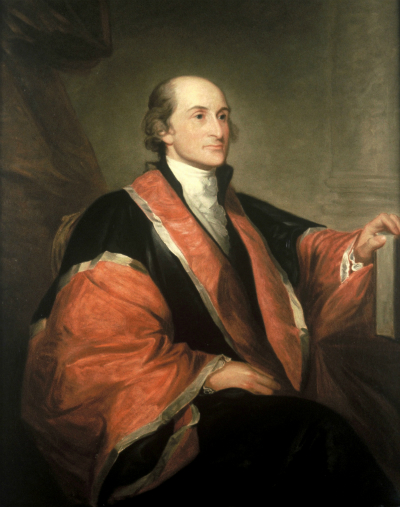
John Jay, of New York City, is appointed as the first Chief Justice of New York State’s Supreme Court.
1777
Robert Livingston Becomes New York State’s First Chancellor
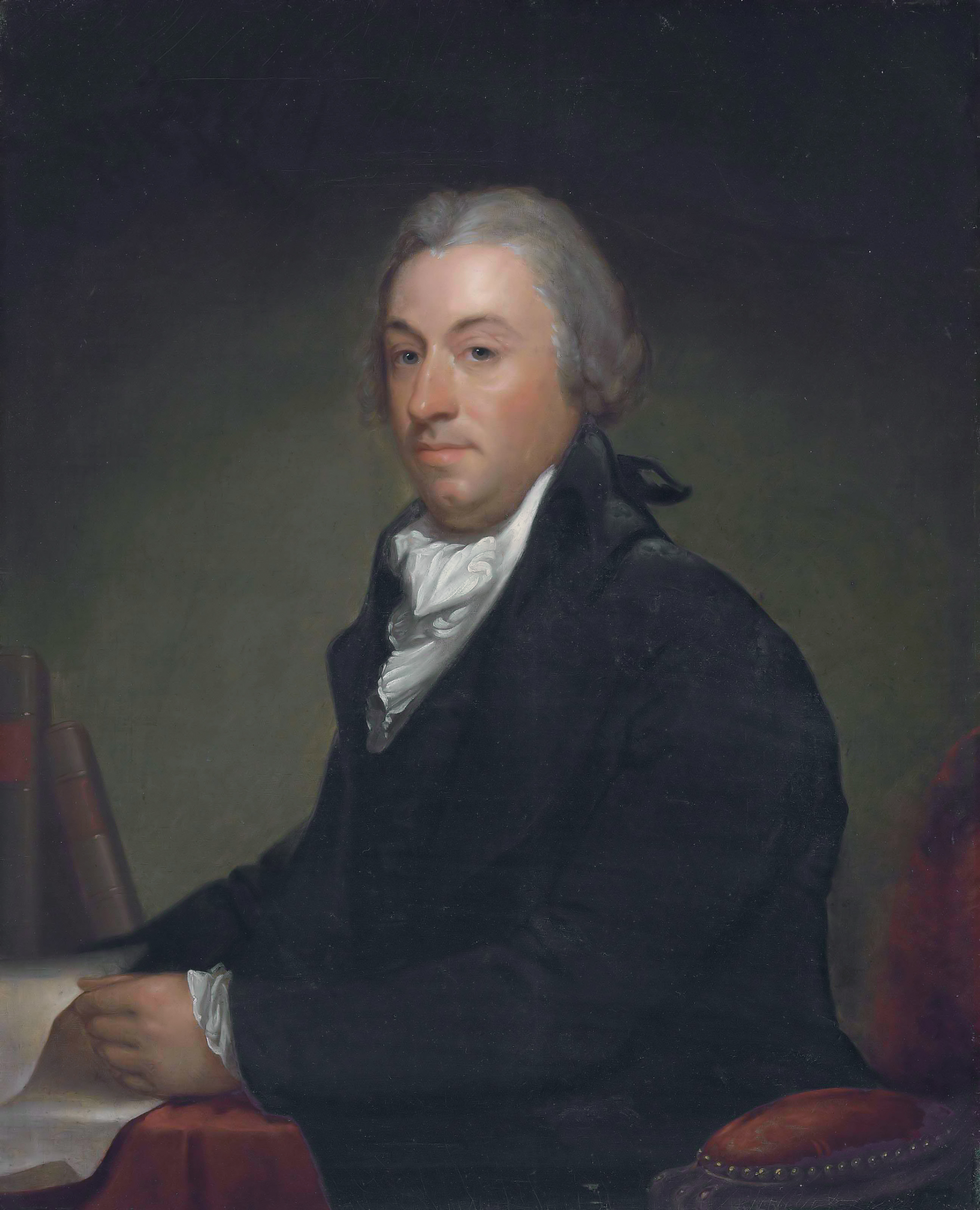 Robert Livingston, of Clermont, New York, is appointed as New York State’s first Chancellor.
1777
New York Adopts the Articles of Confederation
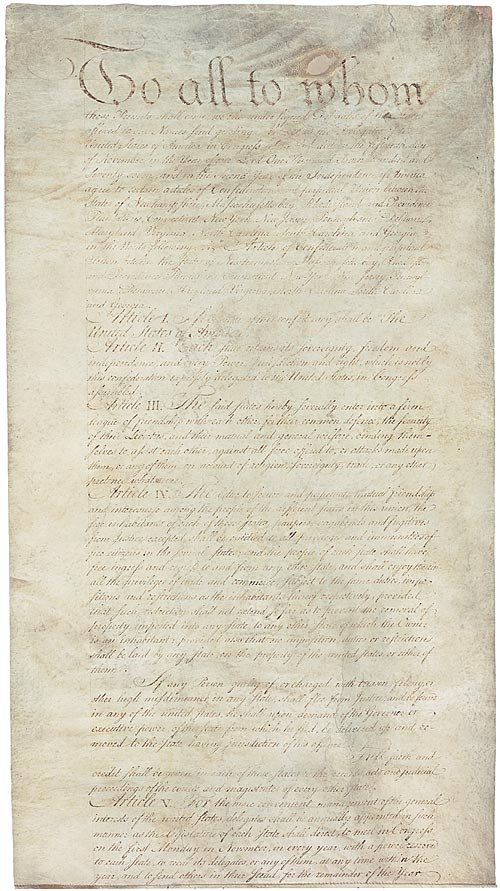 New York becomes the second state to approve the Articles of Confederation.
1779
Richard Morris Becomes Chief Justice
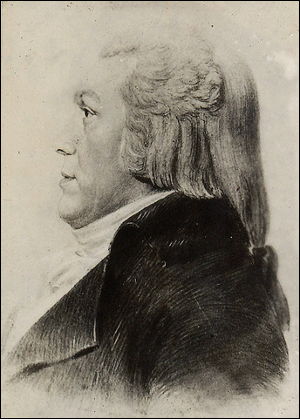
Richard Morris, of Morrisania (an estate later annexed to New York City as part of the Bronx), succeeds John Jay as Chief Justice of New York’s Supreme Court.
1779
The Treaty of Paris Ends the American Revolution
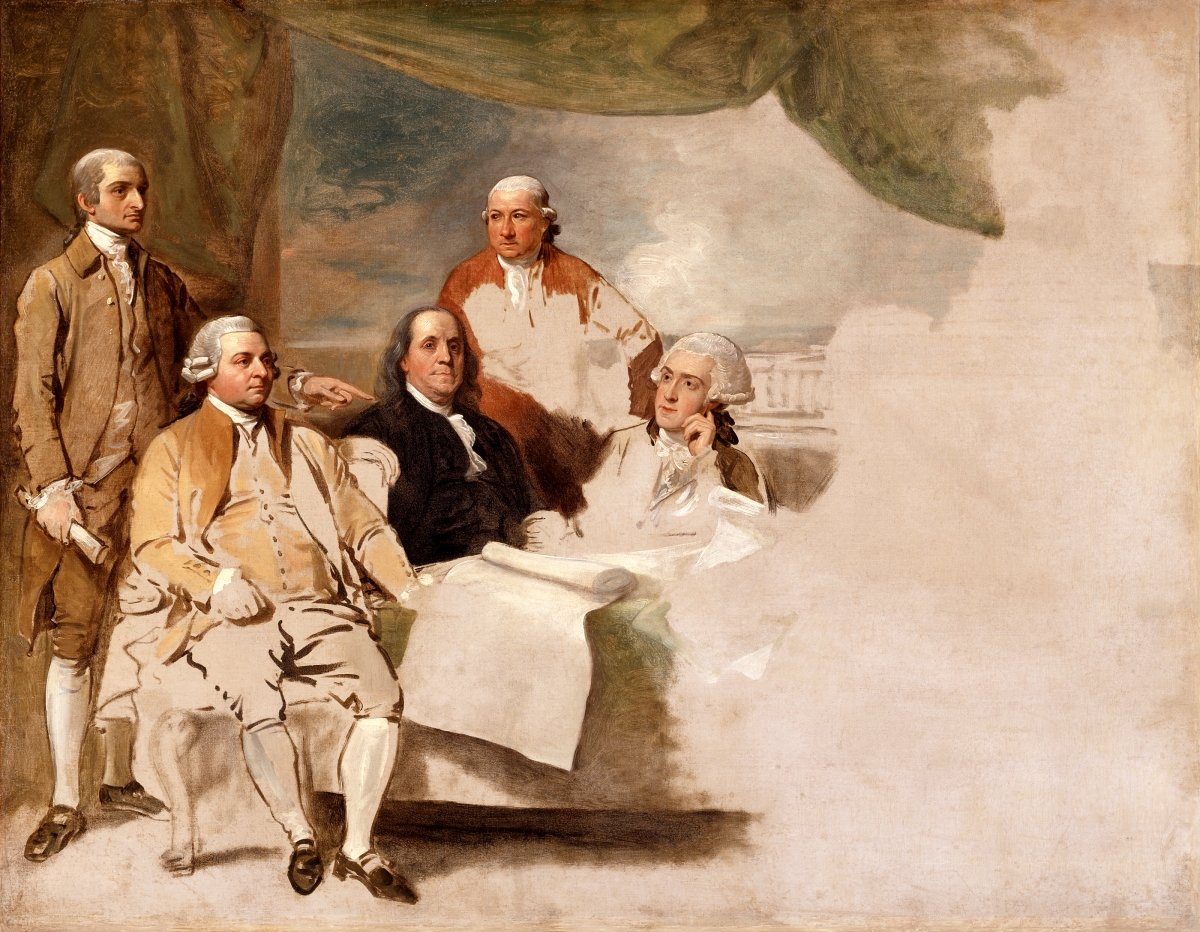 United States and British representatives sign the Treaty of Paris ending the Revolutionary War and recognizing American independence.
1784
Legislature Regulates Court for the Correction of Errors
The Legislature regulates the Court for the Correction of Errors.
1787
Bill of Rights Enacted in New York
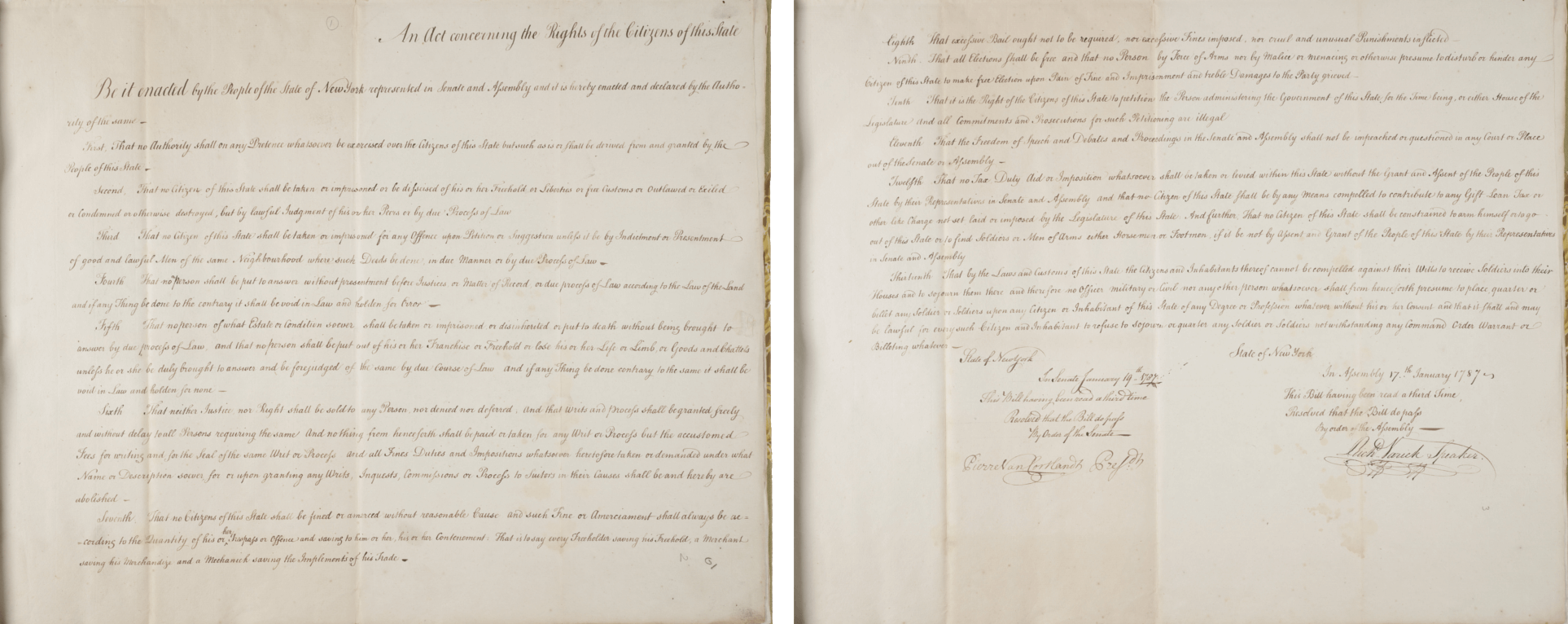
A Bill of Rights is enacted as a statute in New York. It includes a variety of protections including:
- Due process,
- Prohibition of excessive bail/fines and cruel or unusual punishment,
- Free elections, and
- Freedom of speech and debate in the Legislature.
No formal Bill of Rights had been included in the State Constitution adopted in 1777 although there were several clauses guaranteeing basic rights including male suffrage based on residency, a right to counsel in both criminal and civil trials, freedom of religion, abolition of religious establishments, and the guarantee of due process.
1787
U.S. Constitution Adopted
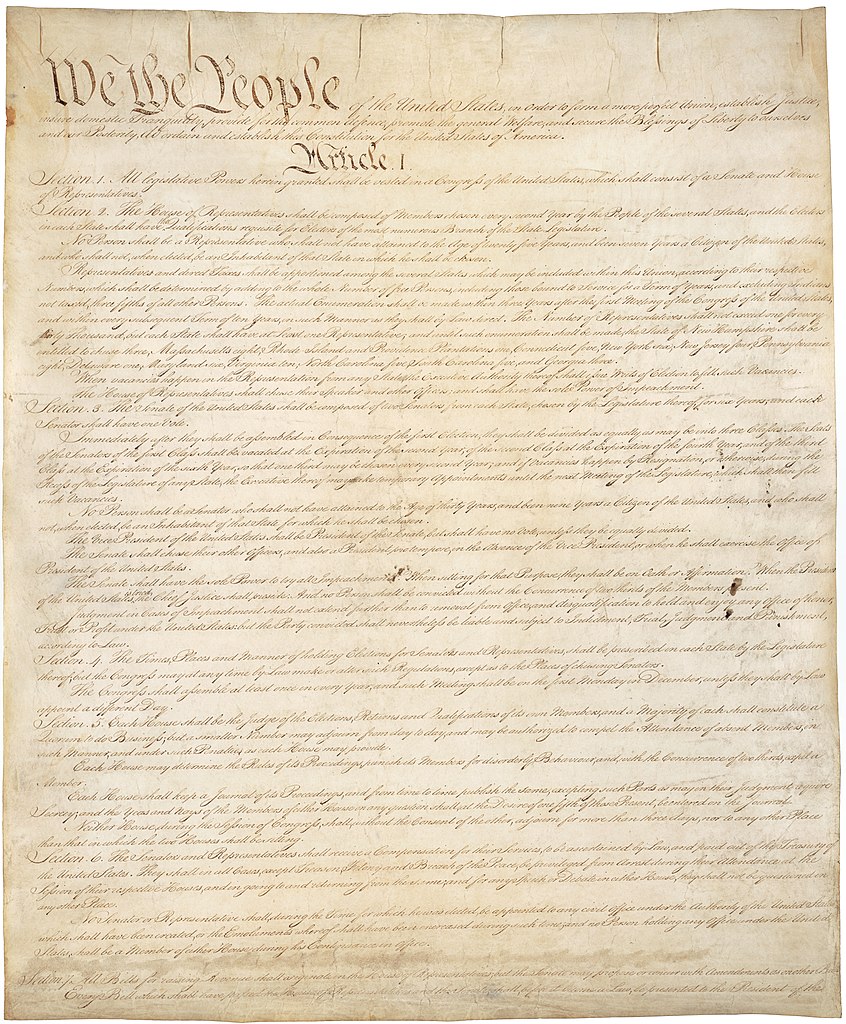 The Federal Constitution is adopted on September 17, 1787.
1788
New York Ratifies the U.S. Constitution
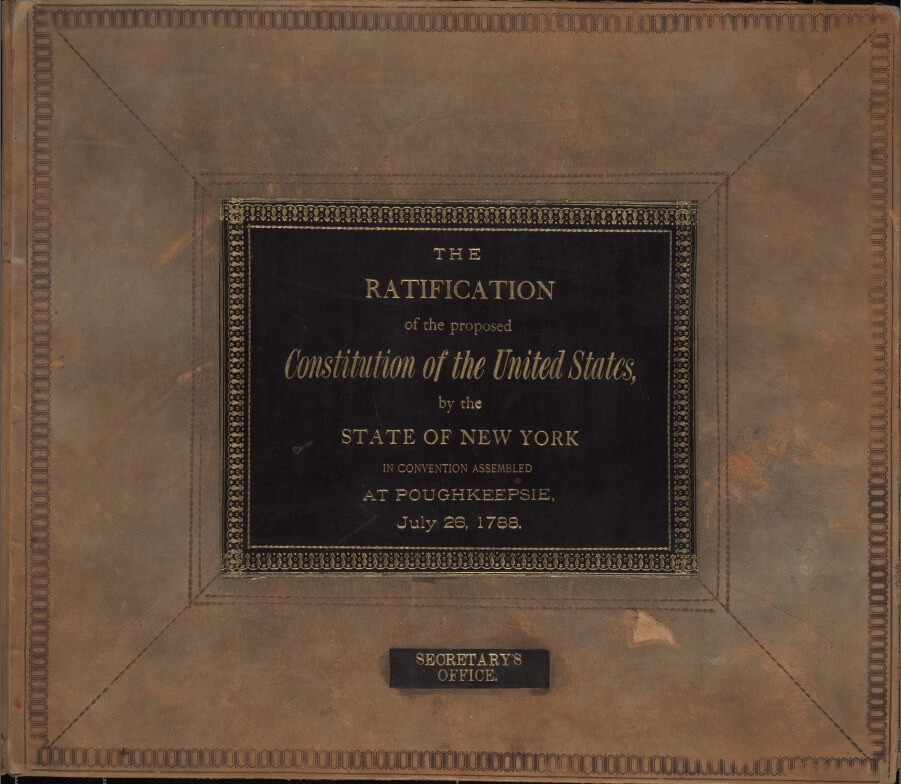 In Poughkeepsie, New Yorkers ratify the Federal Constitution. New York is the eleventh state to do so.
1790
Robert Yates Becomes Chief Justice
Robert Yates, an Associate Justice of the State Supreme Court from Albany, succeeds Richard Morris as Chief Justice.
1791
U.S. Bill of Rights Ratified
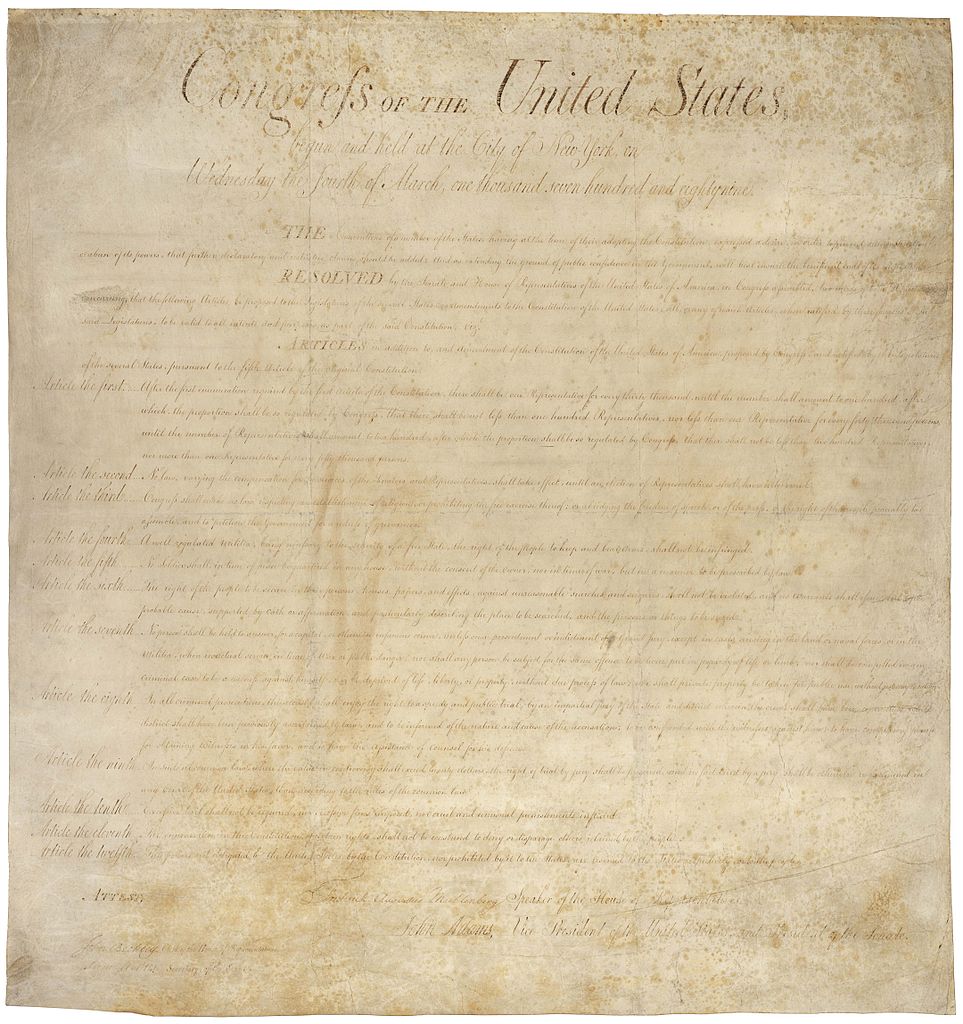 The Bill of Rights is ratified as a series of amendments to the United States Constitution.
1797
Albany Becomes Capital of New York State
Albany becomes the permanent capital of New York State. Prior to this time, the State Legislature had met in Kingston and New York City.
1797
Bar Admission Rules Promulgated by the Supreme Court
First Rules regulating admission to the New York bar are promulgated by the Supreme Court.
1798
Court of Oyer and Terminer Established
The Legislature establishes a Court of Oyer and Terminer for New York City and New York County. Thereafter, the jurisdiction of this Court is prescribed by the Legislature, either in general statutes or by special acts (or by provisions in acts amending the City Charter). The organization of these Courts is to be determined by the Legislature.
In New York City prior to Independence, criminal jurisdiction had been exercised by the Mayor, Recorder, and the Aldermen, who were “justices assigned of Oyer and Terminer and of the jail delivery of all and every jail” in the City. Beginning in the late 18th century, however, this court — which exercises full criminal jurisdiction — consists of a Supreme Court Justice and two or more Judges of the Court of Common Pleas.
1798
John T. Lansing Becomes Chief Justice
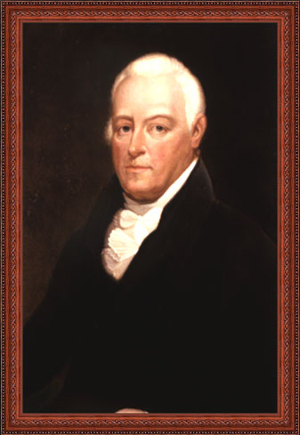 Albanian John T. Lansing, an Associate Justice of the State Supreme Court, succeeds Robert Yates as Chief Justice of that Court.
1799
Gradual Emancipation of Slavery Begins in New York
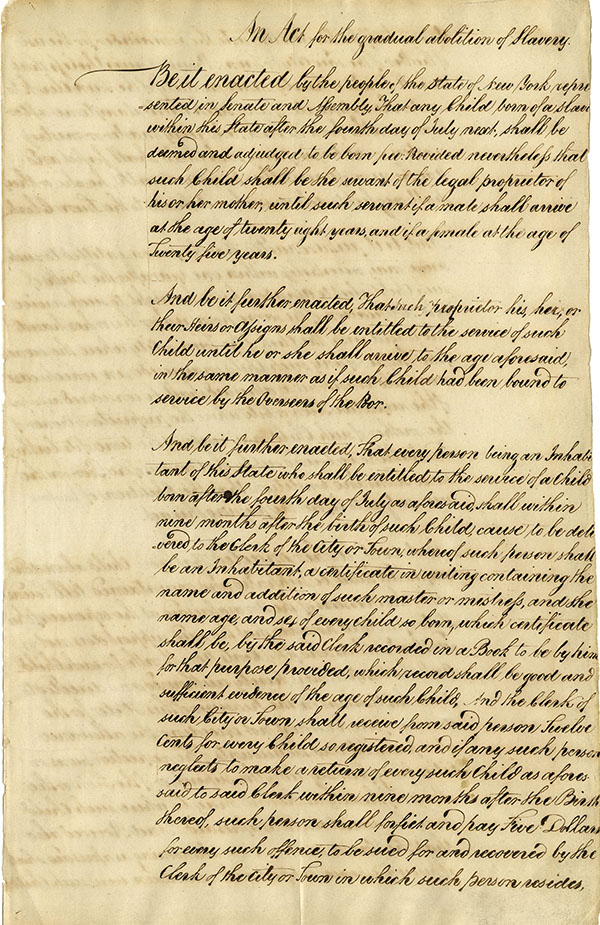 New York begins a process of emancipating slaves living within the State. The Legislature enacts a statute that frees enslaved children born after July 1, 1799, but indentures them until they reach age 28, for males, and age 25, for females.
By a later statute, enacted in 1817, full emancipation of all slaves is directed, effective July 4, 1827.
1800s
1801
Chief Justice John T. Lansing Becomes Chancellor
John T. Lansing, the Chief Justice of New York’s Supreme Court, succeeds Robert Livingston as Chancellor of the State.
1801
Legislature Convenes New York’s Second Constitutional Convention
The Legislature enacts a statute convening the State’s second Constitutional Convention. In so doing, the Legislature acts on its own authority, there being no provision in the 1777 State Constitution fixing a procedure for its revision.
1801
Second Constitutional Convention Held in New York
A second Constitutional Convention is held in New York. This Convention has a very limited agenda: i.e., to increase the size of the Legislature and to amend the existing Constitution to clarify interpretation of Article 23, which then provided for a Council of Appointment. Clarification of Article 23 is necessary to resolve a dispute between the Governor, who believes he enjoys an exclusive right to nominate State, county, and municipal officials, and some members of the Council, who believe they concurrently enjoy a right to make such nominations.[62]
[62] Lincoln, Charles Z., Constitutional History of New York, Vol. 1, pp 596-603.
1803
Supreme Court Adopts New Bar Admission Rules
The Supreme Court adopts a rule providing that every person who has pursued judicial studies for four years within the State under the direction of a professor or an attorney, or who has been admitted to the Bar in any other state and practiced law there for at least four years, shall be admitted to the New York Bar. There is no provision for a state bar examination.
1817
Erie Canal Act Allows Petitions to Supreme Court
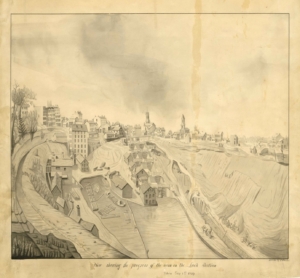 The Erie Canal Act directs the State Canal Commissioners to petition the Supreme Court for appointment of disinterested appraisers to assess damages to private land holders from canal construction. The Commissioners pay the damages thereby assessed and fee title then vests with the people of the State. This is the first general statute providing for the hearing and determination of private claims against the State.
1821
New York’s Electorate Votes for a Constitutional Convention
Following the precedent set in 1801, the Legislature enacts a statute calling for submission to the electorate of the question of holding a Constitutional Convention. The People vote overwhelmingly in the affirmative and the Convention takes place between August and November. It produces a new Constitution, which thereafter is submitted to the State’s voters.
1822
Voters Approve the New Constitution
The new Constitution produced by the 1821 Constitutional Convention is approved by the voters by a two-to-one margin. It is the first time in New York that the State Constitution has been submitted to the voters at a popular referendum.
The new Constitution, which takes effect on December 31st, eliminates the Councils of Appointment and of Revision, which, over time, had become quite unpopular, as well as the Judiciary’s role in vetoing legislation. It also adds a comparatively short article devoted to the Judiciary (Article V), which makes a series of changes in the State’s judicial system. This is done because, for the first time, Judiciary-related issues are a major focus in the drafting of New York’s State Constitution. While some of this attention is for the purpose of restructuring judicial organization in the interest of improving its functioning, historians have suggested that most of the attention was driven by partisan interests and a demand for democratization.[63]
The specific constitutional provisions affecting the courts address:
- Ouster of incumbent Supreme Court Justices. A major aim of the Convention is prematurely to end the tenure of then incumbent Supreme Court Justices. To this end, there is a provision calling for early expiration of all civil offices (including those of judges).[64]
- Reduction in the size of the judicial representation on the Court for the Trial of Impeachments and the Correction of Errors, corresponding to a simultaneous reduction in the number of Supreme Court Justices to three.
- Substantive and procedural changes in the impeachment process, including a change in the impeachment standard (“The assembly shall have the power of impeaching all civil officers of this state for mal and corrupt conduct in office, and for high crimes and misdemeanors”); and (ii) reduction of the requirement for a two-thirds vote in the Assembly to support articles of impeachment to a simple majority.[65]
- County Courts. For the first time, reference is made to the County Courts in the State Constitution.[66] These Courts are a continuation of the Courts of Common Pleas. The Constitution does not set forth their jurisdiction. That is fixed by statute although, by later Supreme Court decision, the County Court is held to be a court of record with general jurisdiction of several actions at common law equal to that possessed by the Common Pleas Court in England).
- Selection of judges. All judicial officers shall be appointed by the Governor, with the Senate’s consent, except for Justices of the Peace and certain special Justices in New York City.[67] Justices of the Peace shall be appointed for four-year terms through a collaborative effort of county boards of supervisors and local County Judges,[68] while special New York City Justices shall be appointed by the City’s Common Council.
- Judicial terms of office, mandatory judicial retirement, limits on judicial office, and removal of certain judges from office. Supreme Court Justices, Circuit Judges, and the Chancellor are to serve during good behavior subject to mandatory retirement at age 60.[69] County Judges and City Recorders are to serve for five-year terms (previously, County Judges were appointed and served during good behavior).[70] All other judicial officers are to hold office at the pleasure of their respective appointing authorities. This introduction of a fixed term of office is an experiment of sorts in finding a means to ensure judicial accountability.
For the first time, the Chancellor and the Supreme Court Justices are barred from holding other offices.[71] Also, for the first time, special provision is included in the Constitution for the removal of certain judges (i.e., County Court Judges and City Recorders may be removed by the Senate on recommendation of the Governor).[72]
After adoption of the 1822 Constitution,[73] there are four methods by which judges can be removed from office: (1) impeachment on charges brought in the Assembly, to be tried by a legislative tribunal consisting of the Senate and judges of the State’s highest court; (2) removal of the Chancellor, Supreme Court Justices, and Circuit Judges, by concurrent resolution of both houses of the Legislature; (3) removal of County Judges and Masters and Examiners in Chancery, by the Senate on recommendation of the Governor; and (4) removal for cause of Justices of the Peace, by the County Court. The 1822 Constitution also revises the impeachment provision so that a public officer may be impeached “for mal and corrupt conduct in office, and for high crimes and misdemeanors.”[74] - Constitutional memorialization of the Circuit Court system. Originally, the Supreme Court had confined its attentions to downstate, where most of the State’s population lay. The small number of Supreme Court Justices was generally adequate to meet the prevailing caseload demands. As New York’s population grew, however, and as the State spread out with new counties and local governments, there developed a need for a greater judicial presence statewide. Indeed, at the time of the 1821 Constitutional Convention, there are only five Supreme Court Justices; and they are expected to do the work required of a court of general jurisdiction in all the State’s counties, then numbering 52. In the late 18th and early 19th centuries, however, such an expectation is unrealistic, and the Legislature finds it necessary to turn to a variety of expedients, including increasing the jurisdiction of the Courts of Common Pleas (County Courts), appointing Supreme Court Commissioners, and vesting City Mayors and Recorders with Supreme Court functions. In the end, these expedients prove to be inadequate and, so, the 1821 constitutional framers give the Legislature authority to divide the State into between four and eight circuits, each with its own judicial allocation.[75] In practice, the Circuit Judges thereby established are considered by the Bar to be essentially the same as Supreme Court Justices. They are vested with the powers of Supreme Court Justices in chambers and with jurisdiction to try cases brought in Supreme Court. This leads to a dual system whereby Circuit Judges try Supreme Court cases before juries and determine factual issues, while Supreme Court Justices exercise jurisdiction over law issues and facts in non-jury matters.
- Chancery. The 1822 Constitution’s establishment of the Circuit Courts also is intended to relieve the caseload and reduce delays in Chancery. To this end, the Constitution permits the Legislature to vest equity powers in the Circuit Courts, as well as in other courts.[76] The Constitution also confers upon the Governor the power to appoint masters in Chancery.[77]
- Filling of judicial vacancies. The 1822 Constitution provides that “[t]he chancellor and justices of the supreme court shall hold their offices during good behavior, or until they shall attain the age of sixty years.” This continues a provision made in the first State Constitution. There is, however, no specific provision made in the 1822 Constitution for the filling of such vacancies on the Supreme Court as might thereafter occur. This may have been because the constitutional framers believed that such was unnecessary because of the constitutional provision already conferring upon the Governor the right to appoint, with Senate consent, nearly all judicial officers.
- Courts of Oyer and Terminer. The 1822 Constitution continues the Courts of Oyer and Terminer but makes no specific provision for their constitution or organization.[78] In practice, they are criminal courts that are presided over by Circuit Judges outside New York City.
- Bar admission. Unlike the 1777 Constitution, the 1822 Constitution makes no mention of the courts’ responsibility for overseeing admission to the Bar.
Although the 1822 Constitution devotes considerably more attention to the courts than did its predecessor, it does not do much more than: (1) change the number of Supreme Court Justices; (2) eliminate Justices already in office at the time of the Constitution’s adoption; (3) limit the tenure of local judges to a fixed term; and (4) bar higher level judges from holding other office. Accordingly, commentators have described the Constitution of 1822 as having been built not so much in anticipation of further State expansion and growth in court needs as to correct past systemic defects.
The new Constitution adopts — for the first time in New York — a separate Bill of Rights.[79] Also, it includes provision for amending the Constitution upon legislative initiative.[80] Finally, it makes many thousands of State offices elective.
[63] See generally Lincoln, Charles Z., Constitutional History of New York, Vol. 1, pp 674-690.
[64] NY Const. (1822), Art. IX, §1.
[65] Ibid., Art. V, §2.
[66] Ibid., Art. V, §6.
[67] Ibid., Art. IV, §7.
[68] Ibid., Art. IV, §14.
[69] Ibid., Art. V, §3.
[70] Ibid., Art. V, §6.
[71] Ibid., Art. V, §7.
[72] Ibid., Art. V, §6.
[73] Some commentators refer to this Constitution as the 1821 Constitution, recognizing that the Constitutional Convention that produced it sat in 1821. As the voters’ adoption of the new Constitution proposed by the Convention did not actually take place until 1822, with its effective date occurring in that same year, it will be referred to throughout this document as the 1822 Constitution.
[74] NY Const. (1822), Art. V, §2.
[75] Ibid., Art. V, §5.
[76] Ibid., Art. V, §6.
[77] Ibid., Art. IV, §12.
[78] Ibid., Art. V, §5.
[79] Ibid., Art. VII.
[80] NY Const. (1822), Art. VIII, §1.
1823
Legislature Enacts Statutes to Implement the New Constitution
The Legislature enacts statutes implementing provisions of the new Constitution that affect the Judiciary. These statutes set forth important detail that had not been included in the Constitution, including specification of the new judicial circuits, rules for the holding of terms of court, provision for the jurisdiction of some courts, and rules governing admission to the State Bar.
1824
New York State Enacts a Juvenile Delinquency Statute
New York enacts a statute establishing the concept of juvenile delinquency.[81] This statute provides that “the managers of the [Society for the Reformation of Juvenile Delinquents] . . . shall receive and take in the house of refuge, established by them in the City of New York, all such children as shall be convicted of criminal offenses, in any city or county of this state, and as may in the judgment of the court, before whom any such offender shall be tried, be deemed proper objects . . .”
[81] L. 1824, c. 126.
1826
Constitution Amended for Selection of Justices of the Peace
The Constitution is amended to change the method of selection for Justices of the Peace from appointment to popular election. This change had been recommended by Governor DeWitt Clinton in his 1825 annual message to the Legislature.[82]
[82] Lincoln, Charles Z., Constitutional History of New York, Vol. 2, pp 5-6.
1826
Universal Suffrage for White Males Implemented
New York introduces universal white male suffrage (the 1822 Constitution had authorized suffrage for white, tax-paying male citizens and for Black males having property of at least $250 in value).
1828
Governor Clinton Calls for Reforms to the Judicial System
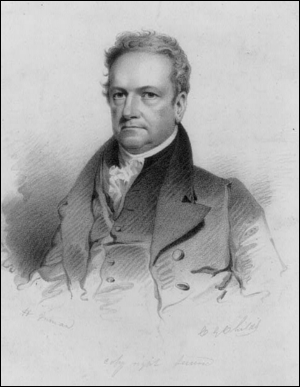 In his 1828 annual message to the Legislature, Governor DeWitt Clinton identifies basic flaws in the judicial system established by the 1822 Constitution. In particular, he points to the inadequacy of the Circuit Court system, writing that “[t]he fatal error consisted in separating the judges who try the fact, from the tribunals who pronounce the law; or, in other words, creating circuit courts as distinct and independent forums, and not as emanations from Supreme Court.”
Clinton is the first in a series of New York Governors to call for significant reform of the Judiciary’s structure; and to take the view that such reform may be beyond the power of the Legislature to effectuate in the absence of a constitutional amendment. He describes the inadequacies in the 1822 Constitution as “radical defects.” In no small measure, this call and those of his successors are made in reaction to a rapid growth in the State’s population and expansion of that population across the State.[83] This expansion sees Albany, Oneida, Onondaga, Monroe, and Erie Counties become among the largest of the population centers outside New York City; and, with their growth, the State’s Chancery and Circuit Court systems soon become overwhelmed.
Also prompting these gubernatorial calls for court reform are the evident limitations of the Court for the Trial of Impeachments and the Correction of Errors. These include:
- The poor quality of its decisions. While some Senators are able lawyers, that is not always the case. The result is that this Court, which serves as the State’s judicial forum of last resort, is viewed as weak judicially.
- Structural unsoundness. The Court’s large size, its method of operation (i.e., there were no real deliberations; rarely did the Court’s members reach a unanimous decision; the design of the Court and its membership were not in keeping with the separation of powers), and its essentially legislative character are problematic. While the Court has occasionally been likened to the British House of Lords, in practice, it really is not much like it at all. An important distinction: the House of Lords delegates its judicial function to a special committee of its members who are professional judges (in other words, the whole body does not participate in the decision of the cases before it). By contrast, all members of the Court for the Trial of Impeachments and the Correction of Errors, whatever their credentials and competence, participate in decisions of the cases coming before it.
- Slow decision-making. There is much public and press criticism of the Court’s delays in disposing of the cases before it.
The calls for court reform go largely unheeded, however, until several unrelated political movements drive the Legislature, in 1845, to pass an act submitting a proposal for a Constitutional Convention to the voters. Among these: an anti-slavery movement fomented by the abolitionist wings of the State’s two controlling political parties, the Democrats and the Whigs. The radical side of the parties on this issue tends to favor a more democratic way of selecting judges, i.e., by election. Another prevailing movement takes the form of agitation by farmers for the breakup of large estates still held by the successors to the huge tracts of land originally amassed by the Dutch Patroons. These feudal practices are impractical in a modern state and are deeply resented by contemporary farmers who can only work and live on the land as tenants. By the late 1830’s, this resentment will lead to violence. As with the radical abolitionists in the anti-slavery movement, the anti-rent farmers especially favor an elective Judiciary that they believe would be less willing to enforce the hated leases. Beyond these two movements, concern for the State’s fiscal plight, especially in the wake of the national bank panic of 1837, and broader misgivings about abuses of legislative power will ultimately tend to drive public sentiment in favor of a Constitutional Convention. Indeed, similar sentiments nationally will simultaneously lead many other states to hold constitutional conventions and amend their constitutions throughout the late 1840s and 1850s.
[83] Galie, Peter J., Ordered Liberty: A Constitutional History of New York, Fordham University Press, 1996, p. 98.
1830
Court of Exchequer Abolished
The Court of the Exchequer ceases to exist.
1834
Governor Marcy Calls for Reforms to the Judicial System
 Governor William Marcy, in his annual message to the Legislature, calls for enlargement of the judicial system — to meet case backlogs that have accumulated and to prevent future delays in the delivery of judicial decisions. At the ensuing session of the Legislature, an amendment to the Constitution calling for two additional Supreme Court Justices is proposed.
1835
Governor Marcy Renews Calls for Reforms to the Judicial System
In his 1835 annual message, Governor Marcy renews his call for judicial reform. Constitutional amendments are introduced — again for enlargement of the Supreme Court and, also, for establishment of a Superior Court of Common Pleas, with jurisdiction to be concurrent with that of Supreme Court.
1835
Griffin v. Potter Upholds Emancipation
Chief Justice John Savage of New York’s Supreme Court decides Griffin v. Potter (14 Wend. 209 (1835)), upholding the State’s emancipation of the slaves. He writes: “It is a fundamental principle of our government that all men are born free and equal; that is, entitled by nature to equal freedom and equal rights . . . When our government was first instituted, one portion of the population was in bondage to the other . . . It could be justified only by necessity. It was at war with our principles; and the Legislature was of opinion that there was no necessity for its continuance.”
1836
Governor Marcy Continues Calls for Reforms to the Judicial System
Governor Marcy continues his call for Judiciary reform. This year, ongoing efforts to add more Supreme Court Justices are coupled with constitutional proposals to reorganize the Court of Chancery by providing for five chancellors and five chancery districts.
1837
Legislature Enacts Statute to Create Judiciary Commission
1838
The Commission’s Report is Presented to the Legislature
Governor Marcy presents the Legislature with the report of the Judiciary commission authorized the preceding year. This report proposes several constitutional amendments to reorganize the Judiciary, including a reduction by one-half in the number of senators on the Court for the Trial of Impeachments and the Correction of Errors; provision for five chancellors and five chancery districts; addition of two new Supreme Court Justices; a grant of legislative authority to further increase the number of Chancellors and Supreme Court Justices; continuation of the Circuit Courts subject to legislative authority to abolish them; a grouping of counties in Common Pleas districts with a presiding judge for each district to be appointed by the Governor; and provision for appointment of special commissions to dispose of certain business before the Supreme Court and the Court of Chancery, respectively. The report does not produce a specific constitutional proposal for the Legislature at its 1838 session, but an amendment to the Judiciary Article is offered during that session calling for continuation of the Court for the Trial of Impeachments and Correction of Errors; reorganization of the Court of Chancery and the Supreme Court by appointment of not more than six Chancellors and six assistant Associate Justices; creation of a Supreme Court of Common Pleas with a Chief Justice and four Associate Justices; authorization for Supreme Court Justices and Justices of the Supreme Court of Common Pleas to hold trial terms; and abolition of the office of Circuit Judge.
1839
New Governor Seward Calls for Reforms
 New Governor William Seward refers to the need for judicial reform in his first annual message to the Legislature. His recommendations:
- Abolition of the office of Circuit Judge;
- Increase in the number of Supreme Court Justices;
- Authorization for Supreme Court to try both issues of law and equity;
- Creation of a Superior Court of Common Pleas with powers concurrent with those of Supreme Court; and
- Reorganization of the Chancery Court.
1840
Constitutional Amendments are Submitted to the Legislature
Governor Seward renews his call for Judiciary reform, and constitutional amendments are submitted to the Legislature. These amendments include a proposal for the popular election of County Judges and Masters and Examiners in Chancery.
1840
Legislature Expands Jurisdiction of Justice Courts
Legislation is passed increasing the jurisdiction of the Justice Courts to cases involving not more than $100.
1841
Governor Seward Continues Calls for Reforms of the Justice System
Governor Seward continues his call for Judiciary reform in his annual message to the Legislature. Thereupon, the Legislature gives first passage to constitutional amendments that would:
- Continue the Court for the Trial of Impeachments and Correction of Errors;
- Reorganize the Court of Chancery (to provide for a Chancellor and between two and four assistant Chancellors);
- Add two additional Supreme Court Justices;
- Authorize creation of two additional courts of law with Supreme Court jurisdiction;
- Provide for general and special terms of court and, also, for a court of review, to be composed of judges of other courts, to hear appeals that otherwise might be taken to the Court for the Trial of Impeachments and the Correction of Errors; and
- Abolish the offices of Circuit Judge and Vice Chancellor.
1842
Judiciary Reform Amendments Fail to Pass
Although the Governor heralds first passage of constitutional reform proposals in the preceding legislative session and encourages their second passage in 1842, the amendments nonetheless fail to pass.
1843
New Governor Brouck Reignites Calls for Reform
 William C. Bouck is now Governor. In his annual message, he echoes his predecessors’ calls for judicial reform, observing that the Constitution has failed to make “adequate provision for the expansion of the judicial system with the increased population and business of the state.” No action is taken on judicial reform by the Legislature during its 1843 session, however.
1844
Constitutional Amendments Are Submitted to the Legislature
Judiciary reform is again a major topic of Governor Bouck’s annual message to the Legislature. Several constitutional amendments affecting the courts are formally submitted to the Legislature. Two are given first passage — one providing for three Associate Chancellors and one adding two new Supreme Court Justices.
1844
Counties Petition Legislature for Vote on Constitutional Convention
24 counties petition the Legislature for submission of a question to the voters regarding the calling of a Constitutional Convention.
1845
Voters Approve Constitutional Convention
Silas Wright is now Governor. His call for second passage of the two constitutional amendments approved by the 1844 Legislature goes unheeded, but a statute is passed submitting to the people the question whether a Constitutional Convention should be held. In November, this question is overwhelmingly approved.
1845
Constitution Amended Regarding Removal of Judicial Officers
The Constitution is amended to provide that, in the case of removal of a judicial officer by the Legislature or by the Senate on the Governor’s recommendation, the affected officer must first receive notice of the charges against him and an opportunity to be heard.
1846
Voters Approve a New State Constitution
New York holds a Constitutional Convention in the summer and early fall. This Convention drafts a new Constitution, which the voters then approve at the November general election. This new Constitution, New York’s third, will take effect on January 1, 1847. Among its most significant provisions is one requiring that, periodically (i.e., every 20 years or sooner if the Legislature so provides), the voters be asked whether there shall be a Constitutional Convention.
This new Constitution includes a comprehensive, detailed Judiciary Article. The specific provisions of this Article have five main ends:
- Establishment of the Court of Appeals.[85] For years, there had been much dissatisfaction with reliance upon the Court for the Trial of Impeachments and for the Correction of Errors as the State’s chief appellate forum. Among the complaints: (1) when a statute’s constitutionality is at issue in a case, it seems inappropriate for that case to be reviewed by the same senators who had approved the statute in the first place; and (2) the Court — dominated by members of the Senate — is a model of inefficiency. Since the Court’s establishment, the experience had been that more opinion writing was drifting away from the professional judges among its membership to Senators who, often, were non-lawyers. Further, the Court never meets as a collegial body; each of its members on his own separately examines a case before the body and writes an opinion if he wishes to — with the Court coming together solely to vote. This has proven to be a very unwieldy process.[86]
Recognizing these complaints, the new Constitution does away with the appellate review function of the Court for the Trial of Impeachments and for the Correction of Errors, transferring that function, along with the Court’s existing appellate backlog, to a new court: the Court of Appeals. This new Court consists of eight Judges — four selected by the voters statewide for eight-year terms plus a rotating corps of four Supreme Court Justices (the four having the shortest time remaining in office) serving annual terms. This arrangement reflects a compromise between members of the Constitutional Convention who want Court of Appeals Judges to have previous judicial trial court experience and members who want an elective system for selecting Court of Appeals Judges.
Also, the new Constitution empowers the Legislature to prescribe a process for selecting the Chief Judge of the Court. - Trial court restructuring generally. The new Constitution provides the first major reorganization of the trial courts since New York acquired statehood.
Under this reorganization, the Circuit Court and the Court of Chancery are abolished, and the offices of Circuit Court Judge and Chancellor are merged into the Supreme Court. With the State’s population having doubled over the past 25 years, many at the Constitutional Convention felt that, in anticipation of a continuing rapid growth in court caseloads in the years ahead, the separation between the fact-finding and law-deciding roles heretofore discharged by Circuit Court and Supreme Court, respectively, should be abandoned. Likewise, it was felt that law and equity should be merged — hence, abolition of the Chancery Court and transfer of its functions to the Supreme Court.[87]
This last change was not without controversy. The merger of law and equity reflects a new idea and, even though the delay and expense of Chancery are obvious to all, there are many in the Bar who, long accustomed to the lodging of law and equity in different courts, feel that mingling the two would be unwise.[88]
Also eliminated are County Courts of Common Pleas and Courts of General Sessions (except in New York City) with replacement of them by County Courts (in every county except New York County), which are given limited civil jurisdiction (i.e., equity jurisdiction in special cases as authorized by the Legislature and authority over appeals from Justice Courts), jurisdiction over all felony cases, and the responsibilities of the office of Surrogate.[89] Further, the practice of having a County Judge preside over criminal matters with two Justices of the Peace (“side justices”) in courts of sessions is given constitutional stature.[90]
The new Constitution further divides the State into eight Judicial Districts (one including all of New York City with the other Districts to be structured along county lines and to be as equal in population as possible), each to be allocated four Supreme Court Justices — although the Legislature could increase that number of Justices in the New York City Judicial District subject to a cap.[91]
Courts of Oyer and Terminer are continued but no specific constitutional provision is made for their institution or organization.[92] Likewise, Justices of the Peace are continued,[93] and the Legislature is given power to establish an inferior court structure in cities.[94] - Court Administration. The Legislature, and not the Judiciary itself, is empowered to fix the times and places for holding terms of the Court of Appeals and the trial courts.[95]
- An elective Supreme Court. The Supreme Court becomes an elective bench, with each Justice serving an eight-year term.[96] Some have seen this change as reflecting the then-prevailing spirit of Jacksonian democracy, but there are other influences at work here. Whatever those influences may have been, undeniably this change is in keeping with a nationwide trend toward elective state judiciaries.
The division of Supreme Court into a Judicial District structure is significant not just because it effectively continues the essence of the Circuit Court structure that is otherwise eliminated but because it provides for district-wide popular election of Supreme Court Justices. This is a compromise between those who object to electing Justices on a county-wide basis (they argue that, under such a system, it would be tough to maintain judicial independence) and those who object to electing Justices statewide (they argue that, under such a system, judicial elections would get lost on the ballot).
Complementing establishment of an elective Supreme Court bench, the Constitution abolishes the offices of Supreme Court Justice existing as of the first Monday in July 1847. This is done because, otherwise, these Justices would have continued to hold their appointive posts during good behavior, or until they reached age 60.[97] - An intermediate appellate court. The new Constitution recognizes the General Terms of the Supreme Court set up in each of the State’s newly created Judicial Districts.[98] This is the forerunner of today’s Appellate Division.[99]
Beyond the foregoing, the new Constitution introduces several other important reforms in the structure of the State’s court system, including:
- Elimination of mandatory retirement for judges. The new Constitution makes no provision for a mandatory judicial retirement age. Under the 1822 Constitution, judges had been required to retire at age 60[100] and some have suggested that this mandatory retirement age is dropped because it is believed to be “inappropriate to a system of election for short terms” (i.e., terms of Supreme Court Justices are fixed at eight years under the new Constitution).
- The filling of judicial vacancies. The new Constitution authorizes the Governor to fill judicial vacancies occurring mid-term in offices on the Court of Appeals and the Supreme Court.[101] Such appointments are to last until the offices are filled at the next general election of judges; and those who are elected to fill the offices are to serve out the unexpired portions of the terms of their elected predecessors.
- Special County Judge and Surrogate; City Courts. Provision is made for the election of local officers, or Special County Judges, to act as County Judges/Surrogates in cases of inability to act or vacancy in office.[102] Also, the Legislature is authorized to create City Courts.[103]
- Terms of office for other judges and their election. Provision is made for election of County Judges to four-year terms,[104] of Justices of the Peace to four-year terms,[105] and of City and Village judicial officers as provided by the Legislature.[106]
- Election of the Clerk of the Court of Appeals. The new Constitution provides for the popular election of the Clerk of the Court of Appeals for a three-year term.[107]
- County Clerks. The County Clerks become clerks of the Supreme Court.[108]
- Practice and procedure in the courts. Under the new Constitution, the Legislature, for the first time, enjoys explicit authority to dictate procedure in the courts.[109] In the past, such procedure had largely been the province of court rule –as had been the practice in England. Complementing this change, the Constitution directs the Legislature to set up a special commission to study, revise, and reform court procedures.[110] The members of this commission (Arphaxed Loomis, David Graham, and D. D. Field) ultimately produce the Field Code.
- Judicial compensation. The new Constitution provides for the compensation of Court of Appeals Judges and Supreme Court Justices. This appears to have been prompted by discomfort with prior practice wherein judges received fees for their services from the litigants in the cases before them.
- Removal of Judges. The new Constitution deletes provision for the impeachment of public officers, including judges, for “formal and corrupt conduct in office, and for high crimes and misdemeanors”.[111]
[85] Const. (1846), Art. VI, §2.
[86] See generally, Lincoln, Charles Z., Constitutional History of New York, Vol. 2, pp 145-150.
[87] Const. (1846), Art. VI, §§3, 5, 10, 24; Art. XIV, §8; L. 1848, c. 379, §62.
[88] See generally, Lincoln, Charles Z., Constitutional History of New York, Vol. 2, p. 152.
[89] Const. (1846), Art. VI, §14.
[90] Ibid.
[91] Ibid., Art. VI, §4.
[92] Ibid., Art. VI, §6.
[93] Ibid., Art. VI, §17.
[94] Ibid.
[95] Ibid., Art. VI, §9.
[96] Ibid., Art. VI, §12.
[97] Ibid., Art. XIV, §8.
[98] Ibid., Art. VI, §6.
[99] Duely & Constantly Kept, 1991, p. 8.
[100] Const. (1822), Art. V, §3.
[101] Const. (1846), Art. VI, §13.
[102] Ibid., Art. VI, §15.
[103] Ibid., Art. VI, §14.
[104] Ibid., Art. VI, §14.
[105] Ibid., Art. VI, §17.
[106] Ibid., Art. VI, §18.
[107] Ibid., Art. VI, §19.
[108] Ibid.
[109] Ibid., Art. VI, §5.
[110] Ibid., Art. VI, §24; see also L. 1847, c. 59.
[111] Ibid., Art. VI, §1.
1847
New Constitution Takes Effect
The new Constitution takes effect on January first.
1847
Legislature Enacts Statutes to Implement New Judiciary Article
The Legislature enacts a series of statutes implementing the Constitution’s new Judiciary Article.[112] As part of this Judiciary Act of 1847, the Supreme Court Justice in each District having the shortest time to serve is to be ex officio the presiding justice of the General Term for that District. It is also provided that Courts of Oyer and Terminer of the County of New York should include a Supreme Court Justice and any two of the Judges of the Court of Common Pleas of the City and County, or the Mayor, Recorder, and aldermen of New York City).
[112] L. 1847, c. 280.
1847
Voters Select Four Judges of the Court of Appeals in a Special Election
A special election is held in June at which the State’s voters choose the four elective Judges of the Court of Appeals. These four Judges are to serve terms of two, four, six, and eight years (plus the months remaining in 1847), respectively, as drawn by lot after their election. Thereafter, upon expiration of any of these terms, an election will be held to fill the position for an eight-year term. The four Judges first elected are Freeborn G. Jewett, Greene C. Bronson, Charles H. Ruggles, and Addison Gardiner. Judge Jewett, as the first to be selected in the ensuing drawing, earns the two-year term and designation as Chief Judge.
Also elected are the Clerk of the Court of Appeals, 32 Supreme Court Justices, and County Judges, Surrogates, and all other judicial officers — all to take office on July 5, 1847.
The four newly elected Judges of the Court of Appeals are joined on the Court by a rotating corps of four Supreme Court Justices (the four having the shortest time remaining in office) serving annual terms.[113] The first of those Justices to serve (so-called ex officio Judges of the Court of Appeals) are Samuel Jones, Thomas A. Johnson, Charles Gray, and William B. Wright.
[113] Const. (1846), Art. VI, §2.
1847
First Term of the Court of Appeals is Held
The Legislature abolishes common law forms of pleading in favor of a statutory code of procedure (the Field Code), as directed by the 1846 Constitution.[114] This code, the Code of Procedure, which is intended to simplify legal proceedings, is one of the first of its kind in the nation.
[114] L. 1848, c. 379.
1848
Legislature Develops a Statutory Code of Procedure
In September, the first term of the new Court of Appeals is held. It lasts for three weeks. During this term, the Court hands down its first decision: Pierce v. Delanter (1 NY 3), upholding the propriety of a Court of Appeals Judge reviewing a case in which he took part in a lower court.
1850
Greene Carrier Bronson Succeeds Freeborn Jewett as Chief Judge
 Greene Carrier Bronson, an Associate Judge of the Court of Appeals and a longtime resident of Oneida County, and at various times Oneida County Surrogate, State Assemblyman, State Attorney General, and Chief Justice of the pre-1847 Supreme Court, succeeds Freeborn Jewett as Chief Judge of the Court of Appeals. Judge Bronson retires from the bench the following year.
1851
Charles Herman Ruggles Becomes Chief Judge
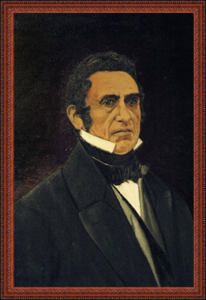 Charles Herman Ruggles, an Associate Judge of the Court of Appeals from the Hudson Valley, who had served prominently as a delegate at the State’s 1846 Constitutional Convention, chairing its Judiciary Committee, succeeds Greene Carrier Bronson as Chief Judge of the Court.
1851
Samuel A. Foot is Appointed to the Court of Appeals
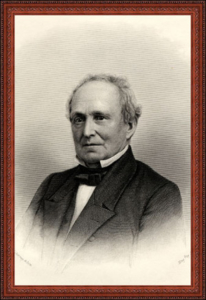 Governor Washington Hunt appoints Samuel A. Foot as an Associate Judge of the Court of Appeals.
1852
New York City Trial Court Grants Habeas Corpus for Eight Enslaved Women and Children Brought to the State
A New York City trial court grants a petition for a writ of habeas corpus brought on behalf of eight slaves seeking freedom while they were in transit through New York State with their owners. Popularly known as the Lemmon case, the trial court’s decision is later upheld by the Court of Appeals.[115]
[115] Lemmon v. The People, 20 NY 562 (1860).
1852
Alexander Smith Johnson is Elected to the Court of Appeals
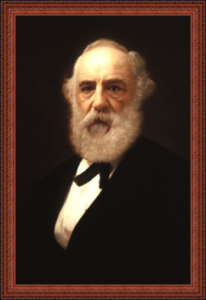 Alexander Smith Johnson, from Oneida County, takes office as an Associate Judge of the Court of Appeals. He will later become Chief Judge of the Court.
1853
Legislature Enacts New Statutes Relating to the Courts
By statute, the Legislature prohibits aldermen from sitting as part of a Court of Oyer and Terminer, or in Courts of General or Special Sessions of the Peace.[116] The Legislature further provides that Courts of Oyer and Terminer for New York City may be held by a Supreme Court Justice; and that Courts of General Sessions of the Peace for the City may be held by the Recorder or City Judge (and that when either of these Courts is presided over by a single judge, that judge may exercise all of the powers of the Court).
[116] L. 1853, c. 217.
1853
Hiram Denio is Appointed to the Court of Appeals
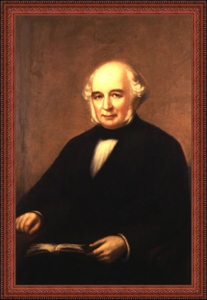 Governor Horatio Seymour appoints Hiram Denio, a former Oneida County District Attorney, Circuit Judge, clerk of State Supreme Court, and Supreme Court Reporter, from Oneida County, as an Associate Judge of the Court of Appeals.
1854
Addison Gardner Becomes Chief Judge
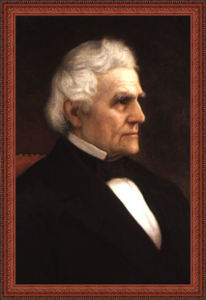 Addison Gardiner, an Associate Judge of the Court of Appeals from Monroe County and former Lieutenant Governor of the State, succeeds Charles Ruggles as Chief Judge of the Court of Appeals.
1856
Hiram Denio Becomes Chief Judge
Hiram Denio, an Associate Judge of the Court of Appeals succeeds Addison Gardiner as Chief Judge of the Court. He serves as Chief Judge for two years; and then serves again as Chief Judge from mid-1862 through the end of 1865.
Judge Denio enjoys two separate terms as Chief Judge (the only person in New York State history to do so) because of the then-prevailing rule that the Court’s Chief Judge should be the elected Judge having the shortest time to serve on the Court. When he first assumed office as Chief Judge, Judge Denio had only two years remaining in his term on the Court. Upon his re-election to the Court in 1857, he lost that distinction, but he will regain it some five years later when he again becomes the Judge of the Court having the shortest time left to serve.
1856
George Franklin Comstock is Elected to the Court of Appeals
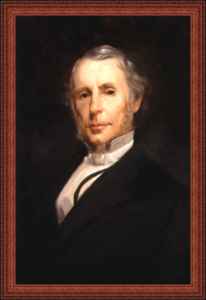 George Franklin Comstock, New York’s first official State Reporter, from Syracuse, is elected as an Associate Judge of the Court of Appeals.
1856
Samuel Lee Selden is Elected to the Court of Appeals
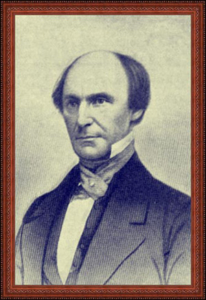 Samuel Lee Selden, a Supreme Court Justice from Rochester, is elected as an Associate Judge of the Court of Appeals.
1858
Alexander Smith Johnson Becomes Chief Judge
Alexander Smith Johnson, an Associate Judge of the Court of Appeals from Oneida County, and later New York City, succeeds Hiram Denio (then having served his first term as Chief Judge) as Chief Judge of the Court.
1858
Henry Ebenezer Davies is Elected to the Court of Appeals
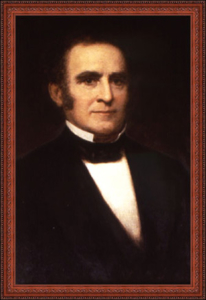 Henry Ebenezer Davies, a former Corporation Counsel for New York City and Supreme Court Justice from the City, is elected as an Associate Judge of the Court of Appeals.
1860
George Franklin Comstock Becomes Chief Judge
George Franklin Comstock, an Associate Judge of the Court of Appeals from Syracuse, succeeds Alexander Smith Johnson as Chief Judge of the Court.
Following the end of his service on the Court of Appeals, Judge Comstock will serve with distinction as a delegate at New York’s 1867 Constitutional Convention. At that Convention, and as a member of its Judiciary Committee, he will play a prominent role in the drafting of a new Judiciary Article, which will become the only component of the new Constitution proposed by the Convention to be adopted by the State’s voters. Among the most significant of the elements of the new Article will be its provision for fourteen-year terms of office for all Judges of the Court of Appeals, including the Chief Judge.
Judge Comstock later runs unsuccessfully for election to the office of Chief Judge.
1861
William Wright is Elected to the Court of Appeals
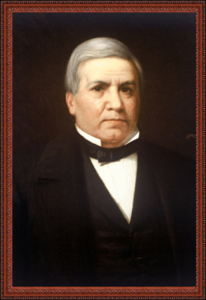 William B. Wright, a Supreme Court Justice from Monticello and later Kingston, and formerly an ex officio Judge of the Court of Appeals, is elected as an Associate Judge of the Court of Appeals.
1862
Samuel Lee Selden Becomes Chief Judge
Samuel Lee Selden, an Associate Judge of the Court of Appeals from Rochester, succeeds George Franklin Comstock as Chief Judge of the Court. He serves only briefly.
1862
Hiram Denio Starts a Second Term as Chief Judge
Hiram Denio succeeds Samuel Lee Selden as Chief Judge of the Court of Appeals, thereby beginning his second term in that capacity.
1862
Henry Rogers Selden is Appointed to the Court of Appeals
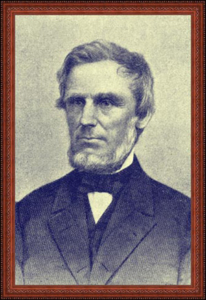 Governor Edwin Morgan appoints Henry Rogers Selden, a former Lieutenant Governor of New York from Rochester, as an Associate Judge of the Court of Appeals.
1863
Henry Rogers Selden is Elected to a Full Term
Henry Rogers Selden, an appointed Associate Judge of the Court of Appeals, is elected to a full term as an Associate Judge of the Court. He will serve only briefly, however, as he resigns early in 1865 on account of ill health.
1865
John Kilham Porter is Appointed to the Court of Appeals
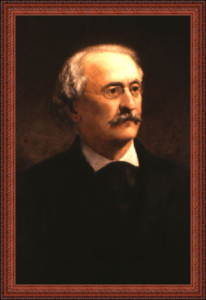 Governor Reuben E. Fenton appoints John Kilham Porter, a practicing lawyer from Albany, as an Associate Judge of the Court of Appeals. After leaving the Court in 1867, Porter will practice law in New York City and later serve as the first president of the New York State Bar Association.
1865
Voters Reject a Constitutional Amendment to Create a Commission of Appeals
The voters reject a constitutional amendment that would have created a five-member Commission of Appeals to assist the Court of Appeals in the disposition of its heavy caseload.
1865
Ward Hunt is Elected to the Court of Appeals
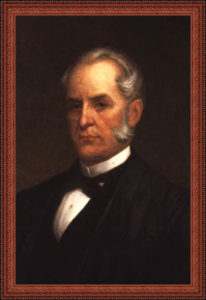 Ward Hunt, a former State legislator and Mayor of Utica, is elected as an Associate Judge of the Court of Appeals. Hunt will later (1868) serve as Chief Judge of the Court and then as an Associate Justice of the United States Supreme Court.
1866
Henry Ebenezer Davies Becomes Chief Judge
Henry Ebenezer Davies, an Associate Judge of the Court of Appeals, succeeds Hiram Denio as Chief Judge of the Court. Following his judicial service, Judge Davies will serve as Dean of the Law School of the City of New York (now the New York University School of Law).
1866
Voters Approve a Constitutional Convention
New York’s voters approve the holding of a State Constitutional Convention in 1867.
1867
Constitutional Convention Delegates Review Judiciary Reforms
A Constitutional Convention is held. At this Convention, particular attention is paid to reform of the Judiciary’s appellate operations, including both those of the Court of Appeals and of the General Terms. As to the former, there is great concern for the Court’s seeming inability to keep up with its workload; as to the latter, there is a belief that the large number of General Terms (i.e., one for each Judicial District) is producing unhelpful disharmony in the law across the State.[117]
The Convention drafts a new Constitution the provisions of which are ultimately submitted separately to the voters who reject all but the provision for a new Judiciary Article. That new Article is approved, albeit by the smallest of margins, to become effective in 1869.
The new Judiciary Article makes the following changes:
- Reform of the Court of Appeals. The Court of Appeals is restructured to consist of a Chief Judge and six Associate Judges, all elected by the voters of the State for terms of 14 years (this length is chosen because it represents the average length of judicial service in those jurisdictions in New York and across the country where judges serve during good behavior).[118] At the same time, all the Court’s incumbent Judges are constitutionally dismissed from office to be replaced by seven new Judges elected to 14-year terms at a special election held on May 17, 1870, which terms are scheduled to commence on the first Monday of July next thereafter (July 4, 1870). No provision is made for staggering the terms of the new Judges as had been the case in the 1846 Constitution. To ensure fairness in the selection of so many Judges at one time (i.e., to ensure some minority political representation), new Article VI provides that statewide voters, at the first election of the Court’s members, may only vote for the Chief Judge and up to four other members of the Court.[119]
The new Judiciary Article also includes provision for establishment of a Commission on Appeals, to function as a kind of second-tier Court of Appeals.[120] The Commission will be presided over by the four elected Judges of the Court of Appeals in service prior to the 1869 constitutional amendment plus a fifth commissioner to be selected by the Governor; and will hear all cases pending before the Court on January 1, 1869, except as otherwise directed by the Court. The primary object of this Commission, which is given three years in which to do its work, is to give the Court a fresh start, with a clean slate and no case backlog (the Court of Appeals in 1870 was heavily in arrears). A second objective is to retain a judicial function for the then-sitting Judges of the old Court of Appeals, who will otherwise lose their offices to make room for the Judges being elected to sit on the new Court.
Done away with is the practice of rotating Supreme Court Justices into service on the Court of Appeals. There had been broad objection to this practice, seeing in it a built-in source of institutional instability. To the same end of securing more continuity for the Court, the constitutional framers extend the terms of office for Court of Appeals Judges from eight to 14 years.[121]
Finally, the new Judiciary Article discontinues election of the Clerk of the Court of Appeals and provides that, henceforward, the position shall be filled by appointment by the Court. - Reform of the General Terms. The new Judiciary Article requires the Legislature, at its next session, to establish up to four General Terms of the Supreme Court. It also permits the Legislature to change the General Term structure in the future, but not more than once every five years.[122]
By statute, the Governor is empowered to select the Justices of each General Term from among the sitting Supreme Court Justices. Each General Term will consist of a Presiding Justice, who will serve for the balance of his term as a Supreme Court Justice, and up to three Associate Justices, who are to serve five-year terms.[123] The new Judiciary Article also reinstates a provision that had been included in the 1821 Constitution but then dropped out of the 1846 Constitution forbidding judges from reviewing on appeal cases over which they had presided below.[124]
The new Judiciary Article does not include any specific provision setting forth the jurisdiction of the General Terms. - Reform of the trial courts. The new Judiciary Article continues the Supreme Court;[125] gives constitutional recognition to superior courts in New York, Brooklyn, and Buffalo,[126] and Courts of Special Sessions for the trial of lesser criminal offenses;[127] continues County Judges as the Surrogates of their respective counties, while empowering the Legislature to establish a separate office of Surrogate in any county having a population greater than 40,000;[128] and, for the first time, formally authorizes the Legislature to provide for the assignment of Judges of the Superior Courts in New York City to Supreme Court, when necessary.[129]
The new Article also restores original civil jurisdiction to County Court (although capped at claims of $1,000).[130] Further, it authorizes County Judges to sit in County Court (or to preside at Courts of Sessions) in any county other than New York or Kings, upon request of the County Judge of such County.[131]
As did the Constitutions of 1822 and 1846, the new Judiciary Article continues Courts of Oyer and Terminer but without specific provision for their constitution or organization.[132] - Judicial Districts. The existing Judicial District structure is preserved, with provision for five Supreme Court Justices in the New York City Judicial District and four in each of the other Judicial Districts.[133]
- Judicial terms of office and mandatory retirement for judges. The new Judiciary Article provides 14-year terms of office for judges and justices of the major trial courts: Supreme Court, Superior Court of New York City, Court of Common Pleas for the City and County of New York, Superior Court of Buffalo, and City Court of Brooklyn.[134] This is a compromise that was reached at the Constitutional Convention, where some delegates had favored tenure in office during good behavior ending at age 70 while others had favored fixed terms, ranging from eight to 14 years, some accompanied by provision for non-eligibility for re-election. As was the case when the term of office was fixed for Judges of the Court of Appeals, a 14-year term was chosen because 14 years was understood to be the average term of judicial service in the courts of the State and of the United States where judicial tenure during good behavior prevails. Reelection to a subsequent term will be available (there had been some thought among the delegates that reelection ought not to be available but, ultimately, the Convention declined to take that path). Some advocated a rotation plan providing for a new judge to be elected every two years; and that a person filling a judicial vacancy would only serve out the unexpired term of his predecessor. Most of the delegates, however, believed this to be unnecessary, feeling that the ordinary vicissitudes of life were enough to assure sufficient change for the court.[135]
A six-year term of office is fixed for County Court Judges.[136]
The new Judiciary Article includes a provision requiring that a judicial vacancy on the Court of Appeals, the Supreme Court, and certain other courts be filled at the next general election occurring not less than three months after the happening of the vacancy. This is to give the people enough time to be informed of the vacancy. The constitutional text includes a clarifying provision that a person elected to fill a vacancy does so for a full term (both as to Supreme Court Justices and Judges of the Court of Appeals).[137]
As for judicial retirement, the new Judiciary Article also restores a mandatory retirement age for judges. Established at age 60 under the 1822 Constitution, it had been dropped by the 1846 Constitution. Now it is fixed at age 70 for all judges except for Justices of the Peace.[138] - Judicial compensation. The new Judiciary Article expressly provides that judicial compensation shall “be established by law, [and] not be diminished during [a judge’s] official [term]”, and drops the former ban on its increase by the Legislature.[139]
- Judicial selection. The new Judiciary Article provides for submission of two ballot propositions at the 1873 general election, inviting the people to determine whether Judges of the Court of Appeals and Supreme Court Justices, as well as County Judges and Judges of certain City Courts, respectively, should be appointed rather than elected to office.[140] The choice to put these questions to the voters reflects an important political compromise. The 1867 Convention was deeply divided on the issue of judicial selection and, were it not for this compromise, it might never have agreed to put the new Judiciary Article before the voters.
- Removal of judges from office. The new Judiciary Article also provides for removal of Judges of the Court of Appeals and Supreme Court Justices by concurrent resolution of both Houses of the Legislature (two-thirds of the members of each House voting therefor).[141] It also authorizes legislative removal of lower court judges — by the Senate alone, on recommendation of the Governor.[142]
- Judges not to hold other offices. The new Article bars Judges of the Court of Appeals and Supreme Court Justices from holding any other office or public trust.[143]
- Power to fix practice and procedure in the courts. The 1846 provision calling for code commissioners is omitted from the new Judiciary Article. In its place, a new provision is added conferring upon the Legislature the same power to alter and regulate procedure as it had theretofore exercised. This continues legislative control over practice and procedure in the courts.[144]
An effort in the 1867 Constitutional Convention to create a Court of Claims and eliminate the Legislature’s historic power to audit and allow private claims against the State fails. While the delegates do, in fact, agree upon creating a Court of Claims, the effort comes to naught because provision for that creation is not included in proposed new Article VI but, instead, in a proposed new Article V (relating to State officers), which is not approved by the electorate.[145]
[117] Lincoln, Charles Z., Constitutional History of New York, Vol. 2, p. 265.
[118] Judiciary Article (1869), §2; see Lincoln, Charles Z., Constitutional History of New York, Vol. 2, p. 252.
[119] Judiciary Article (1869), §2.
[120] Ibid., §4.
[121] See general discussion of proceedings during the 1869 Constitutional Convention in Lincoln, Charles Z., Constitutional History of New York, Vol. 2, pp 251-262.
[122] Judiciary Article (1869), §7.
[123] Ibid.
[124] Ibid., §8.
[125] Ibid., §6.
[126] Ibid., §12.
[127] Ibid., §26.
[128] Ibid., §15.
[129] Ibid., §12.
[130] Ibid., §15.
[131] Ibid.
[132] Ibid., §7.
[133] Ibid., §6.
[134] Ibid., §13.
[135] See general discussion of proceedings during the 1869 Constitutional Convention in Lincoln, Charles Z., Constitutional History of New York, Vol. 2, pp 251-262.
[136] Judiciary Article (1869), §15.
[137] Ibid., §§3 [Court of Appeals], 9 [Supreme Court], 12 [other courts].
[138] Ibid., §13.
[139] Ibid., §14.
[140] Ibid., §17.
[141] Ibid., §11.
[142] Ibid.
[143] Ibid., §10.
[144] Ibid., §8.
[145] Lincoln, Charles Z., Constitutional History of New York, Vol. 2, p. 326.
1867
Martin Grover is Elected to the Court of Appeals
 Martin Grover, a Supreme Court Justice from Allegany County and former ex officio Judge of the Court of Appeals, is elected as an Associate Judge of the Court of Appeals.
1868
William Wright Becomes Chief Judge
William B. Wright, an Associate Judge of the Court of Appeals succeeds Henry Ebenezer Davies as Chief Judge of the Court of Appeals. He serves only briefly.
1868
Ward Hunt Becomes Chief Judge
Ward Hunt, an Associate Judge of the Court of Appeals succeeds William B. Wright as Chief Judge of the Court of Appeals. He serves only briefly in that office — losing his seat by operation of the new 1869 Judiciary Article, which dismisses all the incumbent Judges of the Court of Appeals effective in 1870. He then becomes a Commissioner on the Commission on Appeals for the Court of Appeals as established by operation of the new constitutional Judiciary Article.
Thereafter, in 1872, President Ulysses S. Grant appoints Hunt as an Associate Justice of the United States Supreme Court.
1868
Lewis B. Woodruff is Appointed to the Court of Appeals
 Governor Reuben Fenton appoints Lewis B. Woodruff, a former Justice of the Superior Court of New York City and a former ex officio Judge of the Court of Appeals from New York City, as an Associate Judge of the Court of Appeals. He only serves briefly, leaving the Court to become a Judge of the Court of Appeals for the Second Circuit.
1868
Charles Mason is Appointed to the Court of Appeals
 Governor Reuben Fenton appoints Charles Mason, a former Madison County District Attorney and Supreme Court Justice from Madison County, as an Associate Judge of the Court of Appeals. Prior to this appointment, Mason had run unsuccessfully for that office.
1869
New Judiciary Article Takes Effect
The new constitutional Judiciary Article takes effect.
1869
Robert Earl is Elected to the Court of Appeals
 Robert Earl, a former Herkimer County Judge and Surrogate from Herkimer County, is elected as an Associate Judge of the Court of Appeals.
1869
John A. Lott is Elected to the Court of Appeals
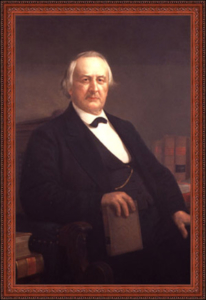 John A. Lott, a former State legislator and Supreme Court Justice from Kings County, is elected as an Associate Judge of the Court of Appeals.
1870
Legislature Establishes Four Judicial Departments
The Legislature establishes four Judicial Departments for the State, each with a General Term of Supreme Court consisting of a Presiding Justice and two Associate Justices.[146]
The four Judicial Departments, with their component Judicial Districts, are as follows: First Department (First District); Second Department (Second District); Third Department (Third, Fourth, and Sixth Districts); and Fourth Department (Fifth, Seventh, and Eighth Districts). The Legislature further requires that, in keeping with the constitutional mandate that General Terms be held in each Judicial District, the First Department be held in New York City; the Second Department be held in Brooklyn (not yet part of New York City) and Poughkeepsie; the Third Department be held in Albany, Binghamton, Elmira, Plattsburgh, and Ogdensburg; and the Fourth Department be held in Syracuse, Oswego, Rochester, and Buffalo.
[146] L. 1870, c. 408.
1870
Robert Earl Becomes Chief Judge
Robert Earl, an Associate Judge of the Court of Appeals, succeeds Ward Hunt as Chief Judge of the Court. Earl serves as Chief Judge for only six months — until July 1870, when he is displaced by operation of the 1869 constitutional amendment restructuring the Court of Appeals. He then is transferred to serve as a Commissioner on the newly-created Commission of Appeals.
1870
Sanford Church Becomes First Elected Chief Judge
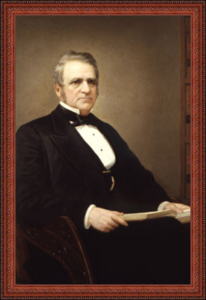 Democrat Sanford Church, a former Lieutenant Governor of the State from western New York, is the first elected Chief Judge of the Court of Appeals under the new constitutional formulation. He succeeds Robert Earl. The remaining six elected Judges of the Court divide evenly between Democrats and Republicans (they include Democrats Rufus W. Peckham (Albany County), William F. Allen (Oswego County), and Charles A. Rapallo (New York); and Republicans Charles Andrews (Onondaga County), Charles Folger (Ontario County), and Martin Grover (Allegany County)).
1870
Commission on Appeals Begins Its Work
The Commission on Appeals begins its work. Its members include outgoing Court of Appeals Judges John A. Lott (Chief Commissioner), Robert Earl, and Ward Hunt; a Supreme Court Justice assigned to the Court of Appeals, Hiram Gray; and a gubernatorial designee, William H. Leonard. Its workload consists of about 800 cases that had been brought in the old Court of Appeals before 1870 and that remain pending.
There is much potential for conflict between the Court of Appeals and the Commission on Appeals although the latter appears determined to defer to the former. This is a source of continuing concern to the Bar at the time. This potential for conflict is clearly manifest in a comparison of two cases decided at about the same time: the Court’s decision in Thurber v. Blanck (50 NY 80) and the Commission’s decision in Mechanics & Traders Bank v. Dakin (51 NY 519). Although the two cases consider the same issue, their holdings are very different.
1870
William Fitch Allen is Elected to the Court of Appeals
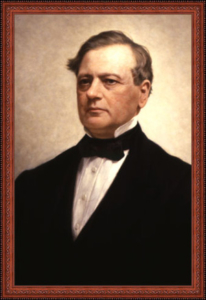 William Fitch Allen, a former State legislator, Supreme Court Justice, and State Comptroller from Oswego, is elected as an Associate Judge of the Court of Appeals.
1870
Charles A. Rapallo is Elected to the Court of Appeals
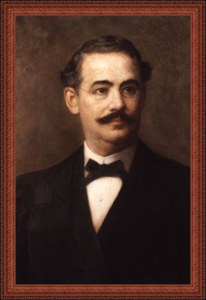 Charles A. Rapallo, a practicing lawyer from New York City, is elected as an Associate Judge of the Court of Appeals.
1870
Rufus Wheeler Peckham, Sr., is Elected to the Court of Appeals
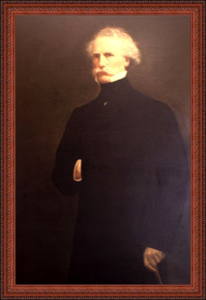 Rufus Wheeler Peckham, Sr., a former member of Congress and Supreme Court Justice from Albany, is elected as an Associate Judge of the Court of Appeals. Three years after assuming office, Peckham is lost at sea in the north Atlantic.
1870
Charles J. Folger is Elected to the Court of Appeals
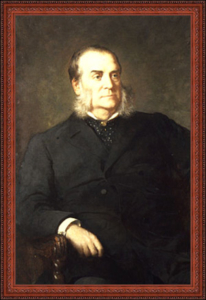 Charles J. Folger, a former Ontario County Judge, State legislator, and constitutional convention delegate from Geneva, is elected as an Associate Judge of the Court of Appeals.
1870
Charles Andrews is Elected to the Court of Appeals
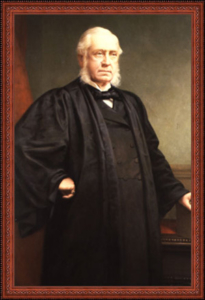 Charles Andrews, a former Onondaga County District Attorney, Mayor of Syracuse, and constitutional convention delegate from Onondaga County, is elected as an Associate Judge of the Court of Appeals.
1870
Code Commission is Created
A Code Commission is created. It produces a Code of Civil Procedure.
1871
Legislature Gives First Passage to Constitutional Amendment in Effort to Clear Court of Appeals’ Backlog
In a further effort to clean up the Court of Appeals’ case backlog, the Legislature gives first passage to a constitutional amendment providing for the transfer of up to 500 then-pending cases from the Court to the Commission on Appeals.
It is hard to understand why the framers of this amendment might have believed that it would have provided much help for the Court. First, under the new Judiciary Article, the Court of Appeals has only seven judges instead of the eight enjoyed by its predecessor. Second, the new Article makes no provision for change in the Court’s jurisdiction. While there is hope that a more stable Court, produced by eliminating the staggered terms and the continuing rotation in of half the Court from among the senior Supreme Court Justices could be a more efficient body and better able to cope with the caseload, such does not turn out to be the case. At best, an amendment permitting transfer of the Court’s excess caseload at one point in time could only be expected to provide momentary, limited relief for the Court.
1872
Legislature and Voters Approve Amendment to Transfer Court of Appeals Cases to the Commission on Appeals
1872
Governor Hoffman Calls for Legislative Establishment of a Constitutional Commission
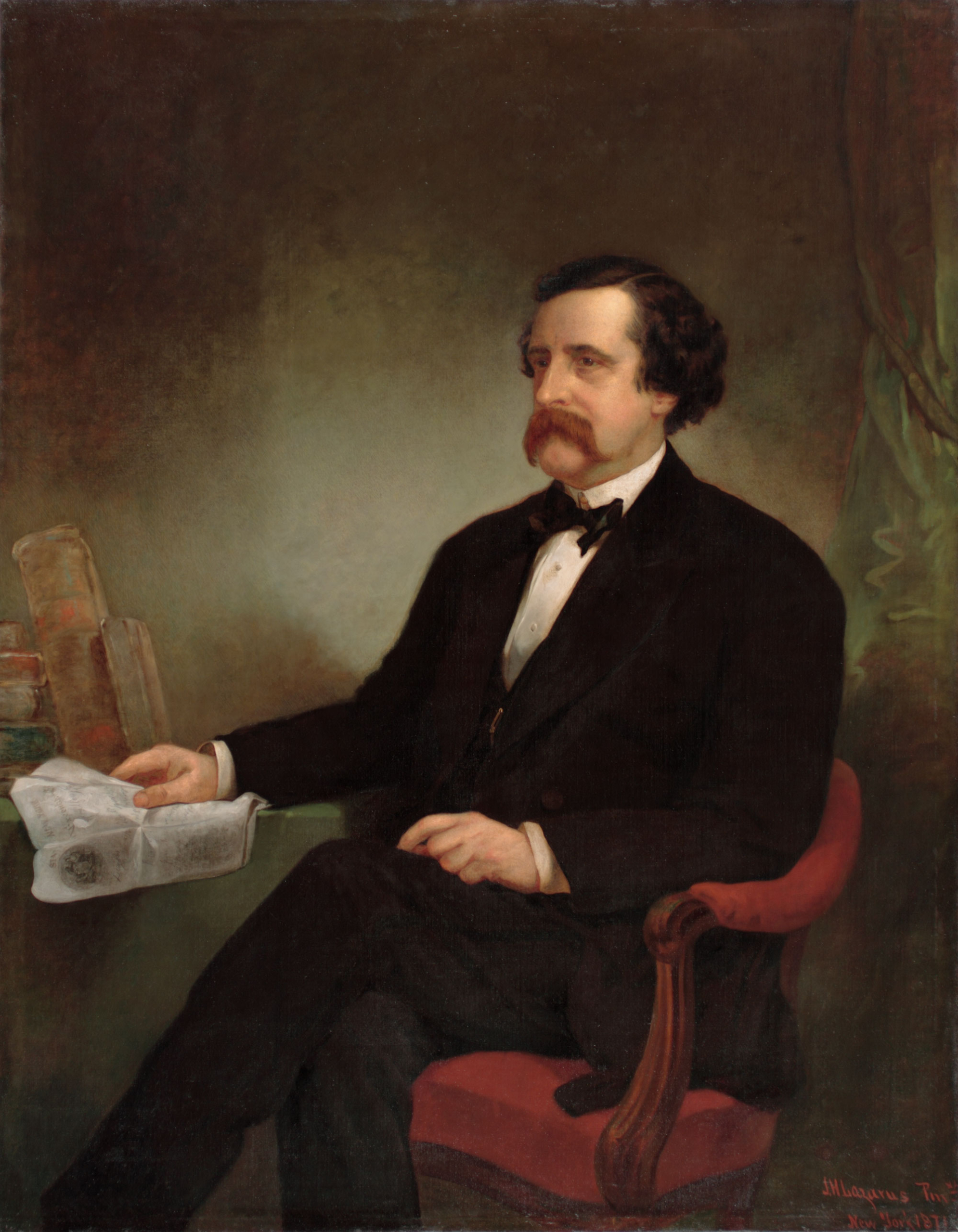 In the wake of the defeat of the constitutional amendments proposed by the 1867 Constitutional Convention (all except the one proposing a new Judiciary Article were rejected by the voters), Governor Hoffman calls for legislative establishment of a constitutional commission. In its original form, the resulting legislation bars the Constitutional Commission from considering amendments to the Constitution’s Judiciary Article, presumably because it had only recently been adopted. While this prohibition is later removed, the Commission ends up proposing only one change bearing upon the courts: i.e., enabling gubernatorial appointment of judges of courts of record in large cities. This proposal does not achieve the requisite two legislative approvals, however, and so it never reaches the voters.
1872
Court of Appeals Decides Smith v. People
The Court of Appeals decides Smith v. People (47 NY 330), holding that organization of Courts of Oyer and Terminer is within the Legislature’s control with the exception that a Supreme Court Justice must be a member of the Court and must preside.
1872
State Supreme Court Justice George Barnard is Impeached and Removed from Office
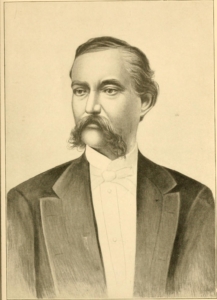 State Supreme Court Justice George Barnard is impeached and removed from office following conviction. Barnard is a product of Tammany Hall and is best remembered as a key figure in the rise and fall of the Tweed Ring. He is impeached on corruption charges along with several other Tammany judges, including Benjamin Cardozo’s father, Supreme Court Justice Albert Cardozo. Cardozo resigns from office before standing trial. Barnard stands trial and is removed from office following conviction, making him the first public officer in New York State history to be impeached and convicted. Also, to this day, he remains the only New York State Supreme Court Justice to have been removed from office following impeachment.
In the same year, the Governor delivers to the Senate charges of official misconduct against a series of county and city-level judges. Some are later removed from office, while some are exonerated.
1873
Voters Reject Reject Propositions for Appointment of Judges
The voters overwhelmingly (three to one against) reject ballot propositions mandated by the 1869 amendments to the Constitution’s Judiciary Article calling for appointment of Judges.[148]
Since those amendments were only narrowly adopted (by fewer than 7,000 votes statewide), the fact that a proposal to make the Court of Appeals an appointive bench was so resoundingly defeated in 1873 appears to justify the decision of the 1869 framers to bifurcate the issues (a new Judiciary Article and elimination of the franchise for selection of Court of Appeals’ Judges, respectively) for voter consideration.
[148] Ibid., §17.
1873
Alexander Johnson is Appointed to the Court of Appeals on an Interim Basis
Court of Appeals Judge Rufus Peckham dies at sea. Governor John Dix appoints Alexander Johnson, a former Chief Judge of the Court and current member of the Commission on Appeals from Oneida County, to fill his seat on an interim basis. Thereafter, Johnson is defeated by Theodore Miller at the November 1874 general election in his bid to attain a full term on the Court.
1873
Legislature Passes Statutes for Court of Appeals’ Jurisdiction
By statute, the Legislature provides that the Court of Appeals “shall have general jurisdiction to review on appeal every actual determination made at a General Term of the Supreme Court” and the General Terms of certain other courts.
1874
Minimum Established for Money Judgments Appealable to the Court of Appeals
A $500 minimum is imposed on any money judgment appealable to the Court of Appeals.
1874
Alexander Smith Johnson is Appointed to the Court of Appeals
After briefly serving as a Commissioner of Appeals, Alexander Smith Johnson is appointed by Governor John Dix as an Associate Judge of the Court of Appeals. This is Judge Johnson’s second tour of duty on the Court, having earlier served as an Associate Judge (1852-1857) and as Chief Judge (1858-1859).
1874
Theodore Miller is Elected to the Court of Appeals
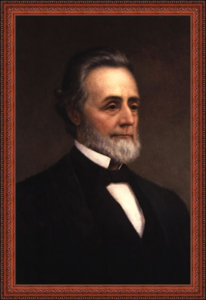 Theodore Miller of Columbia County is elected to a seat as an Associate Judge of the Court of Appeals, succeeding Alexander Johnson. Miller formerly had served as Columbia County District Attorney, Supreme Court Justice in the Third Judicial District, and Presiding Justice of the General Term in the Third Judicial Department.
1875
Commission on Appeals Ends
In July, the Commission on Appeals goes out of existence.
1875
Robert Earl is Appointed to the Court of Appeals
Governor Samuel J. Tilden appoints Robert Earl, a former Associate Judge of the Court of Appeals and Commissioner on the Commission on Appeals, once again to serve as an Associate Judge of the Court.
1875
Legislature Establishes Statutes for Faith-Based Placements for Children
By statute, the Legislature provides that, where a child between 3 and 16 is placed in an institution, it becomes the duty of the placement authorities to place him or her, as far as may be practicable, in an institution governed or controlled by an officer or person of the same religious faith as the child’s parents.
1875
Constitution Amended to Bar Certain Legislative Action
The Constitution is amended to add what is now section 19 of Article III. This provision bars the Legislature from auditing or allowing any private claim or account against the State.
1876
Constitutional Amendment Proposed to Add Additional Justices to the Second Judicial District
A constitutional amendment is proposed (and given first legislative passage) providing for two additional Supreme Court Justices in the Second Judicial District.
1876
State Board of Audit Created
A State Board of Audit is created by the Legislature to hear private claims against the State not heard by the Canal Appraisers.[150] Sovereign immunity is waived in contract actions but not tort actions.
[150] L. 1876, c. 444. The State Board consisted of the State Comptroller, Secretary of State, and State Treasurer.
1876
Robert Earl is Elected to the Court of Appeals
Following his appointment in 1875 to fill a vacancy in the office of Associate Judge of the Court of Appeals, Judge Robert Earl is elected to a full term in that office.
1877
Two Constitutional Amendments Proposed
Two constitutional amendments are proposed. First, the 1876 constitutional amendment proposing the addition of new Supreme Court Justices is modified to call for the addition of only one new Justice in the Second Judicial District. As thus modified, it secures first passage. Second, an amendment is proposed to permit courts to be held by persons other than justices thereof when the public exigency requires.
1878
Constitutional Amendment for Increasing Supreme Court Justices Given Second Passage
The constitutional amendment given first passage by the Legislature in 1877 increasing the number of Supreme Court Justices in the Second Judicial District is given second passage.
1878
Samuel Hand is Appointed to the Court of Appeals
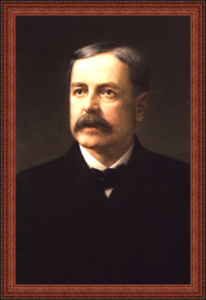 Governor Lucius Robinson appoints Samuel Hand, a practicing lawyer from Albany, as an Associate Judge of the Court of Appeals. Hand serves less than one year on the Court.
1878
George Franklin Danforth is Elected to the Court of Appeals
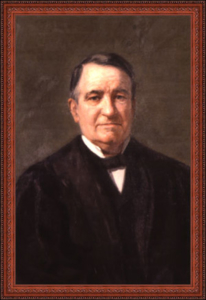 George Franklin Danforth, a practicing lawyer from Rochester, is elected as an Associate Judge of the Court of Appeals.
1880
Election for a New Chief Judge Occurs
The first Chief Judge elected to the revamped 1870 Court of Appeals, Sanford Church, dies. A Democrat, he is replaced by the Governor’s interim appointment of Charles Folger, a sitting Associate Judge of the Court who is a Republican from Ontario County. Judge Folger is then opposed in the 1880 election for a full term by yet another sitting Associate Judge of the Court, Charles Rapallo, a Democrat. In a presidential election year in which James Garfield, the Republican, defeats Winfield Scott Hancock, the Republican, Folger, prevails.
The contest between Folger and Rapallo exposes a critical problem with an elective Court of Appeals bench, i.e., what happens when two sitting judges on the Court vie for the Chief Judge’s seat. To what extent would their contest and their implicit ambitions ripen into a distraction for the Court in the conduct of its business? Not much, fortunately, at least for a while. Over much of the next century, while the office of Judge of the Court of Appeals remains an elective one, the political parties generally agree to endorse the sitting senior Associate Judge, regardless of political affiliation, to fill a vacancy in the office of Chief Judge (likewise, Governors consistently choose the senior Associate Judge to fill interim vacancies in the office of Chief Judge). The effect of this approach is to eliminate unseemly electoral contests between sitting judges or between sitting judges and lawyers outside the Court. As will later be seen, however, this is to change dramatically in the early 1970s.
1880
Francis Miles Finch is Appointed to the Court of Appeals
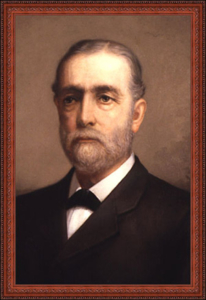 Governor Alonzo Cornell appoints Francis Miles Finch, a former Cornell Law School Dean from Ithaca, to fill a vacancy in the office of Associate Judge of the Court of Appeals. Finch is again appointed to the Court the following year, after which, in 1881, he is elected to a full term as an Associate Judge of the Court. Following his service on the Court of Appeals, Finch becomes President of the New York State Bar Association.
1880
Constitution Amended for Long-Serving Judges who have Reached Constitutional Age Limit
The Constitution is amended to provide that when the term of any Court of Appeals Judge or Supreme Court Justice is cut short by application of the constitutional age limit, and the Judge or Justice had served ten years in the office, compensation shall be continued to the end of the term for which the Judge or Justice was elected.[152]
[152] Judiciary Article (1869), §13 [amended, 1880].
1880
Constitutional Amendment Proposed to Increase Supreme Court Justices in All Districts
A constitutional amendment is proposed to add two additional Supreme Court Justices in each Judicial District.
1881
Additional Constitutional Amendments Proposed
A constitutional amendment is proposed to provide for a fifth General Term of Supreme Court and to add additional Supreme Court Justices in many Judicial Districts.
1881
Legislature Enacts First Comprehensive Code of Criminal Procedure
The Legislature enacts New York’s first comprehensive code of criminal procedure.[153] This new code is based largely on the work of the Field Commission (the Commission on Practice and Pleadings) of the 1840s. That Commission had proposed a criminal procedure code in 1849 and a penal law in 1864. This 1881 enactment is substantially like these earlier efforts.
[153] L. 1881, c. 442.
1881
Charles Andrews is Appointed Chief Judge
Charles Andrews, an Associate Judge of the Court of Appeals, is appointed by Governor Alonzo B. Cornell to succeed Charles Folger as Chief Judge of the Court of Appeals. Folger had resigned to become President Chester A. Arthur’s Secretary of the Treasury.
Judge Andrews serves only as interim Chief Judge upon this appointment, leaving the office in 1883 when he is defeated for election to a full term by William Crawford Ruger. He runs again for Chief Judge in 1892, however, and wins — and then continues to serve as Chief Judge until he reaches the mandatory retirement age in 1897.
1881
Benjamin Franklin Tracy is Appointed to the Court of Appeals
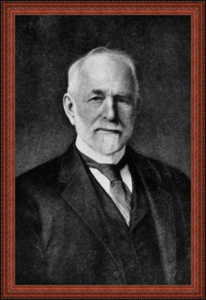 Governor Alonzo Cornell appoints Benjamin Franklin Tracy, a former United States Attorney for the Eastern District of New York from Tioga County and later New York City, as an Associate Judge of the Court of Appeals. Tracy serves only briefly on the Court.
1881
Provision Made for Appeals to the General Term
Provision is made for appeals to the General Term of Supreme Court.
1882
William Crawford Ruger Becomes Chief Judge
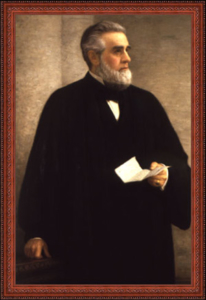 William Crawford Ruger, from Syracuse, is elected to succeed Charles Andrews as Chief Judge of the Court of Appeals.
1883
Legislature Establishes Board of Claims for Non-Tort Cases Against the State
The Legislature establishes a Board of Claims, consisting of three Commissioners, and empowers it to hear non-tort claims against the State.[155] This Board replaces the Board of Canal Appraisers and Board of Claims. At the same time, a constitutional amendment is proposed to require that all claims against the State be adjudicated by either Supreme Court or the Court of Appeals. This amendment fails to pass.
[155] L. 1883, c. 205.
1883
Rufus W. Peckham, Jr., is Elected to the Court of Appeals
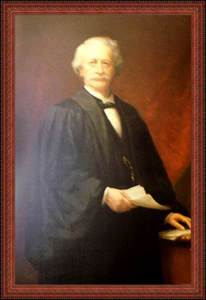 Rufus W. Peckham, Jr., a former Albany County District Attorney and Supreme Court Justice, from Albany is elected as an Associate Judge of the Court of Appeals. He later leaves the Court, in 1895, when President Grover Cleveland appoints him as an Associate Justice of the United States Supreme Court.
1885
Court of Appeals Decides People ex rel Lawrence v. Mann
In People ex rel Lawrence v. Mann (97 NY 530), the Court of Appeals holds that Justices of the Peace do not come within the provisions of the 1869 constitutional Judiciary Article and, therefore, that they are not subject to the Constitution’s mandatory retirement age for judges.
1886
Voters Call for Constitutional Convention
State voters overwhelmingly (by a twenty-to-one margin) call for the holding of a Constitutional Convention. Political infighting between then-Governor David Hill, a Democrat, and the Republican Legislature prevents the Convention from meeting for the next eight years, however.
1886
Legislature Eliminates Legal Obstacles for Women to Practice Law
The Legislature eliminates all legal obstacles to the practice of law by women in the New York State courts.
1886
Kate Stoneman Becomes First Woman Admitted to Practice
 Kate Stoneman, from Chautauqua County, becomes the first woman admitted to the practice of law in New York.[156] Even though she already had passed the Bar Exam and could practice law in New York, Stoneman will later enter Albany Law School, in 1895, at age 54. She graduates (the first woman to do so) in 1898.
[156] Http://katestonemanproject.org/katestonemen.shtml (last visited May 29, 2025).
1887
Legislature Gives First Passage to Creation of a Second Division of the Court of Appeals
To help the Court of Appeals, manage its rapidly growing caseload, the Legislature gives first passage to a constitutional amendment permitting the Governor, in his discretion, to temporarily designate seven Justices of the Supreme Court to act as Associate Judges of the Court of Appeals and to form a second division of that Court. Provision also is made for a second Chief Judge.
This measure acquires particular public urgency because it had grown apparent that the Constitutional Convention approved by the voters in 1886 would not be sitting any time soon. For this reason, the Legislature determines that the Court of Appeals’ caseload issues are such that they must be addressed now, outside the framework of a Convention.
1888
Voters Approve Creation of a Second Division of the Court of Appeals
The constitutional amendment authorizing a second division of the Court of Appeals, first approved the preceding year, is given second passage by the Legislature and is then overwhelmingly approved by the voters (498,114 for and 55,822 against) at the polls. It becomes effective January 1, 1889.[157] This second division of the Court will function until October 1892.
Even with adoption of this constitutional amendment, there remains disagreement as to the most effective means by which to address growth in the Court of Appeals’ caseload. Other proposals being touted at the time include limiting the number of cases that can be taken to the Court annually to 500 and increasing the number of Judges of the Court.
All of this plays out against a background of great dissatisfaction in the Bar and among the public with the functioning of the judicial system generally.
[157] Judiciary Article (1869), §6 [amended 1888].
1888
John Clinton Gray is Appointed to the Court of Appeals
 Governor David Hill appoints John Clinton Gray, a practicing lawyer from New York City, as an Associate Judge of the Court of Appeals. In November, Gray is elected to a full term on the Court.
1889
Legislature Gives First Passage to Addition of New Supreme Court Justices
The Legislature gives first passage to a constitutional amendment to authorize the addition of two new Supreme Court Justices in each of the First and Second Judicial Districts, and one new Justice in each of the other Judicial Districts.
1889
Denis O’Brien is Elected to the Court of Appeals
 Denis O’Brien, a former State Attorney General from Watertown, is elected as an Associate Judge of the Court of Appeals.
1890
Legislature Authorizes Creation of Judiciary Commission
The Legislature authorizes creation of a Judiciary commission.[158] Historians suggest that it does so at this time because it believes need for reform of the judicial system is of such importance that the State cannot wait for the holding of a Constitutional Convention (a Convention that the voters have already approved but that is being held up by a political dispute between the Republican Legislature and Democratic Governor) at which such need might be addressed.[159]
This Judiciary commission proceeds to develop many proposals for change in the Judiciary article of the Constitution, including the following:
- A change in the number of Supreme Court Justices, specifying different numbers for the eight extant Judicial Districts.
- Authorization for the Legislature to alter the Judicial District structure once every ten years.
- Authorization for Supreme Court Justices elected in one Judicial District to serve in another Judicial District.
[158] L. 1890, c. 189.
[159] See general discussion of the Judiciary Commission of 1890, Lincoln, Charles Z., Constitutional History of New York, Vol. 2, pp 682 et seq.
1890
Legislature Gives Second Passage to Expanding the Number of Supreme Court Justices
The Legislature gives second passage to the constitutional amendment proposed in 1889 regarding the number of Supreme Court Justices. This amendment does not go to the voters until 1892, when it is defeated at the polls.
1891
Legislature Gives First Passage to Increase Court of Appeals
A proposal is once again introduced in the Legislature to increase the size of the Court of Appeals to fifteen judges. It attains first passage.
1891
Governor and Legislature Agree to Constitutional Convention
The election of 1891 puts Democrats in control of both the Legislature and the executive branch, thereby paving the way for an agreement as to the timing of a Constitutional Convention.
1892
Robert Earl Becomes Chief Judge
Governor Roswell Flower appoints Robert Earl, an Associate Judge of the Court of Appeals, who had already briefly served as Chief Judge of the Court (in 1870), to fill a vacancy in the office of Chief Judge occasioned by the death of William Ruger.
1892
Isaac Horton Maynard is Appointed to the Court of Appeals
 In January, Governor Flower appoints Isaac Horton Maynard, a former State legislator and Delaware County Surrogate from Delaware County, to fill a vacancy as an Associate Judge of the Court of Appeals. In December, Governor Flower again appoints Maynard to fill a vacancy on the Court. Maynard is later defeated when running for election to a full term on the Court.
1893
Charles Andrews Becomes Chief Judge
Charles Andrews, an Associate Judge of the Court of Appeals who had briefly served as Chief Judge of the Court (in 1881-82), succeeds Robert Earl as Chief Judge. Earl had been filling a vacancy in the position.
1893
Edward Theodore Bartlett is Elected to the Court of Appeals
 Edward Theodore Bartlett, a lawyer from New York City, is elected as an Associate Judge of the Court of Appeals.
1894
New York’s Fourth Constitution is Adopted
New York’s fourth Constitution is adopted following a Constitutional Convention, with all provisions to take effect on January 1, 1895. It includes a new Judiciary Article, providing for:
- Appellate reform. At the outset of the Constitutional Convention, its President, Joseph H. Choate, had declared that “relief of the Court of Appeals” was “a most important subject for [the Convention] to consider.” Nonetheless, the Convention proceeded to devote as much attention to manifold problems with operation of the General Terms as it did to those of the Court of Appeals.
Accordingly, the Convention proposed elimination of the General Terms and establishment of the Appellate Divisions we have today.[160] In doing this, the Convention was simultaneously addressing calendar problems in the Court of Appeals. This was done by constituting the new Appellate Division as the court of final review on all appeals of the facts from a trial court (leaving the Court of Appeals without jurisdiction of such appeals) and limiting appeals to the Court of Appeals on questions of law to those situations where the Appellate Division reversed the lower court or, if it affirmed, it did so by a divided court.[161]
In following this approach, the 1894 Convention rejected the many solutions to the Court of Appeals’ calendar problems that had been promoted over the preceding years, including proposals that there be multiple panels of the Court of Appeals, or that the Court should be expanded in size. Also rejected was an effort to permit the Legislature to enlarge the jurisdiction of the Court of Appeals, as well as to constrict it.
In promoting establishment of the Appellate Division, some at the Constitutional Convention sought to make it a court separate from the Supreme Court and to elect its justices separately in the Judicial Departments (as opposed to having them designated by the Governor from among the corps of Supreme Court Justices). This argument was rejected, however, as was another argument that not just Supreme Court Justices but also Judges of other trial courts should be eligible for designation to the Appellate Division. Accordingly, the Appellate Division became the “Appellate Division of the Supreme Court.” - Retirement age of judges. While the Constitutional Convention saw some effort made to increase the mandatory judicial retirement age from 70 to 75, in the end it was left at age 70. Likewise, although the Convention gave some consideration to shortening the 14-year terms of Supreme Court Justices, ultimately, no change was made.
- Judicial Salaries. The 1846 Constitution had prohibited the diminution or increase of judicial salaries during a judge’s term of office.[162] Thereafter, the 1867-68 Constitutional Convention eliminated the prohibition on increase in salaries in the new Judiciary Article later approved by the voters. While the 1894 Constitutional Convention originally sought to preserve this elimination, it ultimately determined to restore the 1847 prohibition on increase.[163]
- Court Administration. The new Appellate Division was given the administrative power to fix the times and places for the holding of trial and appellate terms, and to assign justices thereto.[164] Prior to this time, the Supreme Court Justices themselves had set such times and places but, in the Constitutional Convention, it was argued that a change was in order (1) to keep Supreme Court from having absolute power over these matters relative to themselves, and (2) to keep Judges of the Superior Court and Judges of the Court of Common Pleas, whose numbers surpassed those of Supreme Court Justices in the First Judicial Department, from enjoying power to dictate assignments of Supreme Court Justices there.
Aside from the changes already noted, the new Judiciary Article ushers in some further court reforms. These include:
- Restructuring of the trial courts. Certain lower courts (the Superior Court of New York City, the Court of Common Pleas for the City and County of New York, the City Court of Brooklyn, and the Superior Court of Buffalo) are abolished and their cases and judges are transferred to the Supreme Court.[165] Likewise, the Circuit Courts and Courts of Oyer and Terminer are abolished.[166]
The abolition of these courts eliminates those courts that formerly were the appellate tribunals for inferior and local courts in New York, Brooklyn, and Buffalo. To replace these appellate tribunals, the new Judiciary Article provides that appeals from such inferior and local courts should be heard in Supreme Court as the Appellate Divisions should direct unless otherwise provided by the Legislature.[167] This is a forerunner to today’s Appellate Term. - Appellate Divisions. The State is divided into four Judicial Departments each to be served by the newly established Appellate Division. The First Department is to be New York County. The composition of the remaining Judicial Departments is to be fixed by the Legislature subject to the direction that each Department be bounded by county lines and be as compact and equal in population as can be. The Governor is empowered to designate the Justices of the Appellate Divisions from among the corps of Supreme Court Justices for five-year terms subject to the requirement that a majority of the Justices in each Department must be residents of that Department. There are to be seven Justices in the First Department and five in each of the others. Justices of the Appellate Division are to be relieved of trial and motion duties, although they are permitted to perform the duties of a Justice out of court.[168]
- Lower courts. The Legislature is authorized to establish inferior courts of civil and criminal jurisdiction provided that such courts are not to be courts of record. The method of selection of the judges of these courts is left to the Legislature.[169]
Along with elimination of the Courts of Oyez and Terminer, authority for County Courts to use side Justices of the Peace in criminal cases is eliminated, leaving the criminal jurisdiction of these Courts to be vested in their County Judges sitting alone. Also, for the first time, there is authority for two County Judges in Kings County.[170] Finally, the civil jurisdictional cap in County Court is raised to $2,000;[171] and County Judges are made full-time in larger counties (i.e., having 120,000 or more population) and in those counties as provided by the Legislature. - Impeachment. While there is a minor change in the Constitution’s impeachment provision, there is no substantive change in the process.[172]
[160] Const. (1894), Art. VI, §2.
[161] Ibid., Art. VI, §§2, 9.
[162] Const. (1846), §7.
[163] Const. (1894), Art. VI, §12.
[164] Ibid., Art. VI, §2.
[165] Ibid., Art. VI, §5.
[166] Ibid., Art. VI, §6.
[167] Ibid., Art. VI, §5.
[168] Ibid., Art. VI, §2.
[169] Ibid., Art. VI, §18.
[170] Ibid., Art. VI, §14.
[171] Ibid.
[172] Ibid., Art. VI, 13.
1894
Albert Haight is Elected to the Court of Appeals
 Albert Haight, a former Erie County Judge and Supreme Court Justice from Buffalo, is elected as an Associate Judge of the Court of Appeals.
1895
1894 Constitution Takes Effect
The new Judiciary Article, together with the rest of the 1894 Constitution, takes effect on January 1st.
1895
Celora Eaton Martin is Elected to the Court of Appeals
 Celora Eaton Martin, a former Supreme Court Justice from Binghamton, is elected as an Associate Judge of the Court of Appeals.
1895
Irving Goodwin Vann is Appointed to the Court of Appeals
 Governor Levi Morton appoints Irving Goodwin Vann, a former Mayor of Syracuse and Supreme Court Justice from Onondaga County, to fill a vacancy as an Associate Judge of the Court of Appeals. The next year, Vann is elected to a full term of office on the Court.
1897
Legislature Establishes the Court of Claims
The Legislature establishes a Court of Claims to replace the Board of Claims.[174] As later determined by the Court of Appeals in People ex rel. Swift v. Luce (204 NY 478 (1912)), this Court is a statutory body notwithstanding the name.
From 1777 to 1897, New York State did not permit litigants to bring claims for damages against itself in any court. The only recourse for injured parties had been to seek redress directly in the Legislature.
[174] L. 1897, c. 36.
1897
Alton Brooks Parker Becomes Chief Judge
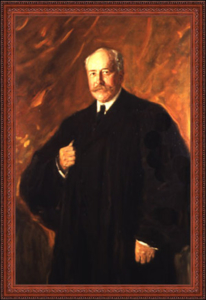 Alton Brooks Parker, a former Supreme Court Justice and Judge of the second division of the Court of Appeals from Kingston, is elected as Chief Judge of the Court of Appeals. Six years later, Parker resigns from the Court to run for the Presidency of the United States. He is soundly defeated by Theodore Roosevelt.
1898
Legislature Gives First Passage to Constitutional Amendment Regarding the Court of Appeals
The Legislature gives first passage to a constitutional amendment permitting the Governor, at the request of a majority of the Judges of the Court of Appeals, to designate up to four Justices of the Supreme Court to serve as Associate Judges of the Court until the Court’s calendar is reduced below 200 cases.
1898
Ellen Yates Miller Becomes the First Woman Elected County Clerk
 Ellen Yates Miller, of Chautauqua County, becomes the first woman to be elected as a County Clerk in New York.
1899
Voters Approve Constitutional Amendment Regarding the Court of Appeals
1899
Voters Approve Constitutional Amendment Regarding the Appellate Divisions
The voters also approve a constitutional amendment permitting the Governor to make temporary designations of Supreme Court Justices to an Appellate Division where the Presiding Justice of that Appellate Division certifies that more Justices are needed for the speedy disposition of court business.[176]
[176] Ibid., Art. VI, §2 [amended, 1899].
1900s
1900
The Appellate Division, First Department Moves into a New Courthouse
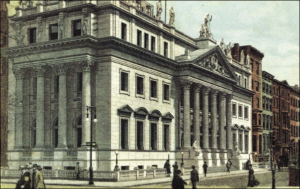 The Appellate Division, First Judicial Department, moves from rented headquarters on 5th Avenue and 19th Street in New York City into a new courthouse designed by James Brown Lord on the northeast corner of Madison Avenue and 25th Street, opposite Madison Square.
1900
Edgar Montgomery Cullen is Appointed to the Court of Appeals
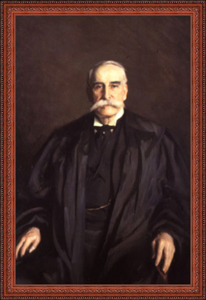 Governor Theodore Roosevelt appoints Edgar Montgomery Cullen, a Justice of the Appellate Division, Second Judicial Department, from Brooklyn, as an Associate Judge of the Court of Appeals. This appointment is made pursuant to the recently adopted constitutional provision permitting the Governor to name additional Court of Appeals Judges to help meet caseload demands.
1902
Legislature Enacts Laws Relating to the Appellate Terms
The Legislature enacts chapter 515 of the Laws of 1902, relating to the Appellate Terms.
1904
Edgar Montgomery Cullen Becomes Chief Judge
Governor Benjamin Barker Odell appoints Edgar Montgomery Cullen, an Associate Judge of the Court of Appeals, to succeed Alton Brooks Parker as Chief Judge of the Court. Parker had resigned to run for President of the United States.
Cullen subsequently wins election to a full term as Chief Judge. While Chief Judge, he will preside over the 1913 impeachment trial of Governor William Sulzer. Although Sulzer is convicted at that trial and removed from office, Cullen votes against conviction.
1904
State Supreme Court Justice D. Cady Herrick is Defeated in Run for Governor
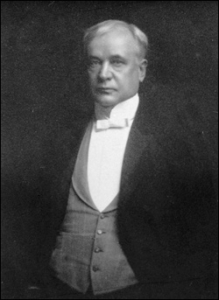 State Supreme Court Justice D. Cady Herrick, a Democrat, runs for Governor and is defeated by Republican Frank W. Higgins in a relatively close contest (813,264 votes for Higgins; 732,704 for Herrick).
1904
William Edward Werner is Elected to the Court of Appeals
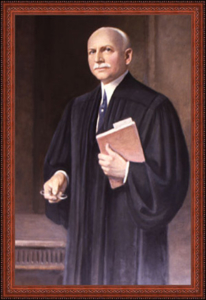 William Edward Werner, a former Monroe County Judge and Supreme Court Justice from Rochester, is elected as an Associate Judge of the Court of Appeals.
1905
Constitution’s Judiciary Article Amended
The Constitution’s Judiciary Article is amended twice. First, to authorize the Legislature to increase the number of Supreme Court Justices in a Judicial District not to exceed a certain proportion of the local population (one justice per 80,000 in the First and Second Judicial Districts [New York City]; one justice per 60,000 in other Districts).[178] Second, to permit Justices of the Appellate Division, when not engaged in the performance of their appellate duties, to hold terms of Supreme Court outside the Judicial Department to which they have been designated.[179]
The first of these amendments gives the Legislature a power not theretofore possessed (the Constitution of 1846 had authorized the Legislature to increase the number of Supreme Court Justices in the Judicial District containing New York City, but not in any other District;[180] this authority was discontinued, however, under the new Judiciary Article adopted in 1869).
This first amendment also amends the Judiciary Article to authorize the Legislature to carve off a new Judicial District out of a portion of the existing Second Judicial District.[181]
[178] Const. (1894), Art. VI, §1 [amended, 1905].
[179] Ibid., Art. VI, §2 [amended, 1905].
[180] Const. (1846), Art. VI, §4.
[181] Const. (1894), Art. VI, §1 [amended, 1905].
1906
Dean Roscoe Pound Calls for Restructuring State Judiciaries
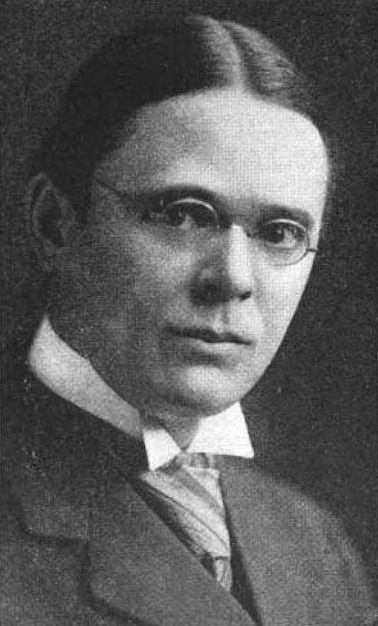 At the 1906 annual meeting of the American Bar Association in St. Paul, Minnesota, Dean Roscoe Pound delivers a memorable speech in which he bemoans the archaic nature of court systems nationwide and stresses the need for restructuring state judiciaries to eliminate their multiplicity of courts. Entitled “The Causes of Popular Dissatisfaction with the Administration of Justice”, this speech concludes that, as the twentieth century begins, American judicial systems have become “archaic” in three ways:
- In their multiplicity of courts,
- In their preservation of concurrent jurisdiction in their many courts, and
- In their waste of judicial power.
1906
New York City Magistrate Charles S. Whitman Works to Break Up Corrupt Policing System
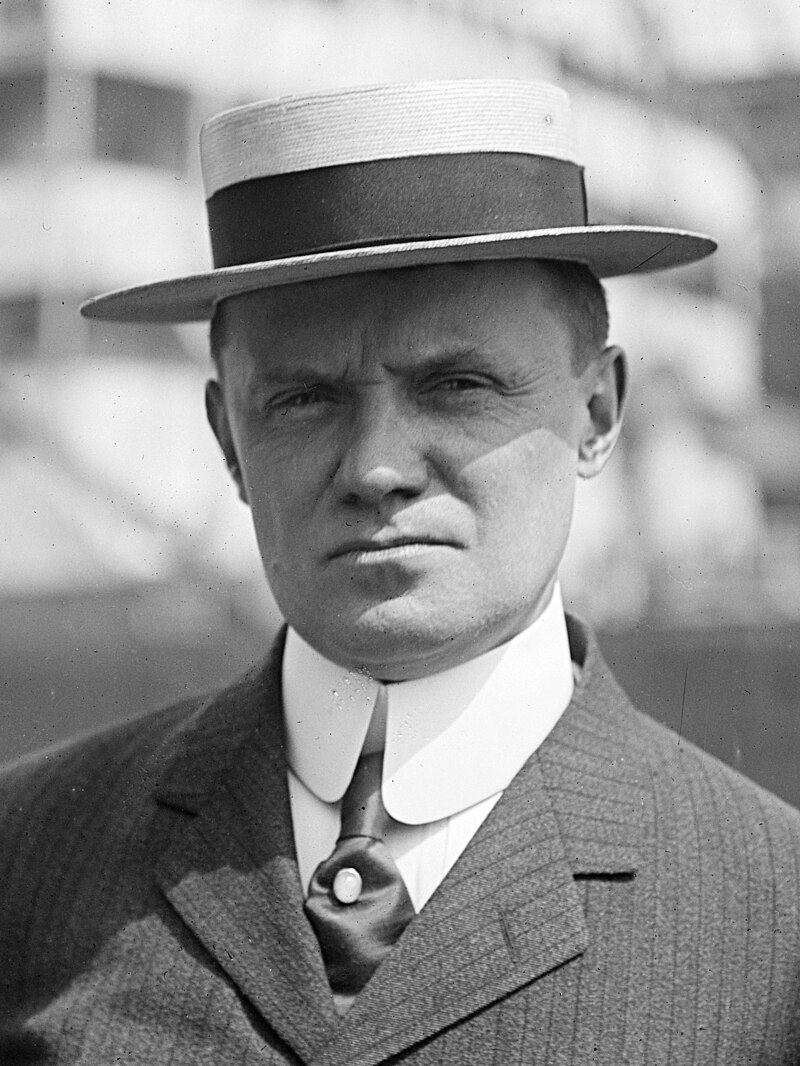 New York City Magistrate Charles S. Whitman dismisses charges against a minor offender and works to break up the corrupt system that allows arresting police officers to split fees with bail bondsmen.
1906
Frank Harris Hiscock is Appointed to the Court of Appeals
 Governor Frank Higgins appoints Frank Harris Hiscock, a former Supreme Court Justice and Justice of the Appellate Division, Fourth Judicial Department, from Syracuse, as a temporary Associate Judge of the Court of Appeals. Higgins subsequently is elected, in 1913, to a full term on the Court. In 1916 he is elected Chief Judge of the Court.
1907
Willard Bartlett is Elected to the Court of Appeals
 Willard Bartlett, a Justice of the Appellate Division, Second Judicial Department, from New York City, is elected as an Associate Judge of the Court of Appeals.
1909
Electorate Votes on Judicial Salary Issues
The State’s voters approve a constitutional amendment eliminating the Legislature’s control over judicial salaries by fixing the salary of a Supreme Court Justice in the State Constitution.[183] At the same time, the voters reject a second constitutional amendment that would have fixed the salary of a Court of Appeals Judge in the Constitution.
[183] Const. (1894), Art. VI, §12 [amended, 1909].
1909
State Supreme Court Justice William Jay Gaynor is Elected New York City Mayor
 Supported by Tammany Hall boss, Charles F. Murphy, State Supreme Court Justice William Jay Gaynor wins the New York City mayoralty election as a Democrat, defeating Fusion Party candidate Otto T. Bannard and Independent Party candidate William Randolph Hearst. Almost immediately, Mayor-elect Gaynor rails against a Court of Appeals’ decision that an 1899 law banning nightwork for women is unconstitutional because it deprives women of the liberty to work in factories.
1910
Frederick Collin is Appointed to the Court of Appeals
 In October, Governor Charles Evans Hughes appoints Frederick Collin, a former Mayor of Elmira from Chemung County, to fill a vacancy as an Associate Judge of the Court of Appeals. A month later Collins wins election to a full term on the Court.
1911
Voters Reject Constitutional Amendments Regarding the Judiciary
The voters reject two constitutional amendments that would have affected the Judiciary. The first would have added Judges to the Kings County Court. The second would have modified the powers of Justices of the Appellate Divisions.
1911
Construction of New York City’s Hall of Records Completed
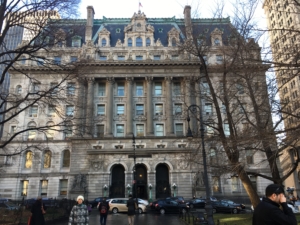
The Hall of Records in New York City (later the site of Surrogate’s Court) is completed at 31 Chambers Street. It is designed by Architect John R. Thomas.
1912
Court of Appeals Decides People ex rel. Swift v. Luce
The Court of Appeals decides People ex rel. Swift v. Luce (204 NY 478). This case sets forth the legal basis upon which private claims against the State may be brought.
1912
Legislature Approves Statute to Create Bronx County
The Legislature approves a statute that, subject to voter approval at a referendum, separates the Bronx from New York County and establishes it as the State’s 62nd county.[186] This legislation adds the Bronx to the First Judicial District and, by so doing, includes it within the First Judicial Department.
[186] L. 1912, c. 548.
1912
Legislature Directs the Board of Statutory Consolidation to Prepare a Plan for Civil Practice in the Courts
Inspired by growing concern that the State’s number of civil practice statutes had proliferated and grown inordinately complex, the Legislature directs the Board of Statutory Consolidation to prepare and report a plan for the classification, consolidation, and simplification of civil practice in the courts.[187] The Board proceeds to recommend that the Legislature adopt a short practice act, and that the most important matters of practice and procedure be regulated by rules of civil practice to be drawn up and adopted by a convention of Appellate Division justices; that details of practice and procedure be left to court discretion; and that the Judiciary be officially charged with the supervision of procedure and with the responsibility for suggesting improvements to the Legislature when legislative action is necessary.
[187] L. 1912, c. 393.
1912
William Herman Cuddeback is Elected to the Court of Appeals
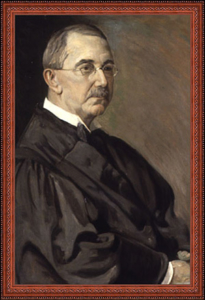 William Herman Cuddeback, a practicing lawyer from Buffalo, is elected as an Associate Judge of the Court of Appeals.
1912
John W. Hogan is Elected to the Court of Appeals
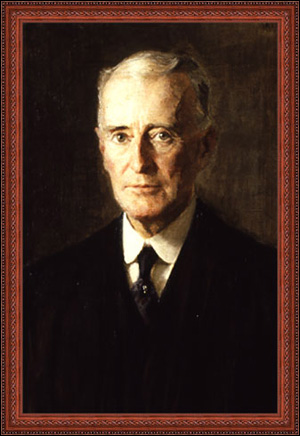 John W. Hogan, a practicing lawyer from Syracuse, is elected as an Associate Judge of the Court of Appeals.
1913
Voters Approve Constitutional Amendments Regarding the Judiciary
1913
Nathan L. Miller is Appointed to the Court of Appeals
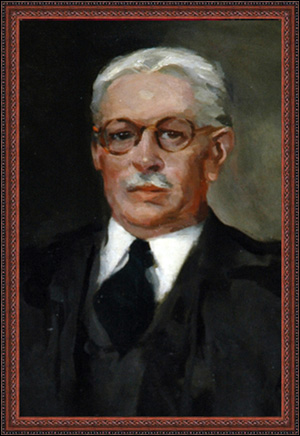 Governor William Sulzer appoints Nathan L. Miller, a former State Comptroller, Supreme Court Justice, and Justice of the Appellate Division, Second Judicial Department, from Cortland County as an ex officio Associate Judge of the Court of Appeals. Miller serves only briefly on the Court. He is later President of the New York State Bar Association and, between 1921 and 1922, Governor of the State.
1913
Governor Sulzer is Impeached
 Governor Sulzer is impeached nine months after assuming office and, following a four-week trial before an impeachment court made up of the State Senate and the Judges of the Court of Appeals, he is removed from office for having “willfully, knowingly and corruptly” falsified records of campaign contributions and expenditures the previous year.
1913
Legislature Establishes Commission to Draft New Civil Practice Act
The Legislature establishes a commission to draft a new civil practice act.
1913
Willard Bartlett Becomes Chief Judge
 Willard Bartlett, an Associate Judge of the Court of Appeals, is elected to succeed Edgar Montgomery Cullen as Chief Judge of the Court of Appeals. Judge Cullen had reached the mandatory retirement age.
1914
The Bronx Becomes a County
The Bronx officially becomes New York’s 62nd county.
1914
Civil Practice Commission Files Its Report
The civil practice commission established the previous legislative session files its report and recommendations.
1914
Benjamin N. Cardozo is Appointed to the Court of Appeals on Temporary Basis
 Governor Martin Glynn appoints Benjamin N. Cardozo, a Supreme Court Justice from New York City, to a temporary seat as an Associate Judge of the Court of Appeals.
1914
William Butler Hornblower is Appointed to the Court of Appeals
 Governor Glynn appoints William Butler Hornblower, a former President of the New York State Bar Association from New York City, as an Associate Judge of the Court of Appeals. He serves for only five months, dying in June 1914. Hornblower had previously been nominated by President Grover Cleveland to a seat as an Associate Justice of the United States Supreme Court, but his nomination was rejected by the Senate.
1914
Samuel Seabury is Appointed to the Court of Appeals
 Governor Glynn appoints Samuel Seabury, a Supreme Court Justice from New York City, as an Associate Judge of the Court of Appeals. Seabury had already won election to a full term on the Court at the 1914 General Election.
1915
Cuthbert Pound is Appointed to the Court of Appeals
 Governor Charles Whitman appoints Cuthbert Pound, a Supreme Court Justice from Ithaca, as a temporary Associate Judge of the Court of Appeals. In 1916, Pound will win election to a full term on the Court. He will subsequently (in 1932) become Chief Judge of the Court.
1915
Constitutional Convention Held
A Constitutional Convention is held. Its principal recommendations for the Judiciary, which, along with the rest of the Convention’s proposed new Constitution, later fail to secure the voters’ approval, include:
- Establishment of the Court of Claims and the Appellate Terms as permanent constitutional courts.
- A mandate for legislative enactment of a simplified civil practice code and periodic reexamination of that code by a specially selected State commission; a ban on legislative revision of the civil practice laws except upon recommendation of such a commission; and authority for the courts to alter civil practice rules.
The 1915 Constitutional Convention largely concentrates on issues of home rule, woman’s suffrage, and reorganization of the Judicial and Executive Branches. It proposes 33 changes in the State Constitution, with the aim of updating the document to create a modern, efficient State government. The delegates package all 33 changes into five separate proposals. As noted, these five proposals all go down to defeat. Some suggest that the voters objected not so much to the substance of the proposals as to the way they were packaged. Indeed, many of the Convention proposals, although rejected by the voters in 1915, are adopted in succeeding years.
1916
Court of Appeals Judge Samuel Seabury is Defeated in Run for Governor
Court of Appeals Judge Samuel Seabury is soundly defeated by incumbent Governor Charles Whitman in the race for Governor.
1917
Frank Harris Hiscock Becomes Chief Judge
 Frank Harris Hiscock, an Associate Judge of the Court of Appeals, succeeds Willard Bartlett as Chief Judge of the Court of Appeals. Bartlett had reached the mandatory retirement age.
1917
Benjamin N. Cardozo is Appointed to the Court of Appeals
Governor Charles Whitman appoints Benjamin N. Cardozo, a temporary Associate Judge of the Court of Appeals, to a seat on the Court vacated by the resignation of Judge Samuel Seabury. Later in the year, Cardozo is elected to a full term on the Court as an Associate Judge. Subsequently (in 1926), he will be elected as Chief Judge of the Court. In 1932, Cardozo will be appointed to be a Justice of the United States Supreme Court by President Herbert Hoover.
1917
Chester Bentine McLaughlin is Appointed to the Court of Appeals
 Governor Whitman appoints Chester Bentine McLaughlin, a former Essex County Surrogate, Supreme Court Justice, and Justice of the Appellate Division, First Judicial Department, from Essex County, as an Associate Judge of the Court of Appeals. Later in the year, McLaughlin is elected to a full term on the Court.
1917
Frederick Evan Crane is Appointed to the Court of Appeals on a Temporary Basis
 Governor Whitman appoints Frederick Evan Crane, a former Kings County Judge and Supreme Court Justice from New York City, as a temporary Associate Judge of the Court of Appeals. Crane is subsequently (in 1920) elected to a full term on the Court. In 1934, he will be elected Chief Judge of the Court, and, in 1938, he will serve as President of the New York State Constitutional Convention held in that year.
1919
Voters Reject a Constitutional Amendment Regarding Judicial Salary
The voters reject an amendment to the Constitution that would have permitted the Legislature to fix the compensation of Court of Appeals Judges.
1919
Abram Elkus is Appointed to the Court of Appeals
 Governor Alfred E. Smith appoints Abram Elkus, a former United States Ambassador to the Ottoman Empire from New York City, as an Associate Judge of the Court of Appeals.
1920
Legislature Enacts Civil Practice Act
The Legislature also enacts a Civil Practice Act along with Rules of Civil Procedure adopted by a statutorily established convention representing Bench and Bar.[194] Control over the rules is given to Appellate Division Justices, a majority of whom, by joint order of the four Presiding Justices, may adopt, amend, or rescind any rule not inconsistent with any statute. These rules supersede previous general rules of practice.
[194] L. 1920, c. 925.
1920
Emory Albert Chase is Elected to the Court of Appeals
 Emory Albert Chase, a former Supreme Court Justice and Justice of the Appellate Division, Third Judicial Department, from Greene County, is elected as an Associate Judge of the Court of Appeals.
1921
Legislature Establishes a Special Convention to Evaluate Amendments to the Judiciary Article
The Legislature establishes a special convention devoted to evaluation of amendments to the Judiciary Article of the Constitution.[195] The delegates to this convention consist of 14 judges, nine practicing lawyers, six members of the Legislature (three from the Senate and three from the Assembly), and the State Attorney General. Court of Appeals Associate Judge Cuthbert Pound is elected by the delegates to serve as chair of the convention.
[195] L. 1921, c. 348.
1921
William Shankland Andrews is Appointed to the Court of Appeals
 Governor Charles Whitman appoints William Shankland Andrews, a Supreme Court Justice from Syracuse, as an Associate Judge of the Court of Appeals. Later in the year, Andrews is elected to full term on the Court.
1921
Voters Approve Constitutional Amendment to Create Children’s Courts and Domestic Relations Courts
State voters approve an amendment to the Constitution establishing Children’s Courts and Domestic Relations Courts.[196] This amendment incorporates, in constitutional text, pre-existing statutory authority providing that, whenever a child is committed to an institution or placed in a person’s custody, it shall be done, whenever practicable, so that the institution or person is of the same religious persuasion as the child.
[196] Const. (1894), Art. VI, §18 [amended, 1921].
1922
Judiciary Convention Makes Its Report and Recommendations
In January, the Judiciary convention established in 1921 makes its report and recommendations, which include:
- Addition of a constitutional provision vesting the judicial power of the State in the courts. Although the State Constitution had long expressly vested the State’s legislative and executive powers in the Legislature and the Governor, respectively, there was no comparable provision affecting the Judiciary. Likely this was because, when the State’s early Constitutions were drafted, there was no Court of Appeals (the Senate then serving as the State’s court of last resort). It was not until 1846 that the Constitution was amended to establish the Court of Appeals, and no effort was made at the time to fill the gap regarding vesting the State’s judicial power in the courts. An effort is made in 1922 because of prevailing concerns that bureaucratic governmental growth and, with it, a proliferation of agencies within the executive branch performing what historically have been regarded as judicial functions, are a threat to the separation of powers.
- A grant of authority to the Appellate Divisions to fix the times and places for holding terms of Supreme Court.
- Provision of clear constitutional authority for establishment of the Appellate Terms.
- A grant of authority to the Court of Appeals to designate a Supreme Court Justice to serve on the Court during the temporary absence or inability of one of its Judges to act.
- 14-year terms of office for New York City Surrogates.
- Abolition of the County Courts in Kings, Bronx, Queens, and Richmond Counties; and extension of the jurisdiction of the Court of General Sessions for the City and County of New York, and that of the New York City Court, citywide.
- Provision that, in order for the Legislature to approve revisions of the State’s civil practice rules, a majority of the Judges of the Court of Appeals and a majority of the Justices of the Appellate Divisions must first certify to their necessity, or, without such certification, that any proposed revision to the rules of civil procedure must be published and then passed by the Legislature at its succeeding session.
1922
Voters Reject Constitutional Amendment Regarding the Court of Appeals
The voters again reject an amendment to section seven of Article VI of the Constitution that would have fixed the salary of a Court of Appeals Judge at $17,500 per year.
1922
Irving Lehman is Elected to the Court of Appeals
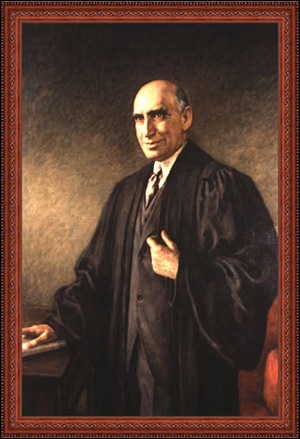 Irving Lehman, a Supreme Court Justice from New York City, is elected as an Associate Judge of the Court of Appeals. Subsequently (1939), Lehman will be elected Chief Judge of the Court.
1925
Voters Approve New Judiciary Article
State voters approve a new Judiciary Article for the Constitution (along with a revised Article five of the Constitution, incorporating many of the proposals offered by the 1915 Constitutional Convention for government reorganization). The provisions of this new Judiciary Article are drawn largely from the recommendations of the Judiciary convention of 1921. They include:
- Removal of constitutionally fixed judicial pay levels combined with provision for judicial pay to be set by the Legislature.[200]
- Establishment of the Appellate Term as a permanent constitutional court.[201]
- Change in the limitation on the number of Supreme Court Justices that may be established by the Legislature in a Judicial District.[202]
- Increase in the number of permanent Justices of the Appellate Division, Second Department, to seven.[203]
- Authority for the Court of Appeals to designate a Supreme Court Justice to serve on the Court during the temporary absence or inability of one of its Judges to act.[204]
- Modification of the Court of Appeals’ jurisdiction.[205]
- Increase in the civil jurisdictional cap for County Court to $3,000. Further, the Governor is authorized to transfer a County Judge between counties to act in cases of death, disability, or other absence of a local County Judge where there is no Special County Judge.[206]
- Expansion of the City Court of New York, originally established to sit only in New York and Bronx Counties, to sit in all counties in the City.[207] Judges of the Court are required to reside in the county where they are elected to serve.
[200] Const. (1925), Art. VI, §19.
[201] Ibid., Art. VI, §3.
[202] Ibid., Art. VI, §1.
<[203] Ibid., Art. VI, §2.
[204] Ibid., Art. VI, §5.
[205] Ibid., Art. VI, §7.
[206] Ibid., Art. VI, §11.
[207] Ibid., Art. VI, §15.
1925
Benjamin N. Cardozo Becomes Chief Judge
Benjamin Nathan Cardozo, an Associate Judge of the Court of Appeals, is elected to succeed Frank Harris Hiscock as Chief Judge. Hiscock had reached the mandatory retirement age.
1926
Henry Theodore Kellogg is Elected to the Court of Appeals
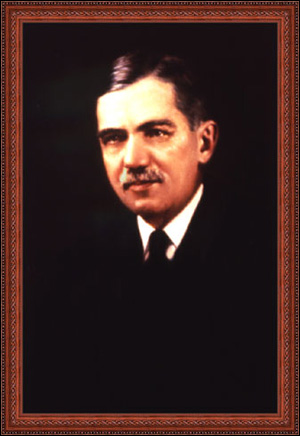 Henry Theodore Kellogg, a Justice of the Appellate Division, Third Judicial Department, from Plattsburgh, is elected as an Associate Judge of the Court of Appeals.
1927
New York County Courthouse Construction Completed
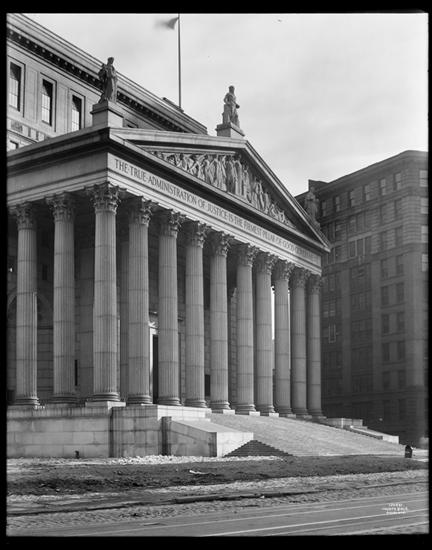
The New York County Courthouse at 60 Centre Street is completed.
1927
John Francis O’Brien is Appointed to the Court of Appeals
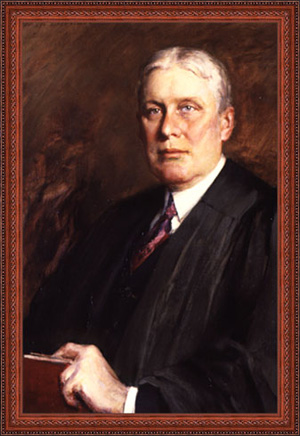 Governor Alfred E. Smith appoints John Francis O’Brien, a lawyer from New York City, as an Associate Judge of the Court of Appeals. Later in the year, O’Brien is elected to a full term on the Court.
1928
Irving Hubbs is Elected to the Court of Appeals
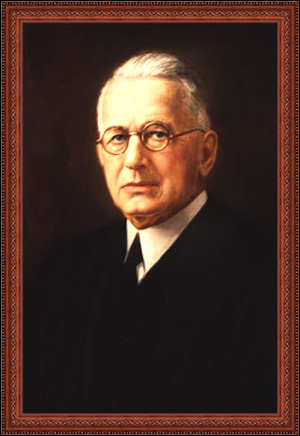 Irving Hubbs, the Presiding Justice of the Appellate Division, Fourth Judicial Department, from Pulaski, is elected as an Associate Judge of the Court of Appeals.
1929
Voters Approve Constitutional Amendment to Transfer Criminal Jurisdiction
1930
Legislature Establishes Commission on the Administration of Justice
The Legislature establishes the Commission on the Administration of Justice.[210] In a series of reports over the next eight years, the Commission recommends more centralized control of the courts and creation of a statewide Judicial Council to collect information and make recommendations.
[210] L. 1930, c. 727.
1930
Supreme Court Justice Joseph Force Crater Disappers
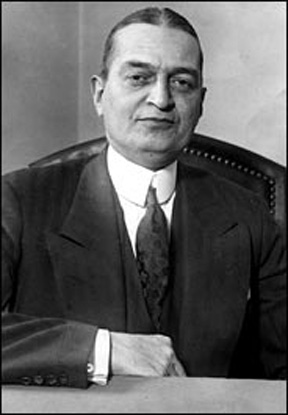 Supreme Court Justice Joseph Force Crater disappears. Crater, a product of Tammany Hall, had been appointed to fill a vacancy on the Supreme Court by then-Governor Franklin Roosevelt the previous April. Prior to his appointment, Crater had been appointed to administer the affairs of a bankrupt hotel on the lower east side of New York City that had been appraised at $1.2 million. In that role, he arranges for its sale for $75,000 to the American Bond and Mortgage Company, whose officers then sell it to New York City for almost a million dollars — to be used as the site for a planned housing project. In the wake of his disappearance, all manner of sordid facts about his finances and private life emerges, assuring his celebrity ever after.
1930
Samuel Seabury Leads Investigation of Magistrate Courts
Hon. Edward R. Finch, Acting Presiding Justice of the Appellate Division, First Department, orders an investigation of New York’s Magistrates’ Courts. Retired Court of Appeals Judge Samuel Seabury is appointed to lead the investigation.
This is one of three investigations that Judge Seabury is asked to lead. Governor Franklin D. Roosevelt also names him to head up an investigation of Manhattan DA Thomas Crain’s office and the Legislature calls upon him to lead a general investigation of New York City government.
In the wake of this last investigation, New York City Mayor Jimmy Walker is forced to resign.
1931
Voters Reject Constitutional Amendment Reorganizing Judicial Districts
The voters reject a proposed constitutional amendment that would have authorized the Legislature to subdivide the existing Second Judicial District into two Judicial Districts.
1932
Cuthbert Pound Becomes Chief Judge
Governor Roosevelt appoints Cuthbert Pound, an Associate Judge of the Court of Appeals, to succeed Benjamin Cardozo as Chief Judge of the Court of Appeals. President Herbert Hoover had named Cardozo to a seat on the United States Supreme Court. Later in the year, Pound wins election to a term as Chief Judge.
1932
Leonard Crouch is Appointed to the Court of Appeals
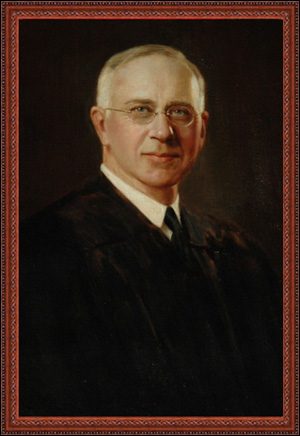 Governor Roosevelt appoints Leonard Crouch, a Justice of the Appellate Division, Fourth Judicial Department, from Syracuse, as an Associate Judge of the Court of Appeals. Crouch subsequently (in 1933) is elected to a full term on the Court.
1932
Democrats Nominate Surrogate John P. O’Brien in a Mayoral Special Election
Democrats nominate Surrogate John P. “Boo Boo” O’Brien to run in a special election to fill the unexpired term of former Mayor Walker. He wins easily.
1933
New York City Domestic Relations Court Established
The New York City Domestic Relations Court is established.[211] This Court is created through legislative exercise of a power granted under the Constitution’s new Judiciary Article as approved in 1925. That Article expressly authorizes the Legislature to establish Children’s Courts and Domestic Relations Courts as separate parts of existing courts or as entirely new courts, and to confer on these bodies equity and such other jurisdiction “as may be necessary for the correction, protection, guardianship and disposition of delinquent, neglected or dependent minors, and for the punishment and correction of adults responsible for contributing to such delinquency, neglect or dependency, and of all persons legally chargeable with the support of a wife or children who abandon or neglect to support either.”
[211] L. 1933, c. 482.
1933
New York City Bar Association’s Committee on Court Rules Issues Report
A Committee on Court Rules of the Association of the Bar of the City of New York issues a special report on the extension of the courts’ rule-making power. This report calls for a recasting of many Civil Practice Act sections as Rules of Practice — thus affording the Judiciary greater opportunity to control procedure.
1934
Frederick Evan Crane Becomes Chief Judge
Frederick Evan Crane, an Associate Judge of the Court of Appeals, is elected to succeed Cuthbert Winfred Pound as Chief Judge of the Court of Appeals. Pound had reached the mandatory retirement age.
1934
John Loughran is Appointed to the Court of Appeals
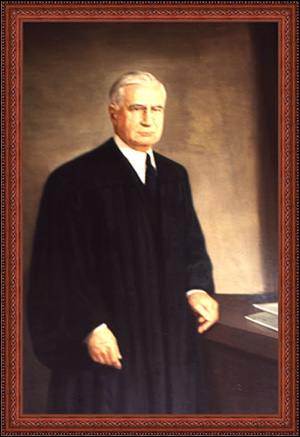 Governor Herbert Lehman appoints John Loughran, a Supreme Court Justice from Kingston, as an Associate Judge of the Court of Appeals. Later in the year, Loughran is elected to a full term on the Court. Subsequently (in 1945), Loughran will become Chief Judge of the Court.
1934
Edward Ridley Finch is Elected to the Court of Appeals
 Edward Ridley Finch, a former State legislator and Presiding Justice of the Appellate Division, First Judicial Department, from New York City, is elected as an Associate Judge of the Court of Appeals.
1935
Justine Wise Polier Becomes the First Woman Judge Appointed in the State
 New York City Mayor Fiorella H. LaGuardia appoints Justine Wise Polier to the Domestic Relations Court in New York City. She is the first female judge in New York State history.
1936
Harlan Watson Rippey is Elected to the Court of Appeals
 Harlan Watson Rippey, a former Supreme Court Justice and Federal District Court Judge from Monroe County, is elected as an Associate Judge of the Court of Appeals.
1937
Voters Reject Constitutional Amendments to the Judiciary Article
The voters reject two proposed amendments to the Constitution’s Judiciary Article. The first would have increased the civil monetary jurisdiction of the City Court of New York City and extended its operation beyond New York and Bronx Counties to the entirety of the City. The second would have continued the jurisdiction and powers of the Municipal Court of New York City while permitting the Legislature to augment them.
1938
Constitutional Convention is Held
A Constitutional Convention is held. It enjoys only limited success, with many of its proposals, including a series of revisions to the Judiciary Article of the Constitution, being rejected by the voters. These revisions would have been substantial, and would have included:
- Introduction of a ten Judicial District system.
- Amendment of the jurisdictional grant to the Court of Appeals.
- Introduction of a new system for judicial discipline under which the Court of Appeals would be empowered to remove judges of the State’s major courts for “cause” and to retire them for “permanent mental or physical disability preventing the performance of . . . judicial duties.”
- Expansion of the General Sessions Courts in New York City.
- Legislative erection of a system of local inferior courts.
- Establishment of the Court of Claims as a constitutional court.
The 1938 Constitutional Convention is presided over by Chief Judge Frederick Evan Crane of the Court of Appeals. Held during the Great Depression, the Convention delegates are greatly influenced by New Deal efforts going on in Washington to give the State Legislature more power to engage in social programs. Delegates are very concerned with the way in which their work product will be packaged for presentation to the voters. Ultimately, the Convention’s 58 proposed amendments are put into nine separate questions for presentation on the ballot. More controversial changes are set forth separately. Of the nine, six are handily approved; three are rejected. Among the three rejections: one that would have permitted extensive review of all administrative action.
1939
Jane Bolin Becomes the First African-American Woman Judge in the U.S.
 New York City Mayor Fiorella LaGuardia appoints Jane Bolin to the New York City Domestic Relations Court. She is the first African-American female judge of any court in the United States and she remains a judge for 40 years (continuing in service even after the Domestic Relations Court merges into the New York City Family Court in 1962).
1940
Irving Lehman Becomes Chief Judge
Irving Lehman, an Associate Judge of the Court of Appeals, is elected to succeed Frederick Evan Crane as Chief Judge of the Court of Appeals. Crane had reached the mandatory retirement age.
1939
Albert Conway is Appointed to the Court of Appeals
 Governor Herbert Lehman appoints Albert Conway, a Justice of the Appellate Term, from New York City, as an Associate Judge of the Court of Appeals. Later that year, Conway wins election to a full term on the Court. Subsequently (in 1954), Conway will be elected Chief Judge of the Court.
1940
Charles Sears is Appointed to the Court of Appeals
 Governor Herbert Lehman appoints Charles Sears, the Presiding Justice of the Appellate Division, Fourth Judicial Department, from Buffalo, as an Associate Judge of the Court of Appeals. Sears serves only briefly.
1940
Edmund Lewis Harris is Appointed to the Court of Appeals
 Governor Lehman appoints Edmund Harris Lewis, a Justice of the Appellate Division, Fourth Judicial Department, from Onondaga County, as an Associate Judge of the Court of Appeals. Later in the year, Lewis is elected to a full term on the Court. Subsequently (in 1953), Lewis will become Chief Judge of the Court.
1940
Charles Desmond is Elected to the Court of Appeals
Charles Desmond, a Supreme Court Justice from Eden, is elected as an Associate Judge of the Court of Appeals. Subsequently (in 1960), Desmond will become Chief Judge of the Court.
1943
Thomas Day Thacher is Appointed to the Court of Appeals
 Governor Thomas Dewey appoints Thomas Day Thacher, a former Federal District Court Judge, Solicitor General of the United States, and New York City Corporation Counsel from New York City, as an Associate Judge of the Court of Appeals. Later in the year, Thacher is elected to a full term on the Court.
1944
Marvin Rood Dye is Elected to the Court of Appeals
 Marvin Rood Dye, a Court of Claims Judge from Rochester, is elected as an Associate Judge of the Court of Appeals.
1945
John T. Loughran Becomes Chief Judge
Governor Thomas Dewey appoints John T. Loughran, an Associate Judge of the Court of Appeals, to succeed Irving Lehman as Chief Judge of the Court. Lehman had died in office. The following year (in 1946), Loughran is elected to serve as Chief Judge for a full term.
1945
George Medalie is Appointed to the Court of Appeals
 Governor Dewey appoints George Medalie, a former United States Attorney from New York City, as an Associate Judge of the Court of Appeals. His service on the Court is brief.
1945
The Court of Appeals Decides Kuhn v. Curran
The Court of Appeals decides Kuhn v. Curran (294 NY 207), holding that, since explicit legislative authority for increasing the number of judicial districts dropped out of the Constitution in 1867 and had not since been restored despite several amendments to the Constitution’s provision regarding the number of districts, the Legislature’s authority to alter the judicial district structure does not include authority to increase the number of such districts.
1946
Stanley Fuld is Appointed to the Court of Appeals
 Governor Thomas Dewey appoints Stanley Fuld, a lawyer from New York City, as an Associate Judge of the Court of Appeals. Later in the year, Fuld is elected to a full term on the Court. Subsequently (in 1967), Fuld will become Chief Judge of the Court.
1947
Voters Approve Constitutional Amendments Regarding the Court System
The voters approve two amendments to the Constitution. One adds a new provision relating to removal or retirement of judges by a newly created Court on the Judiciary.[214] The other carves a new Judicial District out of the existing Second Judicial District.[215]
The new Court on the Judiciary is made up of the Chief Judge and Senior Associate Judge of the Court of Appeals and one Appellate Division Justice from each Judicial Department. It is authorized to order removal or retirement of Judges of the Court of Appeals, Supreme Court Justices, Court of Claims Judges, Surrogates, Special Surrogates, County Court Judges (including a Special County Judge), Judges of the Court of General Sessions of New York County, and Justices of a City Court of Record. Removal must be “for cause” and retirement must be “for mental or physical disability preventing the proper performance of [the judge’s] judicial duties.”
Prior to this time, judges of the major trial and appellate courts could only be removed from office by the Legislature.
[214] Ibid., Art. VI, §9-a [added, 1947].
[215] Ibid., Art. VI, §1 [amended, 1947].
1949
Bruce Bromley is Appointed to the Court of Appeals
 Governor Thomas Dewey appoints Bruce Bromley, a lawyer from New York City, as an Associate Judge of the Court of Appeals. He serves only briefly.
1949
Charles Froessel is Elected to the Court of Appeals
 Charles Froessel, a Supreme Court Justice from New York City, is elected as an Associate Judge of the Court of Appeals.
1950
Charlotte Smallwood Becomes the First Woman District Attorney in the State
 Charlotte Smallwood, of Wyoming County, becomes the first woman in New York to be elected to the office of District Attorney.
1950
Proposals to Consolidate the Courts Fail
As the new decade opens, there is growing public concern for greater trial delays that are plaguing the courts. It is reported that the time required for a tort case to reach jury trial in many counties has grown substantially in the years since the end of World War II.[217] Experts point to an exponentially greater use of automobiles, and a resulting proliferation of accidents, as a major reason for this growth.[218] To counter this calendar congestion, several constitutional proposals to consolidate the courts are introduced in the Legislature in 1950. None passes.
[217] See Preliminary Report of the Temporary Commission on the Courts to the Governor and the Legislature, March 1954.
[218] Galie, Peter J., Bopst, Christopher, and Benjamin, Gerald, New York’s Broken Constitution, SUNY Press, 2016, p. 85.
1951
Voters Approve Constitutional Amendments Regarding the Court System
The voters approve three constitutional amendments. They include:
- Authorization for appeals by permission to the Court of Appeals from non-final orders in proceedings by or against public officers;[219]
- An increase in the monetary jurisdiction of the City Court of New York City;[220] and
- Permission for Judges and Justices to serve in the armed forces.[221]
[219] Const. (1925), Art. VI, §7 [amended, 1951].
[220] Ibid., Art. VI, §15 [amended, 1951].
[221] Ibid., Art. VI, §19 [amended, 1951].
1952
New York Enacts Section 52 of the Civil Rights Law
New York enacts section 52 of the Civil Rights Law, which prohibits the televising, broadcasting, or taking of motion pictures of certain proceedings, including court proceedings, “in which the testimony of witnesses by subpoena or other compulsory process is or may be taken.”[222] This effectively forecloses any audio-visual broadcast of court trials in New York.
[222] L. 1952, c. 241.
1953
Governor Thomas Dewey Calls for Commission to Study the Judicial System
 Governor Thomas Dewey, in his annual message to the Legislature, calls for creation of a special commission to study the State’s judicial system and to prepare recommendations for modernizing the administration, procedure, and structure of the courts. In response to Governor Dewey’s call, the Legislature establishes an 11-member Temporary Commission on the Courts to make a comprehensive study of the judicial system, including its administration, structure, procedures, and personnel.[223] This Commission becomes known as the Tweed Commission, after its chair, prominent New York City lawyer Harrison Tweed. It is charged with filing a report by February 1954.
[223] L. 1953, c. 591.
1953
Edmund Harris Lewis Becomes Chief Judge
Governor Thomas Dewey appoints Edmund Harris Lewis, an Associate Judge of the Court of Appeals, to succeed John T. Loughran as Chief Judge of the Court. Loughran had died in office. Later in the year, Lewis is elected to a full term of office.
1953
John Van Voorhis is Appointed to the Court of Appeals
Governor Thomas Dewey appoints John Van Voorhis, a Justice of the Appellate Division, First Judicial Department, from Rochester, as an Associate Judge of the Court of Appeals. The following year, Van Voorhis is elected to a full term of office.
1953
Voters Approve Constitutional Amendments Regarding the Court System
The voters approve a constitutional amendment to increase the civil monetary jurisdiction of County Courts outside New York City from $3,000 to $6,000.[224] They also approve amendments relating to the temporary assignment of judges between courts in New York City.[225] These amendments are part of an effort to combat increasing calendar congestion in Supreme Court.
[224] Const. (1925), Art. VI, §11 [amended, 1953].
[225] Ibid., Art. VI, §§1, 2, 16 [amended, 1953], and 14-a, 15-a [added, 1953].
1954
Tweed Commission Issues First Report
The Tweed Commission issues its first report, identifying the various areas of the Judicial system to which it is giving its attention.
1954
Albert Conway Becomes Chief Judge
Albert Conway, an Associate Judge of the Court of Appeals, is elected to succeed Edmund Harris Lewis as Chief Judge of the Court of Appeals. Lewis had reached the mandatory retirement age.
1954
Adrian Burke is Elected to the Court of Appeals
 Adrian Burke, a former Corporation Counsel of New York City, is elected as an Associate Judge of the Court of Appeals.
1955
Tweed Commission Issues Second Report
The Tweed Commission issues its second report. In this report, the Commission recommends legislation to establish a Judicial Conference for the State, to create the position of State Administrator for the courts, and to create Departmental Committees in each Judicial Department. Together, the Judicial Conference, the State Administrator, and the several Departmental Committees would be tasked with various consultative functions intended to improve court operations.
1955
Tweed Commission Issues Proposal for Simplified State-wide Court System
In June 1955, a subcommittee of the Tweed Commission issues its proposal for a “Simplified State-wide Court System”. This proposal calls for establishment of a court system consisting of five courts:
- A Supreme Court of Appeals (a court of last resort consisting of seven judges elected statewide),
- An Appellate Court (to replace the Appellate Divisions as the State’s court of intermediate appellate resort, to be organized in the same four Judicial Department structure then existing, and to be presided over by specially-designated trial court judges),
- A Superior Court (merging the judges and jurisdiction of the Supreme Court, the Court of Claims, and various other lower courts, and divided into subordinate divisions, including criminal, civil, youth, probate, and family and children’s divisions),
- A District Court (to be a localized trial court organized on a county-wide basis with limited civil and criminal jurisdiction), and
- A Magistrates Court (another localized court, to operate in both New York City and outside the City where it would exercise traffic jurisdiction and low-level criminal jurisdiction).
1955
Tweed Commission Appoints Commission to Study Civil Practice
The Tweed Commission appoints the Advisory Committee on Practice and Procedure to study New York civil practice.
1955
Legislature Establishes Judicial Conference
The Legislature establishes the Judicial Conference to serve as an advisory body of trial and appellate judges from across the State, as well as the office of State Administrator.[228] The Judicial Conference is to be chaired by the Chief Judge of the State and include as members the Presiding Justices of each of the four Appellate Divisions and one trial Supreme Court Justice from each Judicial Department selected by the trial Justices of the Department. A successor to the Judicial Council that had been established in 1934, the Judicial Conference is vested with a wide array of research, advisory, and consultative powers in relation to the functioning of the courts. The Conference is further empowered to select a State Administrator to act as its secretary and to assist it in discharge of its duties.
The Legislature also directs the Presiding Justice of each Appellate Division to establish a departmental committee for court administration for his or her Judicial Department.[229] Consisting of the Presiding Justice and other judges and justices in the Department for which it is established, each departmental committee will serve as a regional adjunct to the Judicial Conference and assist it in discharge of its duties.
[228] L. 1955, c. 869.
[229] Ibid.
1955
Voters Reject Two Constitutional Amendments Regarding the Court System
The voters reject two amendments to the Constitution. The first would have permitted the Governor, upon receipt of a certificate from the Presiding Justice of an Appellate Division, to appoint a temporary judge to hold County Court outside New York City for renewable periods of up to 90 days not exceeding one year. The second would have permitted the Governor, upon receipt of a certificate from the Presiding Justice of an Appellate Division, to appoint a temporary judge to hold certain courts in New York City for renewable periods of up to 90 days not exceeding one year.
1956
Tweed Commission Its Third Report
The Tweed Commission issues its third report.
1956
Tweed Commission Revises Its Findings
Following public hearings in 1955, the Tweed Commission modifies the earlier report of its subcommittee on modernization and simplification of the court structure.
1957
Tweed Commission Issues Fourth Report
The Tweed Commission issues its fourth report. Principal among its recommendations is the adoption of a new Judiciary Article in the Constitution establishing a simplified statewide court system with general administrative power over the Judiciary to be lodged in a Judicial Conference. The proposed court system would consist of:
- The existing appellate court structure (i.e., a Court of Appeals, acting as the court of last resort, and an Appellate Division in each of four Judicial Departments, as an intermediate appellate court).
- A trial court structure including: (1) in New York City, a Supreme Court with general and unlimited civil and criminal jurisdiction along with jurisdiction over Surrogate’s and Family matters, and a General Court with limited civil and criminal jurisdiction; and (2) outside the City, a Supreme Court with general and unlimited civil jurisdiction, a County Court with unlimited criminal jurisdiction, limited civil jurisdiction and jurisdiction over Surrogate’s and Family matters, and a Magistrates Court with limited civil and criminal jurisdiction to serve each town and village or a District Court with like jurisdiction to serve in counties as determined by the Legislature.
1957
Tweed Commission Issues Fourth Report
The Tweed Commission issues its fourth report. Principal among its recommendations is the adoption of a new Judiciary Article in the Constitution establishing a simplified statewide court system with general administrative power over the Judiciary to be lodged in a Judicial Conference. The proposed court system would consist of:
- The existing appellate court structure (i.e., a Court of Appeals, acting as the court of last resort, and an Appellate Division in each of four Judicial Departments, as an intermediate appellate court).
- A trial court structure including: (1) in New York City, a Supreme Court with general and unlimited civil and criminal jurisdiction along with jurisdiction over Surrogate’s and Family matters, and a General Court with limited civil and criminal jurisdiction; and (2) outside the City, a Supreme Court with general and unlimited civil jurisdiction, a County Court with unlimited criminal jurisdiction, limited civil jurisdiction and jurisdiction over Surrogate’s and Family matters, and a Magistrates Court with limited civil and criminal jurisdiction to serve each town and village or a District Court with like jurisdiction to serve in counties as determined by the Legislature.
1957
Tweed Commission’s Plan is Developed into Resolutions
The Tweed Commission’s reform plan is embodied in concurrent resolutions presented to the Legislature.
1957
Voters Reject Constitutional Convention
The State’s voters reject a ballot proposition calling for a new Constitutional Convention.
1958
Tweed Commission Issues Its Final Report
The Tweed Commission issues its final report. Among its proposals are calls for:
- Placement of full administrative supervision and control of the courts with the Judicial Conference and the four Appellate Divisions.
- A series of court mergers, as follows: (1) the Court of Claims with the Supreme Court; (2) the County Court, Surrogate’s Court, and Children’s Court into a single County Court; and (3) New York City’s lower courts into a General Court for the City.
- Continuation of the Nassau County District Court.
- Preservation of the existing City, Town, and Village Court structure outside New York City, adding only the requirement that lay judges complete a training program before they can hold court.
- Establishment of a separate New York City Family Court.
1958
Legislature Rejects Tweed Commission Proposals
The Tweed proposals are presented to the Legislature where they narrowly fail to secure approval (passing the Senate but losing by one vote in the Assembly).
1958
Governor Averell Harriman Asks Judicial Conference to Develop Plan for Court Reorganization
 In April, following the close of the 1958 legislative session, and much public outcry at the failure of the Tweed proposals to pass, Governor Averell Harriman asks the Judicial Conference to “study and evaluate the court structure of the State and formulate a plan for court reorganization and administration for submission to the 1959 Legislature.” On November 10, 1958, the Judicial Conference publishes its recommendations, which, borrowing heavily upon the Tweed Commission’s work, include calls for:
- Merger into the Supreme Court of the Court of Claims and the County Courts in New York City plus the Court of General Sessions in New York County. Successors in office to incumbent judges of the merged courts are to be elected.
- Establishment of a statewide Family Court. Outside New York City, judges of the Family Court are to be elected; in New York City, such judges are to be appointed by the Mayor.
- Merger of New York City’s lower courts into citywide courts of civil and criminal jurisdiction, respectively. Judges of the former court of civil jurisdiction are to be elected within counties from districts established by the Legislature. Judges of the former court of criminal jurisdiction are to be appointed by the Mayor.
- Preservation of upstate County Courts, albeit with elimination of special county judges and part-time judges. Also, preservation of Surrogates’ offices.
- Abolition of the Justice Courts with their replacement, in each county, by a District Court.
1959
Legislature Gives First Passage to Constitutional Amendment Establishing New Judiciary Article
The Legislature gives first passage to a constitutional amendment proposed by newly-elected Governor Rockefeller to establish a new Judiciary Article.
If passed a second time by the Legislature and adopted by the State’s voters, this constitutional amendment would introduce a new administrative organization for the courts (one that, for the first time in New York, would provide for regional administration of the trial courts by the Appellate Divisions and statewide policy-making by the State’s Chief Judge and the Presiding Justices of the four Appellate Divisions, who together would constitute an Administrative Board of the Judicial Conference); merger of New York City’s lower courts into newly-created New York City Civil and Criminal Courts; and merger of the Domestic Relations Court and Children’s Courts into a single Family Court in New York City and county-wide Family Courts outside the City.
Passage of the amendment is quite a coup for the new Governor – representing the first real reorganization of the State’s court system in 112 years (i.e., since the 1846 Constitution ushered in a new Judiciary Article). The amendment passes the Republican-controlled Legislature over the near-solid opposition of the Legislature’s Democrats.
1959
Charles Stewart Desmond Becomes Chief Judge
Charles Stewart Desmond, an Associate Judge of the Court of Appeals, is elected to succeed Albert Conway as Chief Judge of the Court. Conway had reached the mandatory retirement age.
1960
Legislature Gives First Passage to Constitutional Amendment Establishing New Judiciary Article
The Legislature once again gives first passage to a constitutional amendment providing for a new Judiciary Article. This amendment is identical in all respects to the amendment passed in 1959 except that it includes provision for an Eleventh Judicial District. The 1959 amendment had failed to provide for establishment of this District.
1960
Sydney Foster is Appointed to the Court of Appeals
 Governor Nelson Rockefeller appoints Sydney Foster, the Presiding Justice of the Appellate Division, Third Judicial Department, from Sullivan County, as an Associate Judge of the Court of Appeals. Later in the year, Foster is elected to a full term of office.
1961
Legislature Gives Second Passage to Constitutional Amendment Establishing New Judiciary Article
The Legislature gives second passage to the constitutional amendment proposing a new Judiciary Article approved in 1960, directing that it be put before the voters at the November general election.
1961
Legislature Establishes Joint Legislative Committee on Court Reorganization
The Legislature, by concurrent resolution adopted in March, establishes a Joint Legislative Commission on Court Reorganization chaired by State Senator Daniel G. Albert (Suffolk County). This Commission is charged with drafting legislation to implement the court reform constitutional amendment to be put before the voters at the 1961 general election.
1961
Legislature Establishes Temporary State Commission on Revision of the Penal Law and Criminal Code
The Legislature establishes a Temporary State Commission on Revision of the Penal Law and Criminal Code.[232] The Commission is charged with preparing a comprehensive overhaul and modernization of the State’s Penal Law and its Code of Criminal Procedure. Glens Falls Assemblyman Richard J. Bartlett is named to be its chair.
[232] L. 1961, c. 346.
1961
Legislature Establishes Temporary State Commission on the Modernization, Revision, and Simplification of the Law of Estates
The Legislature establishes the Temporary State Commission on the Modernization, Revision, and Simplification of the Law of Estates.[233] The Commission is charged with conducting a comprehensive study of existing statutory law relating to estates and their administration for the purposes of correcting defects and modernizing, simplifying, and improving law and practice. John D. Bennett, retired Surrogate of Nassau County, is named Chair. Known as the Bennett Commission, the Commission operates from 1962 to 1967.
[233] L. 1961, c. 731.
1961
Voters Approve Constitutional Amendment Regarding Court Reform
In November 1961, the State’s voters approve adoption of the court reform constitutional amendment by nearly a five to one margin. The amendment carries by a plurality of 1.8 million votes — the largest in the State’s history for a constitutional amendment.
1962
Joint Legislative Commission on Court Reorganization Issues Its First Reports
The Joint Legislative Commission on Court Reorganization issues its first two reports, covering judicial administration and Family Court, respectively. The former calls for legislation to give effect to a new system for the administration of the courts under the aegis of an Administrative Board of the Judicial Conference, the Appellate Divisions, and a Judicial Conference. Among the most significant elements of this new system, which are to be set out in a new Article 7-A of the State’s Judiciary Law:
- The Appellate Divisions, which, under the new Judiciary Article, are to supervise the administration and operation of the trial courts, would be authorized to designate Administrative Judges to supervise courts on their behalf.
- Each Appellate Division would also be authorized to appoint Departmental Directors of Administration to provide professional and staff assistance to the Appellate Division and to the Administrative Judges it has designated.
- The Administrative Board of the Judicial Conference would have the power to appoint a State Administrative Judge to discharge such duties as the Board would delegate.
- The definition of the administrative powers of the Administrative Board and a grant of authority to the Board to prescribe how and to what extent those powers are to be used.
- The composition and powers of the Judicial Conference.
1962
New Judiciary Article Takes Effect
The new constitutional Judiciary Article, approved by the voters in 1961, takes effect on September 1, 1962.
1962
Legislature Approves Legislation Recommended by Joint Legislative Commission
The Legislature approves legislation recommended by the Joint Legislative Commission that includes:
- Comprehensive recodification of the State’s civil practice statutes into a new Civil Practice Law and Rules (CPLR).[234]
- A new Family Court Act.[235]
- A new New York City Civil Court Act and related statutes.[236]
- A new New York City Criminal Court Act and related statutes.[237]
- A new Article 7-A for the Judiciary Law implementing the new constitutional formulation for administration of the courts.[238]
[234] L. 1962, c. 308.
[235] L. 1962, c. 686.
[236] L. 1962, c. 693.
[237] L. 1962, c. 697.
[238] L. 1962, cc 684, 685.
1962
John Scileppi is Elected to the Court of Appeals
 John Scileppi, a Supreme Court Justice from New York City, is elected as an Associate Judge of the Court of Appeals.
1963
Civil Practice Laws and Rules Takes Effect
The CPLR takes effect on September first. It replaces the Code of Civil Procedure (which had also been known as the Throop Code). The CPLR is largely the product of the Advisory Committee on Practice and Procedure.
1963
Francis Bergan is Elected to the Court of Appeals
 Francis Bergan, the Presiding Justice of the Appellate Division, Third Judicial Department, from Albany, is elected as an Associate Judge of the Court of Appeals.
1965
Legislature Enacts New Penal Law
1965
Voters Reject Constitutional Amendments Regarding the Court System
The voters reject constitutional amendments that
- Would have authorized the Legislature to fix the terms of Town Justices at beyond four years, and
- Would have permitted the certification of Surrogates in New York City, on Long Island, and in Westchester County, upon reaching age 70, for continued judicial service as Supreme Court Justices until they reach age 76.
1965
Voters Approve Call for Constitutional Convention
The Democratic Party, in the wake of Lyndon Johnson’s landslide victory in the 1964 presidential election, controls the State Legislature and Democratic legislators promptly put the question whether there should be a new Constitutional Convention on the ballot at the State’s November general election. The voters agree to the call for a Convention. It is thought that two of the major reasons for the voters’ approval are
- Widespread dissatisfaction with the State’s outmoded court system (substantially unchanged in over 100 years), and
- Gross under-representation of new suburban areas in both houses of the Legislature. The Democrats garner a majority of the delegate seats, and they control the Convention.[240]
[240] See generally Galie, Peter J., Ordered Liberty: A Constitutional History of New York, chapter 14 [pp 307 et seq].
1966
Constitutional Amendments Regarding the Court System Put Before Voters
Two constitutional amendments affecting the courts are put before the voters. The first, which would permit Court of Appeals Judges, upon designation by their colleagues on the Court, to remain in service on the Court after reaching the mandatory retirement age of 70, is narrowly defeated (by just 6,000 votes out of 3.5 million cast). The second, which would permit Justices of the Appellate Division to remain in service on that Court after reaching mandatory age 70 retirement, is approved.[241]
[241] Judiciary Article (1962), §25 [amended, 1966].
1966
Stanley H. Fuld Becomes Chief Judge
Stanley H. Fuld, an Associate Judge of the Court of Appeals, is elected to succeed Charles Desmond as Chief Judge of the Court. Desmond had reached the mandatory retirement age.
1967
Constitutional Convention Proposes Revisions to the Court System
A Constitutional Convention is held. The delegates propose a new Constitution, which would make the following changes in the Judiciary:
- Court of Appeals. It would authorize the Court to exercise exclusive original jurisdiction of any action contesting the validity of a redistricting plan.
- Appellate Divisions. It would authorize the Legislature to divide the State into between five and seven Judicial Departments. Also, it would introduce: (1) a requirement that a majority of the Justices of an Appellate Division reside in the Judicial Department in which the Court sits; (2) authorization for the Court of Appeals to permit an Appellate Division to sit in panels of three; and (3) a requirement that the Legislature fix the number of Justices in each Department at between five and eight, plus the Presiding Justice.
- Number of judgeships. It would authorize the Court of Appeals to create additional trial court judges by certification filed with the Legislature by February first of a year, subject to legislative abrogation on or before the following April first.
- County Court. It would authorize the Legislature to abolish the County Court in any county and to transfer the County Court Judge and his or her jurisdiction to any appropriate court (except for jurisdiction over felonies, which could only be transferred to the Supreme Court).
- Lower Courts. It would extend the District Court system into all counties outside New York City, disestablish the Town, Village, and City Court systems subject to legislative approval of their continuation as courts with jurisdiction over only vehicle and traffic matters and local ordinance violations.
- Court of Claims. It would authorize the Court of Claims to hold jury trials under limited circumstances.
- Court Funding. It would require a State takeover of the cost of court operations over a ten-year period.
- Court Management. It would institute centralized management of the courts under the supervision of a Chief Administrator of the Courts appointed by the Court of Appeals, together with policy making by the Court of Appeals.
- Judicial power. It would expressly vest the State’s judicial power in a Unified Court System.
1967
Voters Reject Proposed Constitution
The proposed new Constitution, including these changes in the Judiciary, is soundly defeated by the State’s voters in November. The vote is three-to-one against.
There is a general belief that this failure occurs because the proposed new Constitution does not include a so-called Blaine amendment — i.e., a provision in the existing State Constitution (and in the constitutions of many other states) that bars public financial support for parochial school education. The amendment derives its name from James Blaine, a nineteenth century Maine Republican who, at various times, served as Speaker of the United States House of Representatives and United States Secretary of State, and who ran unsuccessfully for President against Grover Cleveland in 1884. In 1875, during an era of strong American anti-Catholic sentiment, Blaine had called for an amendment to the Federal Constitution further codifying the separation of church and state by explicitly prohibiting use of public funds to support religious institutions (especially parochial schools). While Blaine’s amendment failed to secure the congressional approval required for a Federal constitutional amendment, it did inspire some states, New York among them, to include it in their own state constitutions.[243]
[243] See Galie, Peter J., Ordered Liberty: A Constitutional History of New York, pp 325-327 for a general review of the failure of the Constitution proposed by the 1967 Constitutional Convention.
1967
Charles D. Breitel is Appointed to the Court of Appeals
 Governor Nelson Rockefeller appoints Charles D. Breitel, a Justice of the Appellate Division from New York City, as an Associate Judge of the Court of Appeals. Later in the year, Breitel is elected to a full term of office. Subsequently (in 1974), Breitel will become Chief Judge of the Court.
1967
Matthew J. Jasen is Elected to the Court of Appeals
 Matthew J. Jasen, a Supreme Court Justice from Buffalo, is elected as an Associate Judge of the Court of Appeals.
1968
The Court of Appeals Decides Kagen v. Kagen
The Court of Appeals decides Kagen v. Kagen (21 NY 2d 532), in which it holds that State Supreme Court enjoys jurisdiction even as to classes of actions and proceedings not recognized as being part of its jurisdiction at the time of the adoption of the new constitutional Judiciary Article in 1962.
1968
The Court of Appeals Decides Cox v. Katz
The Court of Appeals decides Cox v. Katz (22 NY 2d 903), in which it rejects a challenge to the system for election of Judges of the New York City Civil Court on the grounds that it is not in accordance with the one man, one vote principle.
1969
Harold A. Stevens Becomes the First African-American Appointed Presiding Justice
 Governor Nelson Rockefeller designates Harold Stevens, an Associate Justice of the Appellate Division, First Judicial Department, as the Presiding Justice of that Court. Justice Stevens becomes the first African-American to hold such position.
1969
James Gibson is Appointed to the Court of Appeals
 Governor Rockefeller appoints James Gibson, the Presiding Justice of the Appellate Division, Third Judicial Department, from Washington County, as an Associate Judge of the Court of Appeals. Later that year, Gibson is elected to a full term on the Court.
1970
Legislature Enacts New Criminal Procedure Law
1970
Governor Nelson Rockefeller Calls for Study of the Court System
 In his annual message to the Legislature, and in response to a proposal of the League of Women Voters, Governor Nelson Rockefeller calls upon the Legislature to create a temporary state commission to study and make recommendations with respect to the courts. The Legislature promptly does so,[245] and the resulting commission becomes known as the Dominick Commission, after its chair, Orange County State Senator, D. Clinton Dominick. The Commission consists of 11 members appointed by the Governor and the legislative leadership and is charged with filing a report by February 1971.
In his message, the Governor emphasizes the need for a periodic re-examination of the effectiveness and capacity of each branch of the government. He particularly stresses the importance of such a study of the Judiciary in 1970, in light of prevailing “problems encountered by the courts in administering criminal justice, in dealing with family matters, and in processing cases in a timely manner.”
[245] L. 1970, c. 943.
1971
The Court of Appeals Decides McCoy v. Helsby
The Court of Appeals decides McCoy v. Helsby (28 NY2d 790), holding that subjecting the Judiciary’s administrative authorities to certain legislatively imposed limitations (e.g., the Taylor Law, which sets forth procedures regulating collective bargaining between public employees and their employers) “does not derogate [their] basic administrative control over the court system.” At the same time, the Court acknowledges that “[i]t may be that some future legislative action would so deeply cut at the basic fiber of administrative power as to be violative of section 28 of [A]rticle VI of the Constitution.”
1972
Legislature Revises Judicial Administration Statute
The Legislature revises the judicial administration statute that is part of the Judiciary Law.[247] The revisions include provision for a reconstitution of the post of State Administrator of the Unified Court System.
This legislation reflects a compromise between Governor Rockefeller and the Legislature and is enacted amidst considerable public concern for a rapidly growing criminal case backlog, primarily in New York City. The Governor had publicly called for a series of court reforms, the most notable of which were State assumption of funding responsibility for the courts and creation of the post of chief court administrator. Under the Governor’s plan, this court administrator would have been appointed to office for a six-year term by the Governor; and would have been responsible for working with the Chief Judge in managing the court system. Both proposals are rejected by the Legislature, however (the Judiciary, too, strongly opposes the court administrator proposal because of concerns for the separation of powers inherent in having an Executive Branch-appointed official as an active manager of Judiciary operations). The compromise legislation that is enacted provides supplemental funding for creation of needed court parts, and for additional prosecutorial, legal assistance, probation, and correctional services resources. Moreover, while not establishing an independent chief court administrator to manage the courts, this legislation does embellish the powers of the existing State Administrator of the Courts — in particular, by elevating that office from one that performs no more than advisory functions to one intended to play an active role in assisting the Administrative Board and the Appellate Divisions in discharge of their constitutional administrative powers over the Judiciary.
[247] L. 1972, c. 496.
1972
Legislature Establishes Commission on Legislative and Judicial Salaries
The Legislature enacts a statute establishing a nine-member Commission on Legislative and Judicial Salaries to review the salaries of legislators and judges “for the purposes of determining and providing the appropriate salary levels and relationships between and among [these] office holders.”[248] The Commission is to report annually, by December first.
[248] L. 1972, c. 875.
1972
Legislature Establishes Housing Part of the New York City Civil Court
1972
Voters Reject Constitutional Amendment Regarding the Court System
State voters soundly defeat a proposed constitutional amendment to increase the number of Judicial Departments from four to five (with the Fifth Judicial Department to have consisted of Nassau and Suffolk Counties).
1972
Hon. Jack Weinstein Calls for Exercise of Broad Powers by Chief Judges in Court Administration
Federal District Court Judge Jack Weinstein, who later will be a candidate for election as Chief Judge of the Court of Appeals, delivers a speech entitled, “The Role of the Chief Judge in Judicial Reform,” before the City Club of New York. He calls for the exercise of broad powers by the Chief Judge in the administration of the courts.
1972
Gabrielli, Jones, and Wachtler are Elected to the Court of Appeals
Despite a plea by Governor Rockefeller that a woman be on the ballot,[250] three male Republicans are elected as Associate Judges of the Court of Appeals. They include:
- Domenick Gabrielli, a Justice of the Appellate Division in the Third and later Fourth Judicial Department, from Steuben County.
- Hugh R. Jones, a former President of the New York State Bar Association from Utica.
- Sol Wachtler, a Supreme Court Justice from Nassau County. Subsequently (in 1985), he will become Chief Judge of the Court.
[250] “G.O.P. Chooses 3 for Appeals Court,” NY Times, April 4, 1972.
1972
Dominick Commission Issues Report
The Dominick Commission issues an interim report.
1973
Dominick Commission Issues Final Report
The Dominick Commission issues its final report, consisting of analyses and recommendations for administering and financing the Judiciary, restructuring the courts, selecting and disciplining judges, and releasing, retaining, and indicting criminal defendants. The recommendations directly affecting the courts include the following:
Administration of the Courts
- Appointment of a Chief Administrator of the Courts by the Chief Judge to serve for a four-year term.
- Abolition of the Administrative Board and the Judicial Conference.
- Selection of a corps of Deputy Chief Administrators by the Chief Administrator.
- Rename Judicial Districts to be Judicial Circuits.
- Put probation under the aegis of the Judiciary.
Financing the Courts
- Adoption of a unified court budget funded by the State for all courts except City and Town Courts.
- Assumption by the State of a significant measure of responsibility for the provision of court facilities.
Structure of the Courts
- Continuation of the Court of Appeals as the court of last resort but to be renamed as the Supreme Court. The Court should enjoy full certiorari jurisdiction except that appeals should be as of right in death cases, cases involving construction of the State and Federal Constitutions, and cases from the Court on the Judiciary and the Commission on Judicial Conduct. The Court should also have authority to amend the rules portion of the CPLR, and the Chief Judge should be empowered to name temporary additional judges where needed.
- The Appellate Court should replace the Appellate Division as the intermediate appellate court and sit in such number of Judicial Departments as the Legislature shall determine.
- Trial courts should include the Superior Court (a renamed Supreme Court), into which should be merged the Court of Claims, the County Court, the Surrogate’s Court, the Family Court, and the lower courts. The number of judgeships of the Superior Court should be fixed by statute.
- Authorization for the Chief Administrator of the Courts to establish specialized divisions and parts of the Superior Court and to assign Judges to them.
- Lower courts should include: in New York City, the Criminal Court and the Civil Court; and, outside New York City, the District Court, City Courts, and Town Courts. These courts should enjoy limited civil jurisdiction, trial jurisdiction over misdemeanors, and preliminary jurisdiction over felonies. The District Courts should be (1) mandatory in all counties with populations greater than 145,000, and (2) discretionary at local option elsewhere. Existing Village Courts should be abolished, and Town Courts should be abolished wherever a District Court is established, unless the affected Town Boards choose to preserve them.
Judicial Selection
- Statewide election of the Chief Judge and Associate Judges of the renamed Supreme Court for 14-year terms. Gubernatorial appointment of the Judges of the Appellate Court for 14-year terms from a list furnished by a special committee of lawyers residing in the Judicial Departments in which they would serve. County-wide election of Superior Court Judges for 14-year terms. Mayoral appointment of New York City Civil and Criminal Court Judges for ten-year terms from a list furnished by a special committee. District-wide election of District Court Judges for ten-year terms. City-wide election of City Court Judges outside New York City for four-year terms. Town-wide election of Town Court Judges for four-year terms.
- Mandatory retirement of Judges at age 70 coupled with elimination of the present system permitting certain Judges to be certificated for continued judicial service beyond age 70.
Judicial Discipline
- Establishment of a Commission on Judicial Conduct to investigate claims of judicial misconduct in office with authority to censure a Judge or to request that the Court on the Judiciary (made up exclusively of Judges and presided over by a Judge of the Appellate Court) discipline, remove, or retire a Judge from office. Appeals from Commission or Court determinations should be taken to the Supreme Court.
- Adoption of a code of judicial conduct by the Supreme Court.
1973
Governor Nelson Rockefeller Calls for Court Reforms
Governor Rockefeller submits proposals to the Legislature calling for a variety of court reforms, including: centralized court administration under the aegis of the Chief Judge and an appointed Administrator of the Courts; merit selection of judges; a restructured Court on the Judiciary; and State financing for the courts.
1973
Legislature Enacts Rockefeller Drug Law
The Legislature enacts the so-called Rockefeller Drug Law, imposing harsher sentences for drug offenses.[251] The Law also authorizes the appointment of up to 68 new Court of Claims judges who can be assigned to serve on the Supreme Court to help meet an anticipated increase in its criminal caseload.
[251] L. 1973, c. 603.
1973
Commission on Legislative and Judicial Salaries Issues Report
The Commission on Legislative and Judicial Salaries established in 1972 issues a report calling for a revised salary scale for the Statewide Judiciary and State Legislature.
1973
Voters Reject Constitutional Amendments Regarding the Court System
State voters reject proposed amendments to the Constitution that would have merged the Nassau County Court with Supreme Court, increased the terms of office of Nassau District Court judges and their civil jurisdiction, and made most judges of the major courts eligible for certification to serve beyond age 70. At the same time, the voters approve an amendment conferring jurisdiction upon Family Court over the custody of minors in habeas corpus proceedings.[252]
[252] Judiciary Art. (1962), Art. VI, §13(b) [amended, 1973].
1973
Joint Legislative Committee on Court Reorganization Established
The Joint Legislative Committee on Court Reorganization is established. Chaired by State Senator Bernard Gordon, a Republican from Westchester County, the Committee recommends amendment of the Judiciary Article of the State Constitution to provide for:
- Appointment of judges of the Court of Appeals by the Governor, subject to Senate confirmation;
- Establishment of a State Commission on Judicial Conduct;
- Centralized court management by a Chief Administrator of the Courts appointed by the Chief Judge subject to Senate confirmation; and
- State financing of the courts.
1973
Charles D. Breitel Becomes Chief Judge
 Charles D. Breitel, an Associate Judge of the Court of Appeals, is elected Chief Judge, defeating lawyer Jacob Fuchsberg and Supreme Court Justice James Leff in a hotly contested election. Breitel succeeds Chief Judge Stanley H. Fuld, who had reached the mandatory retirement age.
Historically, Court of Appeals Judges — elected since 1870 — were cross-endorsed by political leaders. Further, there was a tradition that, upon the occurrence of a vacancy in the position of Chief Judge, title to the position should pass to the then-sitting senior Associate Judge. In 1972, however, New York changed its laws to permit primary election challenges. Thus, an aspirant for the position of Chief Judge could, by winning a statewide primary, trump tradition and the wishes of the political parties. This is exactly what happened in 1973. Breitel, who already had served 12 years on the Court of Appeals, was next in line; and should have been the nominee of both parties. But he only received the Republican nomination — this because Democrat Fuchsberg won a Democratic primary for Chief Judge and thereby garnered the Democratic nod. What followed was an expensive and bitter election.[253]
[253] See generally, Charles David Breitel, Historical Society of the New York Courts.
1973
Appellate Division, First Department Decides In Re McCoy v. Mayor of the City of New York
The Appellate Division, First Department, decides In Re McCoy v. Mayor of the City of New York (41 AD2d 929), holding that New York City had to provide funds requested for operation of the then newly created Housing Part of the New York City Civil Court.
1974
Chief Judge Breitel Presents Plan to Improve the Judiciary to the Legislature
Chief Judge Breitel addresses a joint session of the Legislature and presents a five-point plan for improvement of the Judiciary. He calls for:
- Centralized court administration with an Administrative Board (consisting of the Chief Judge and the Presiding Justices of the Appellate Division in each of the four Judicial Departments) to serve as a rule-making and advisory body and a State Administrative Judge appointed by the Chief Judge to manage the courts.
- Merger of the trial courts.
- State funding of the courts.
- Merit selection of judges. There should be executive nomination of all judges, subject to confirmation by a specially constituted confirmation panel comprised of members of Bench, Bar, and the public.
- Reform of the judicial conduct process.
The Chief Judge’s proposal for merit selection of judges does not reflect a consensus view within the Judiciary. It is reported that the four Presiding Justices of the Appellate Divisions reject his proposal. Likewise, several civic groups, including the Citizens Union, the League of Women Voters, and the Committee for Modern Courts, express a preference for another proposal pending in the Legislature that would establish a nominating commission rather than a qualifications commission.
1974
Richard Bartlett Becomes State Administrative Judge
 Chief Judge Breitel designates State Supreme Court Justice Richard Bartlett as the State Administrative Judge. With the cooperation of the Presiding Justices of the four Judicial Departments, and the assistance of a legislative enactment adding to the authority of the State Administrator,[254] Judge Bartlett is given management authority over the State’s trial courts (through delegations from the four Appellate Divisions, in which such authority previously reposed). Similarly, the Presiding Justices of the First and Second Judicial Departments agree to the designation of Judge David Ross as Administrative Judge for New York City.
[254] L. 1974, c. 615.
1974
State Senate Approves Court Reorganization Proposals
In March, the State Senate approves the four court reorganization proposals offered by the Joint Legislative Committee on Court Reorganization. They include three constitutional amendments:
- Reconstitution of the Court on the Judiciary and constitutional establishment of a Commission on Judicial Conduct,
- Establishment of the constitutional office of Chief Administrator of the Courts to oversee court operations (the Chief Administrator would be appointed by the Chief Judge with the advice and consent of the Senate to serve for a term not exceeding four years), and
- Merit selection of Judges of the Court of Appeals (these Judges would be appointed by the Governor with the advice and consent of the Senate following a public hearing by the Senate Judiciary Committee).
The Senate also approves legislation providing for a complete State assumption of court funding. In May, the State Assembly also approves the first two of these constitutional amendments, relating to judicial discipline and administration of the courts, respectively, giving them the first passage requisite to the constitutional amendment process.
Many believe that the flurry of legislative attention to the selection process for Judges of the Court of Appeals is a direct consequence of public concerns expressed following Jacob Fuchsberg’s insurgent candidacy for Chief Judge in 1973.
Chief Judge Breitel opposes the two constitutional amendments promoted by the Joint Legislative Committee on Court Reorganization and given first passage by the Legislature. In a Law Day speech in May, he asserts that the proposals threaten judicial independence because
- The new Commission on Judicial Conduct only includes two judicial appointments among its nine members; and
- The office of Chief Administrator would be limited to a four-year term and the Chief Judge’s appointments to fill the office would be subject to Senate confirmation.
1974
Governor Hugh Carey Issues Executive Order Regarding Appointment of Judges
 Governor Carey issues an executive order establishing judicial nominating committees to recommend to the Governor the names of persons qualified for the various judicial offices over which the Governor enjoys the power of appointment.
1974
Legislature Enacts Temporary State Commission on Judicial Conduct
During an extraordinary session of the Legislature held in June, legislation is enacted establishing a nine-member Temporary State Commission on Judicial Conduct with power to investigate complaints against a judge.[255] Upon finding that such a complaint is warranted, the Commission is to report its findings to the judge’s superiors for them to take appropriate disciplinary action.
Since 1962, when a new Judiciary Article was added to the Constitution, the judicial disciplinary process had been built around a constitutionally established Court on the Judiciary comprised of the Chief Judge and the senior Associate Judge of the Court of Appeals and one Appellate Division Justice from each Judicial Department.[256] The Court on the Judiciary was empowered to remove or retire (for mental or physical disability) any Judge of the Court of Appeals or of any of the major trial courts.
Also, until now, comparable responsibility for disciplining lower court judges, including judges of the New York City Civil and Criminal Courts, has been constitutionally vested in the Appellate Divisions acting pursuant to legislatively fixed procedures.[257]
Seeing these processes as inadequate means by which to ensure public faith in the courts, the Legislature’s Joint Legislative Committee on Court Reorganization, in 1973, had recommended constitutional establishment of a State Commission on Judicial Conduct to serve as a professional body to investigate charges of judicial misconduct and to determine appropriate discipline in cases where warranted — these determinations ultimately to be subject to review by the Court on the Judiciary. The 1973 Legislature promptly acted on this recommendation and gave first passage to a constitutional amendment that would give it effect. In 1974, during the interim between first and second passage of this amendment (it would again be approved by the Legislature in 1975, and then by the voters at the general election[258]), the Legislature determines that a head start for the Judicial Conduct Commission is in order. Accordingly, beginning in 1975, a Temporary State Commission is given authority to investigate allegations of judicial misconduct, to admonish judges where warranted and, in more serious cases, to recommend that formal disciplinary proceedings be commenced against judges in the Court on the Judiciary or Appellate Division, as appropriate.[259] This Temporary State Commission functions for 20 months, until the end of August 1976, when it is succeeded by a permanent commission created by amendment to the State Constitution.
[255] L. 1974, c. 739.
[256] Judiciary Art. (1962), Art. VI, §§22(a)-(h).
[257] Ibid., Art. VI, §22(i).
[258] Ibid., Art. VI, §22 [amended, 1974].
[259] L. 1974, c. 739.
1974
Governor-Elect Carey Establishes Task Force on Judicial Selection and Court Reform
Governor-elect Hugh Carey establishes an ad hoc task force under the chairmanship of Cyrus Vance to study court structures and the methods of judicial selection. This task force comes to be known, formally, as the “Task Force on Judicial Selection and Court Reform.”
1974
Court of Appeals Decides Taylor v. Sise
The Court of Appeals, in Taylor v. Sise (33 NY2d 354), turns back a challenge to long-term (and open-ended) temporary assignments made by court administrators of lower court judges to Supreme Court. This challenge was directed at the assignment of Court of Claims Judges to Supreme Court to deal with an increase in the number of criminal cases spawned by implementation of the Rockefeller drug laws beginning in 1973.
The Taylor decision is of great significance to today’s Judiciary, where one-half or more of New York City’s Supreme Court parts are presided over by acting justices who serve for indefinite, if not effectively, permanent periods of time. These assignments are necessary because the Constitution places a severe cap on the number of Supreme Court Justices that can be created for the City: i.e., none may be created by the Legislature to exceed a ratio of one Justice per 50,000 of a Judicial District’s population.[260] Had the Court of Appeals ruled otherwise in Taylor, and held that temporary assignments like the one at issue in that case could not run indefinitely, i.e., that they must be limited to brief tours of service on Supreme Court, there would be no practical means under the present Constitution to ensure that the Supreme Court, at least in New York City, will have the judicial resources needed to cope with its caseload.[261]
The Taylor result also sanctioned by-pass of the constitutional provision requiring that Supreme Court Justices be elected to 14-year terms. Most of the corps of acting Supreme Court Justices in New York City are City Family Court or Criminal Court Judges, or Judges of the State Court of Claims. None of these Judges is elected to his or her original office — Family Court Judges and Criminal Court Judges being subject to Mayoral appointment[262] while Court of Claims Judges are appointed by the Governor with the advice and consent of the State Senate[263] — and none serves for a 14-year term. And since all temporary assignments of these judges to Supreme Court are made by court administrators[264] — the Appellate Divisions in their supervisory role in the early 1970’s when Taylor was decided and the Chief Administrative Judge today — none of these judges ever stands for election to the Supreme Court posts they occupy, often for the balance of their judicial careers.
[260] Judiciary Art. (1962), Art. VI, §6(d).
[261] Galie, Peter J., Bopst, Christopher, and Benjamin, Gerald, New York’s Broken Constitution, p. 89.
[262] Judiciary Art. (1962), Art. VI, §§13(a) [Family Court], 15(a) [NYC Criminal Court].
[263] Ibid., Art. VI, §9.
[264] Ibid., Art. VI, §26.
1974
Task Force on Judicial Selections and Court Reform Issues First Report
The Task Force on Judicial Selection and Court Reform issues the first in a series of reports on court reform-related issues. Entitled “Judicial Selection and Court Reform”, it calls for a variety of reforms, including:
- Adoption of an executive order establishing Judicial Nominating Committees to recommend to the Governor candidates for appointment to judicial office;
- Adoption of a constitutional amendment giving effect to merit selection of judges through a Judicial Nominating Commission;
- Support for second legislative passage of a once-passed constitutional amendment addressed to removal and discipline of judges;
- Adoption of a constitutional amendment centralizing court administration under the control of the Chief Judge of the Court of Appeals and a Chief Administrator; and
- Enactment of legislation to effectuate a State takeover of court funding.
1974
Legislature Introduces Constitutional Amendment Regarding Court System
A constitutional amendment is introduced in the Legislature providing for the merit selection of all judges in a manner to be provided by the Legislature; and for judges to serve during good behavior rather than for specified terms of office.
1974
Samuel Rabin is Appointed to the Court of Appeals
 Governor Wilson appoints Samuel Rabin, the Presiding Justice of the Appellate Division, Second Judicial Department, from New York City, as an Associate Judge of the Court of Appeals.
1974
Jacob Fuchsberg is Elected to the Court of Appeals
 Jacob Fuchsberg, a lawyer from New York City, is elected as an Associate Judge of the Court of Appeals.
1974
Lawrence H. Cooke is Elected to the Court of Appeals
 Lawrence H. Cooke, a Justice of the Appellate Division, Third Judicial Department, from Sullivan County, is elected as an Associate Judge of the Court of Appeals. Subsequently (in 1979), Cooke will become Chief Judge of the Court.
1975
Chief Judge Breitel Identifies Keys to Progress for the Judiciary
Chief Judge Breitel delivers the keynote address at the Citizen Leadership Conference on the Courts, sponsored by the American Judicature Society, the Fund for Modern Courts, and the Institute of Judicial Administration. In his speech, Judge Breitel identifies what he calls the five keys to progress for the Judiciary. They include:
- Improvement in the judicial selection process (incorporating a merit selection system built around executive appointment of judges);
- Centralized court administration (under a State Administrator appointed by the Chief Judge with the approval of a body of judges);
- Merger of the trial courts;
- A streamlined, more efficient process for judicial discipline; and
- Unified State financing of the courts.
1975
Task Force on Judicial Selection and Court Reform Issues Two Additional Reports
The Task Force on Judicial Selection and Court Reform issues two more reports on court reform-related issues. The reports address:
- The certification and retirement of judges (recommending abolition of the certification procedures for superannuated Supreme Court Justices); and
- The integration and unification of the State’s trial courts (recommending merger of County Court, Family Court, Surrogate’s Court, and the Court of Claims into Supreme Court; and local option as to whether a District Court system should replace the local courts in smaller counties).
1975
Governor Carey Issues Executive Order for Judicial Merit Selection
Governor Carey issues an executive order setting forth merit selection procedures to apply to all judges who are appointed by him, viz., Justices of the Appellate Division, Judges of the Court of Claims, and judges who fill vacancies on the Court of Appeals and the major trial courts. This order implements a major recommendation of the Task Force on Judicial Selection and Court Reform.
1975
Committee on Legislative and Judicial Salaries Issues Report
The Commission on Legislative and Judicial Salaries established in 1972 issues a further report regarding salaries for the Statewide Judiciary and State Legislature.
1975
Voters Reject Court Administration Reforms
The recommendations of the Senate’s Joint Legislative Committee on Court Reorganization relating to judicial discipline and court administration are passed for a second time by the Legislature, and then put before the voters at the 1975 general election. While the former is approved handily, the latter is rejected by fewer than 20,000 votes out of almost 2.9 million cast. It is generally believed that rejection of the court administration proposal is because the public associated it with central court financing, and the voters were in no mood to see the State assume larger fiscal burdens during what then was a period of serious State and national fiscal crisis.
1976
State Administrative Judge Bartlett Submits Statement to Task Force on Judicial Selection and Court Reform
In a statement submitted to the Task Force on Judicial Selection and Court Reform, then-State Administrative Judge Richard Bartlett, writing on behalf of himself and Chief Judge Breitel, criticizes study proposals to provide periodic opportunity for public referendum on the question whether judges should be elected or selected via nonpartisan appointment. Judge Bartlett expresses strong support for institution of a merit selection appointive system.
1976
Task Force on Judicial Selection and Court Reform Recommends Adoption of New Judiciary Article
The Task Force on Judicial Selection and Court Reform recommends adoption of a new Judiciary Article for the Constitution, with significant revisions in the judicial selection process, the structure and funding of the trial court system, and the judicial disciplinary process. The Task Force also calls for a state takeover of court funding for all courts except the Town and Village Justice Courts and small City Courts.
While similar to the Dominick Commission proposals published three years earlier in calling for broad reforms of the Judiciary, the Task Force proposal offers a different approach, as follows:
Administrative
- The Chief Judge of the Court of Appeals should appoint a Chief Administrator to serve at his or her pleasure and to supervise the operation of the courts on the Chief Judge’s behalf.
- The Chief Judge should regulate administration of the courts by promulgating controlling standards and policies.
- The Administrative Board should promulgate rules of procedure for the courts not inconsistent with statute.
Budget
- There should be a unified court budget funded by the State for all courts except Town and Village Justice Courts and small City Courts.
Court Restructuring
- The trial courts should consist of the Supreme Court and the lower courts outside New York City (District Courts, City Courts, and Town and Village Justice Courts).
- The Court of Claims, the County Court, the Surrogate’s Court, the Family Court, and the New York City Civil and Criminal Courts should be merged into the Supreme Court over a period of five years.
Selection of Judges
- Court of Appeals Judges should be appointed by the Governor upon recommendation of a commission on judicial nomination, with the advice and consent of the Senate, to serve until age 70.
- Appellate Division Justices should be appointed by the Governor from among the corps of Supreme Court Justices upon recommendation of a commission on judicial nomination for the remainder of their 14-year terms as Supreme Court Justices.
- Supreme Court Justices should be appointed by the Governor upon recommendation of a commission on judicial nomination for 14-year terms. Two years following appointment, and whenever a Supreme Court Justice seeks a new term of office, each Justice should stand for a non-partisan retention election. Justices must retire at age 70.
- There should be no certification for continued service beyond age 70 as was then available to Supreme Court Justices.
Judicial Discipline
- The membership of the Commission on Judicial Conduct should be modified to add more judges.
- The Court on the Judiciary should be abolished.
- The Chief Judge of the Court of Appeals should adopt a code of judicial conduct.
1976
The Court of Appeals Decides Blyn v. Bartlett
The Court of Appeals, in Blyn v. Bartlett (39 NY2d 349), holds that constitutional court administrators have the power to determine the needs and priorities of the Judiciary within budgetary amounts made available by the appropriating body. In so doing, the Court sustains decisions made by the Administrative Board of the Judicial Conference to abolish certain confidential attendant and law secretary positions in the face of significantly reduced funding for the courts during the New York City fiscal crisis of the mid-1970s.
1976
Governor Carey Calls for Court Reform
Governor Carey calls for broad court reform. In a press release issued in early May, he applauds the recommendations of the Task Force on Judicial Selection and Court Reform and asks the Legislature to address trial court merger and merit selection of trial court judges.
1976
Legislature Enacts Unified Court Budget Act
At an August special session of the Legislature, a Unified Court Budget Act is enacted by which the State, over a four-year period, will assume responsibility for funding all the non-court facilities costs of the courts other than those of the Justice Courts.[265] Also at this special session, the Legislature gives first passage to a series of constitutional amendments to:
- Centralize court administration under the authority of the Chief Judge of the Court of Appeals and a Chief Administrator of the Courts;
- Establish a Commission on Judicial Conduct; and
- Make Court of Appeals judgeships appointive offices. These amendments are combined in a single concurrent resolution by the Legislature.
The special session becomes necessary because of the Legislature’s failure to reach agreement on a court reform package during the regular 1976 session. It is suggested that, among the reasons for this failure, there was political disagreement as to when a constitutional amendment converting the Court of Appeals into an appointive bench should take effect. As the incumbent Republican Chief Judge, Charles Breitel, would reach the Constitution’s mandatory retirement age for judges in 1978 and thereby be required to leave office by the end of that year, some Republican legislators wished to see the amendment take effect after his retirement so that Republicans would have one more shot at gaining the Chief Judge’s office by election. By contrast, the Governor, the Chief Judge, and many Democrats wished to see the amendment take effect before the Chief Judge’s retirement — thereby to ensure that his successor would be appointed — because they feared an unpleasant, unseemly, and costly election fight like that which preceded Chief Judge Breitel’s election in 1973. There also is some indication that internal divisions in the Judiciary were delaying progress on court reform. Of particular note, the four Presiding Justices of the Appellate Divisions had, early in the 1976 session, circulated a letter among legislators denouncing so much of the court reform package as would constitutionally-establish the position of Chief Administrator.
The special session is called for the beginning of August because, in the view of many legal experts, first passage of any constitutional amendments in 1976 had to take place by early August to be valid (i.e., to comply with a constitutional requirement that any constitutional amendment given first passage must be published for three months prior to the next succeeding general election of members of the Assembly[266] — in 1976, that was November 2nd).
At the special session, the leaders of both houses of the Legislature and the Governor agree to pass the three constitutional amendments (merit selection of Court of Appeals Judges; centralized court administration; new judicial disciplinary process) as a single package; and to leave to the 1977 Legislature the decision when and in what form the amendments would be presented to the voters. How is the compromise reached? It is reported that a single package is favored by Democrats because such a format is thought to encourage Republicans to seek earlier presentation of the amendments to the voters while, somewhat paradoxically, deferral of determination of the date of presentation to the voters is favored by Republicans because, to them, it seemed to leave open the possibility that the Court of Appeals merit selection proposal could be presented to the voters after one more election of the Chief Judge.
The State takeover of court funding comes about when the Governor yields his demand that it be a six-year phased takeover and accepts a shorter, four-year process. The takeover converts all city-level and county-level judges and nonjudicial court employees into State employees, effective April 1, 1977.[267]
[265] L. 1976, c. 966.
[266] Const. (1925), Art. XIX, §1.
[267] Judiciary Law, §220(6) [renumbered §39(6)].
1976
Appellate Division, Second Department Decides Glass v. Thompson
The Appellate Division, in Glass v. Thompson (51 AD2d 69), finds use of quasi-judicial hearing officers to preside in the Housing Part of the New York City Civil Court constitutional so long as the proceedings do not involve a jury trial.
1976
Appellate Division, Third Department Decides Lefkowitz v. Bartlett
The Appellate Division, in Lefkowitz v. Bartlett (52 AD2d 657 (3rd Dept.)), dismisses a lawyer’s challenge to the Administrative Board’s denial of certification for service as retired justices to 13 applicant Supreme Court Justices as being without standing. The lawyer had argued that additional Supreme Court Justices are needed to avoid delays, which abrogate the constitutional rights of litigants and deprive lawyers like himself of a livelihood.
1977
Legislature Gives Second Passage to Constitutional Amendments Regarding Court Reform
The Legislature gives second passage to the court reform constitutional amendments first passed during the 1976 special session of the Legislature. Once again, these amendments are combined in a single concurrent resolution. This single concurrent resolution expressly directs that, for purposes of the upcoming general election, its component amendments should be broken up into three discrete propositions for separate consideration by the voters. The voters then approve all three at the polls in November.[268]
Along the way to second passage, the road is rocky. First, the State Senate splits the constitutional amendment package into three components, giving second passage only to two of them: centralized court administration and reform of the judicial disciplinary process. At the time, it is explained that there was insufficient support among both Democrats and Republicans for the third component, merit selection of Court of Appeals Judges. This leads to an angry rebuke by the Chief Judge, who is quoted as describing the Senate’s failure to approve the entire package as “[a] bipartisan mugging of court reform in the back alleys.” At the same time, the Assembly passes the full package, combining the three components into a single concurrent resolution (exactly the form it took upon first passage, in 1976), and provides that it should be submitted to the voters for approval at the November 1977 general election.
The Republican Senate then passes the judicial selection component but provides that it should be submitted to the voters in 1978. Defenders of this approach argue that it is necessary to divide the package into its three components for separate submission to the electorate to avoid the risk that the voters, uncomfortable with surrendering the franchise on selection of Court of Appeals Judges, would sooner vote the entire package down than accept an appointive Court of Appeals as the price for the other constitutional reforms.
A month later, the Senate drops its insistence upon a 1978 vote on merit selection of Court of Appeals Judges and approves the constitutional amendment package for separate submission of all three of its components to the electorate at the November 1977 general election. The Assembly does not immediately follow suit (while it had earlier approved the amendments a second time, in doing so it had directed that the three court reform components be submitted to the voters as one package). But, by the session’s end, the Assembly agrees to go along with the Senate and have the amendments submitted separately.
[268] Judiciary Art. (1962), Art. VI, §§2, 4, 7, 8, 11, 20, 22, 26, 28, 29, 30 [amended, 1978].
1977
Voters Approve Three Court Reform Constitutional Amendments, Reject One
Even while approving the three court reform constitutional amendments, the voters reject a fourth amendment, which would have eliminated the constitutional cap on the civil monetary jurisdiction of the Town and Village Justice Courts.
1977
The Court of Appeals Decides People v. Skrynski
The Court of Appeals decides People v. Skrynski (42 NY 2d 218), rejecting a due process challenge to New York’s system permitting lay judges to preside over its Town and Village Justice Courts.
1977
Voters Reject Constitutional Convention
The voters soundly reject a referendum on the question whether the State should have a Constitutional Convention.
1978
The Court of Appeals Decides Frank v. State
In Frank v. State (44 NY2d 687), the Court of Appeals rejects a challenge to the form in which the 1977 court reform constitutional amendments were submitted to the voters (i.e., the Legislature’s action separating the concurrent resolution into three separate ballot propositions). The Court holds that the Legislature that gives amendments second passage has an absolute right to dictate the form in which the amendments are presented to the voters.
1978
Court Reform Constitutional Amendments Take Effect
The 1977 court reform constitutional amendments take effect on April first.
1978
Legislature Implements Constitutional Amendments
The Legislature enacts legislation implementing the constitutional amendments.[269] This legislation includes new provisions for the State’s Judiciary Law that set forth the administrative powers and duties of the Chief Judge, the Court of Appeals, the Chief Administrator of the Courts, and the Administrative Board of the Courts. These new provisions also set forth the organization and procedure of the Commission on Judicial Conduct and the Commission on Judicial Nomination.
[269] L. 1978, c. 156.
1978
Chief Judge and Presiding Justices Develop Administrative Policies to Guide Courts
The Chief Judge and the Presiding Justices of the Appellate Division agree upon a set of standards and administrative policies to guide the courts;[270] and a series of administrative rules and delegations are promulgated to define the new administrative court structure, including:
- Continuation of existing administrative rules previously promulgated by the Appellate Divisions and other court administrative authorities, and
- Delegations by the Chief Judge of administrative authority to the Chief Administrative Judge, the Deputy Chief Administrative Judge in New York City, the Deputy Chief Administrative Judge outside New York City, and the Assistant Chief Administrator. Also promulgated are the Rules Governing Judicial Conduct.[271]
[270] 22 NYCRR Parts 1 et seq.
[271] Ibid., Part 100.
1978
The Court of Appeals Decides Matter of Catapano v. Goldstein
The Court of Appeals, in Matter of Catapano v. Goldstein (45 NY2d 810), holds that the Constitution permits New York City Civil Court Judges to reside anywhere in New York City.
1978
Legislation Enacted Regarding Housing Part of the Civil Court
Legislation is enacted changing references in the law to “hearing officers” of the Housing Part of the Civil Court to “housing judges.”
1978
Court of Appeals Associate Judge Jacob Fuchsburg Censured
 Jacob Fuchsberg, an Associate Judge of the Court of Appeals, is censured by the State’s Court on the Judiciary for failing to recuse himself from sitting on certain cases before the Court involving securities in which he was trading at the time. Judge Fuchsberg is also censured for having enlisted the assistance of law professors in determining cases before the Court.
1979
Lawrence H. Cooke Becomes Chief Judge
Governor Hugh Carey appoints Lawrence Cooke, an Associate Judge of the Court of Appeals, to succeed Charles D. Breitel as Chief Judge of the Court of Appeals. Cooke is the first appointed Judge of the modern Court of Appeals. Breitel had reached the mandatory retirement age.
1979
Bernard S. Meyer is Appointed to the Court of Appeals
 Governor Carey appoints Bernard S. Meyer, a former Supreme Court Justice from Nassau County, as an Associate Judge of the Court of Appeals.
1979
The Court of Appeals Decides Corkum v. Bartlett
In Corkum v. Bartlett (46 NY2d 424), an early test of the administrative authority granted by the court reform constitutional amendments effective in 1978, the Court of Appeals holds that the Chief Judge’s administrative powers over the courts are “complete” and that “the Chief Administrator may employ them fully when and while and to the extent that they have been delegated to him.”
1979
New York State Bar Association Publishes Report on Court Merger Issues
Action Unit #4 of the New York State Bar Association publishes a report analyzing court merger issues. Guided by this report, the Bar Association’s House of Delegates makes recommendations for:
- Merger of the County Court, Family Court, Surrogate’s Court, Court of Claims, and the New York City Civil and Criminal Courts into Supreme Court.
- Creation of a Surrogate’s Division of Supreme Court in selected counties.
- Merit selection of Supreme Court Justices (including appointment by the Governor from lists of candidates vetted by judicial district-wide commissions on judicial nomination).
1979
Herbert B. Evans Becomes Chief Administrative Judge
 Herbert B. Evans, a Justice of the Appellate Division, First Judicial Department, from New York City, succeeds Richard J. Bartlett as Chief Administrative Judge of the Courts.
1979
The Court of Appeals Decides Marro v. Bartlett
In Marro v. Bartlett (46 NY2d 674), the Court of Appeals holds that the Administrative Board enjoys nearly unfettered discretion when determining whether a Supreme Court Justice may be certificated for continued judicial service beyond the mandatory age 70 retirement age.
1981
Governor Carey Calls for Court Reforms
Governor Hugh Carey again calls publicly for trial court merger and merit selection of trial court judges.
1981
Chief Judge Cooke Calls for Consolidation of Trial Courts
 In May, Chief Judge Lawrence Cooke submits testimony to a joint hearing of the Senate and Assembly Judiciary Committees calling for prompt action to consolidate the trial courts.
1981
Chief Judge Cooke Establishes Committee to Utilize the Services of Retired Judges
Chief Judge Cooke appoints a special panel to study whether additional use may be made of the State’s large corps of retired judges. Known as the Committee to Utilize the Services of Retired Judges, this panel is chaired by former New York City Mayor John Lindsay.
1981
Court of Appeals Decides Hurowitz v. Board of Elections
In a 4-3 decision in Hurowitz v. Board of Elections (53 NY2d 531), the Court of Appeals holds that a judge in an elective judicial position (in this case, a New York City Civil Court Judge) may not run for reelection to his or her office in the middle of an ongoing term in that office.
1982
Appellate Justice in New York is Published
Robert MacCrate, James Hopkins, and Maurice Rosenberg publish Appellate Justice in New York, a comprehensive study of the State’s appellate courts. Their major recommendations include calls for:
- The Court of Appeals to be given control over its docket; and
- Establishment of a Fifth Judicial Department (consisting of the Ninth and Tenth Judicial Districts).[273]
[273] For a further discussion of appellate reform, see generally Galie, Peter J., Bopst, Christopher, and Benjamin, Gerald, New York’s Broken Constitution, p. 93-96.
1982
Committee to Utilize the Services of Retired Judges Issues Recommendations
The Committee to Utilize the Services of Retired Judges recommends creation of the new position of Judicial Hearing Officer (or JHO). Former judges and justices could be designated to such position in which they would serve
- In civil proceedings, as State-paid referees, and
- In criminal proceedings, as referees to hear and report on pre-trial motions and to hear and determine, with the parties’ consent, minor criminal matters not requiring a jury.
1982
The Court of Appeals Decides Morgenthau v. Cooke
The Court of Appeals decides Morgenthau v. Cooke (56 NY2d 24), holding that the Chief Administrator of the Courts may not assign judges to serve temporarily on other courts in the absence of standards and administrative policies sanctioning such assignments adopted by the Chief Judge of the State with the approval of the Court of Appeals.
1982
Chief Judge Promulgates Rules Authorizing Audio-Visual Coverage of Court Proceedings
The Chief Judge of the Court of Appeals, with the approval of the Associate Judges of that Court, promulgates a set of rules authorizing audio-visual coverage of appellate court proceedings.
1983
Chief Judge Cooke Calls for Court Reforms
Chief Judge Cooke delivers an address to the New York Board of Trade, calling upon business and civic leaders, along with the general public, to join him in his campaign for five major court reforms, including court merger; more creative use of retired judges; enactment of legislation to more completely implement the 1978 constitutional amendment centralizing court management; court facilities improvement; and authorization for use of cameras in the courts.
1983
Governor Mario Cuomo Issues Executive Order for Judicial Merit Selection
 The Governor issues his own executive order setting forth merit selection procedures to apply to all judges who are appointed by him, viz., Judges of the Court of Appeals, Justices of the Appellate Division, Judges of the Court of Claims, and judges who fill vacancies on the major trial courts.
1983
Senate Establishes Select Task Force on Court Reorganization
The State Senate establishes a Select Task Force on Court Reorganization to be led by H. Douglas Barclay, chair of the Senate Judiciary Committee. This Task Force is charged with studying the need for increased efficiency in the courts and determining whether change in the judicial selection process is in order. In its report, issued in May 1983, the Task Force calls for:
- Merger of the Court of Claims and all the major upstate trial courts (Supreme Court, County Court, Family Court, Surrogate’s Court) into a new county-wide Superior Court.
- Merger of the New York City courts into the new Superior Court, with establishment of the position of Associate Justice of the Supreme Court to be filled by former New York City Civil and Criminal Court judges.
1983
Robert J. Sise Becomes Chief Administrative Judge
Robert J. Sise, the Deputy Chief Administrative Judge for Courts Outside New York City, from Montgomery County, succeeds Herbert B. Evans as Chief Administrative Judge of the Courts.
1983
Richard Duncan Simons is Appointed to the Court of Appeals
 Governor Mario Cuomo appoints Richard Duncan Simons, a Justice of the Appellate Division, Fourth Judicial Department, from Rome, as an Associate Judge of the Court of Appeals.
1983
Judith S. Kaye Becomes the First Woman to Serve on the Court of Appeals
 Governor Cuomo appoints Judith S. Kaye, a lawyer from New York City, as an Associate Judge of the Court of Appeals. She is the first woman to serve on the Court. Subsequently (in 1993), Kaye will become Chief Judge of the Court.
1983
Appellate Division, Third Department Decides Durante v. Evans
The Appellate Division, Third Judicial Department, in Durante v. Evans (94 AD2d 141), holds that, under the 1978 constitutional court reforms, the Chief Administrator of the Courts enjoys the exclusive power of appointment over the positions of counsel and deputy clerk in the office of a County Clerk in a county in New York City.
1983
Voters Reject Constitutional Amendment Regarding Judicial Service
The voters soundly reject a proposed constitutional amendment that would have expanded eligibility for certification for continued judicial service beyond age 70 to judges of all major trial courts.
1983
Voters Reject Constitutional Amendment Regarding Judicial Service
The voters soundly reject a proposed constitutional amendment that would have expanded eligibility for certification for continued judicial service beyond age 70 to judges of all major trial courts.
1983
Voters Approve Constitutional Amendments Regarding the Court System
The voters approve constitutional amendments to increase the civil jurisdictional ceilings of the County Court and the New York City Civil Court to $25,000 and of the District Court to $15,000, as well as an amendment to permit temporary assignments of Family Court judges to Supreme Court.[275]
[275] Judiciary Art. (1962), Art. VI, §§11, 15, 16, 26 [amended, 1984].
1983
Chief Administrative Judge Sise Testifies Before Senate Judiciary Committee Regarding Recommended Reforms
Chief Administrative Judge Robert Sise testifies before a Senate Judiciary Committee hearing concerning the recommendations of the Select Task Force on Court Reorganization. He criticizes several of the recommendations, particularly those calling for establishment of the position of Associate Justice of the Supreme Court and the operational structuring of a merged court system along county lines.
1983
Court of Appeals Decides People v. Charles F.
The Court of Appeals, in People v. Charles F. (60 NY2d 474), reaffirms its 1977 holding in People v. Skrynski that there is no Federal constitutional infirmity in New York’s lay magistrate system because an existing statutory procedure to remove a case between courts provides an “effective alternative of a criminal trial before a court with a traditionally law-trained Judge” — as required by the United States Supreme Court in 1976 in North v. Russell (427 US 328).
1984
The Court of Appeals Decides Maresca v. Cuomo
The Court of Appeals, in Maresca v. Cuomo (64 NY2d 242), rejects due process and equal protection challenges to the State Constitution’s restriction on the availability of certification for continued judicial service beyond age 70 to Supreme Court Justices.
1984
Legislation Enacted Regarding Housing Part Judges
Legislation is enacted providing that Housing Judges of the New York City Civil Court shall be “duly constituted judicial officers.”[276] When approving this legislation, Governor Mario Cuomo writes that it is intended only to clarify the nature of the 1978 amendment, which had changed the original title for these positions from “Hearing Officers” to “Housing Judges”, so that it might convey more respect for the offices.
[276] L. 1984, c. 528.
1985
Sol Wachtler Becomes Chief Judge
Governor Mario Cuomo appoints Sol Wachtler, an Associate Judge of the Court of Appeals, to succeed Lawrence Cooke as Chief Judge of the Court of Appeals. Cooke had reached the mandatory retirement age.
1985
Chief Judge Wachtler Delivers First State of the Judiciary Address
 Chief Judge Wachtler delivers the first State of the Judiciary Address before a joint session of the State Legislature. In it, he expresses support for a variety of court reforms, including merit selection of trial judges, trial court merger, creation of a Fifth Judicial Department, and modification of rules governing appeals as of right to the Appellate Divisions and the Court of Appeals.
1985
Joseph W. Bellacosa Becomes Chief Administrator of the Courts
 Joseph W. Bellacosa of Guilderland (Albany County), formerly Chief Clerk of the Court of Appeals, replaces Robert J. Sise as Chief Administrator of the Courts. Bellacosa is later appointed as a Judge of the Court of Claims, whereupon he becomes the Chief Administrative Judge of the Courts.
1985
Senate Proposes Constitutional Amendment Regarding Court Mergers
The Senate Republican majority proposes a constitutional amendment providing for a three-year phased-in merger with Supreme Court of the county-level courts, the New York City Civil and Criminal Courts, and the District Courts; creation of a Fifth Judicial Department comprised of the Ninth and Tenth Judicial Districts; and introduction of a retention election process for elective judgeships complemented by creation of judicial screening commissions. Later in the year, the Senate Judiciary Committee conducts a series of statewide hearings on court reform issues.
1985
Legislation Enacted Regarding Appeals to the Court of Appeals
Responding to the Chief Judge’s call for reform of the Court of Appeals’ mandatory jurisdiction, the Legislature enacts legislation subjecting the great majority of civil appeals to the Court of Appeals to certiorari review via motion for permission to appeal and requiring that, before an appeal as of right may be taken to the Court on grounds that a dissent was recorded at the Appellate Division below, there must be two dissenting Justices.[277]
[277] L. 1985, c. 300.
1985
Wachtler and Bellacosa Applaud Trial Court Merger Proposals
In September, Chief Judge Sol Wachtler and Chief Administrative Judge Joseph Bellacosa issue a joint statement applauding the recent trial court merger proposals of both Houses of the Legislature and urging that negotiations proceed so that a single proposal can be agreed upon and placed before the voters. While continuing to endorse addition of a Fifth Judicial Department, the two judges recommend that that issue be pursued separately from merger.
1985
Voters Approve Constitutional Amendment Regarding the Court of Appeals
1985
Vito Joseph Titone is Appointed to the Court of Appeals
 Governor Cuomo appoints Vito Joseph Titone, a Justice of the Appellate Division, Second Judicial Department, of Staten Island, as an Associate Judge of the Court of Appeals.
1985
Fritz Winfred Alexander II is Appointed to the Court of Appeals
Governor Cuomo appoints Fritz Winfred Alexander II, a Justice of the Appellate Division, First Judicial Department, of New York City, as an Associate Judge of the Court of Appeals. He is the first African-American to be appointed to a full term on the Court.
1986
Chief Judge Wachtler Delivers State of the Judiciary
Chief Judge Wachtler’s State of the Judiciary Address again calls for merit selection of trial judges and trial court merger.
1986
Senate Judiciary Committee Publishes Report on Court Reforms
The Senate Judiciary Committee publishes a report reviewing testimony given at the court reform public hearings the Committee had held in the autumn of 1985. This report analyzes the issues in detail and recommends a trial court merger plan, establishment of a Fifth Judicial Department, reliance upon so-called merger in place, provision that all new judgeships be elective, and use of judicial qualification commissions as a complement to the elective process.
1986
Legislature Gives First Passage to Court Merger Constitutional Amendments
The Legislature gives first passage to court merger constitutional amendments jointly drafted on the final night of the 1986 legislative session by representatives of the Governor, both houses of the Legislature, and the Judiciary. These amendments would:
- Merge County Court, Family Court, Surrogate’s Court, the Court of Claims, the New York City Civil and Criminal Courts, and the District Courts into Supreme Court. Also, it would create a Surrogate’s Division of Supreme Court in selected counties. No changes are made in the judicial selection process except that Supreme Court Justices in such office before the date of merger would become elected on a county-wide basis.
- Permit the Legislature to create up to two more Judicial Departments.
- Establish the maximum civil jurisdiction of the upstate City Courts and Justice Courts at $15,000.
It has never been entirely clear why the Legislature moved so quickly to give first passage to this proposal when it did. This is especially so given that the proposal abruptly died when it was presented for second passage during the 1987 legislative session. Some believe that the proposal was aggressively pushed by legislators at the end of the 1986 session to compensate for their failure to resolve longstanding problems with the quality of the State’s court facilities. Others have felt that, since 1986 was an election year, legislators needed to demonstrate to the voters that they could put together meaningful reform of the Judiciary, which then faced escalating caseloads and a brewing medical malpractice crisis. Whatever the reason or reasons may have been, it is difficult not to imagine that a certain degree of cynicism lay behind the 1986 effort, viz., the legislators who approved the proposed amendment so quickly at the 1986 session’s end must have recognized full well that, given the need for a second legislative passage before the proposal could go to the voters, their approval could very easily be undone the following year if the political situation favoring court reform changed.
Of some significance in this proposal was its provision for what is termed “merger in place.” That is, after trial court merger is implemented, Supreme Court would not continue to be an elective bench with all its Justices serving 14-year terms. Instead, only those Supreme Court offices that, prior to merger, were Supreme Court offices, would continue to be filled by election — albeit now county-wide instead of Judicial District-wide — for 14-year terms. By contrast, all Justices occupying offices that, prior to merger, were judicial offices in other courts would be chosen for office in the same manner and for the same terms as were their predecessors. So, for example, a Supreme Court Justice in an office that, prior to merger, was part of Supreme Court would continue to be elected for a 14-year term, while a Justice in an office that formerly was that of County Judge would be elected county-wide for a 10-year term and a Justice in an office that was that of a Court of Claims Judge would be appointed by the Governor with the Senate’s advice and consent for a nine-year term.
1986
Senate Judiciary Committee Publishes “Camera in the Courtroom: A Proposal for a New York State Experiment“
The Senate Judiciary Committee publishes a report entitled “Cameras in the Courtroom: A Proposal for a New York State Experiment.” This effort to examine into the virtues of introducing broadcast of court proceedings in New York was likely inspired by the decision of the United States Supreme Court in 1981 in Chandler v. Florida (449 U.S. 560). In that case, the Supreme Court held that, consistent with constitutional guarantees, a state may permit radio, television, and still photographic coverage of a criminal trial for public broadcast over objection of the accused; and that there is no constitutional rule that such coverage is inherently a denial of due process. In 1982, the year following the Chandler decision, an unsuccessful effort was made to lift a ban on audio-visual coverage of court proceedings in New York dating back to 1952.
1986
Stewart Freeborn Hancock, Jr. is Appointed to the Court of Appeals
 Governor Cuomo appoints Stewart Freeborn Hancock, Jr., a Justice of the Appellate Division, Fourth Department, of Syracuse, as an Associate Judge of the Court of Appeals.
1986
Appellate Division, Third Department Decides Tenney v. Sise
The Appellate Division, Third Judicial Department rules, in Tenney v. Sise (122 AD2d 370), that statutes placing in a law library board of trustees the power to administer Supreme Court law libraries violate the State Constitution.
1987
Supreme Court Justices’ Association Opposes Second Passage of Court Merger Proposal
The Supreme Court Justices’ Association formally opposes second passage of the court merger proposal approved by the Legislature in 1986 when the proposal is presented for second passage. To support this position, the Association commissions a study by the accounting firm of Peat Marwick that concludes that implementation of the proposal will cost the State approximately $100 million. Contesting this cost estimate, the Committee for Modern Courts engages the accounting firm of Ernst Whinney to conduct a further study, which concludes that the costs of court merger will be significantly less (i.e., less than $34 million).
1987
Albert M. Rosenblatt Becomes Chief Administrative Judge
 Albert M. Rosenblatt, a Supreme Court Justice from Dutchess County, replaces Joseph Bellacosa as Chief Administrative Judge of the Courts.
1987
Legislature Rejects Court Merger Proposal
The Legislature rejects the 1986 court merger proposal, declining to give it the requisite second passage.
1987
Legislature Enacts Court Facilities Act
The Legislature enacts the Court Facilities Act, omnibus legislation by which the State assumes a much greater role in the construction and funding of court facilities.[279]
Historically, counties and cities had borne full responsibility for furnishing court facilities. That responsibility continued even after the 1976 enactment of the Unified Court Budget Act by which the State assumed responsibility for the operational costs of most courts. Under the Court Facilities Act, however, the Legislature established a state aid program by which local governments could receive subsidies for their expenditures in financing court construction and in maintaining and operating their court facilities.
[279] L. 1987, c. 825.
1987
Legislature Approves Use of Audio-Visual Coverage of Trials in New York for 18 Months
The Legislature approves legislation authorizing an 18-month experiment in the use of audio-visual coverage in civil and criminal trials in New York courtrooms to begin on December 1, 1987, and sunset on May 31, 1989.[280] The statute requires that the Chief Administrative Judge file a report on the experiment with the Governor, the Legislature, and the Chief Judge of the State by March 31, 1989.
This legislation also requires the Chief Administrative Judge to promulgate implementing rules, which, among their other provisions, call for a phased-in implementation of the cameras experiment throughout the State — in New York City and in Monroe, Onondaga, Erie, and Chemung Counties on December 1, 1987; in Albany, Rensselaer, Schenectady, Nassau, Suffolk, Broome, Westchester, and Chautauqua Counties on February 1, 1988; in Rockland, Clinton, Oneida, Jefferson, Tompkins, Ulster, Montgomery, Dutchess, and Saratoga Counties on April 1, 1988; and in the State’s remaining counties on June 1, 1988.
[280] L. 1987, c. 113.
1987
Joseph W. Bellacosa is Appointed to the Court of Appeals
Governor Cuomo appoints Chief Administrative Judge Joseph Bellacosa, of Albany, as an Associate Judge of the Court of Appeals.
1989
Chief Administrative Judge Bellacosa Recommends Permanent Audio-Visual Coverage of Court Proceedings
In March, the Chief Administrative Judge files his report on audio-visual coverage of court proceedings with the Legislature, the Governor, and the Chief Judge. The report concludes that that, in the main, experience during the experiment in coverage was positive; and recommends that authority for audio-visual coverage of court proceedings be extended permanently.
1989
Matthew T. Crosson Becomes Chief Administrator of the Courts
 Matthew T. Crosson of New York City, the Deputy Chief Administrator of the Courts, succeeds Albert M. Rosenblatt as Chief Administrator of the Courts.
1989
Legislature Extends Audio-Visual Coverage of Court Proceedings for Two Years
The Legislature extends the experiment in audio-visual coverage for an additional two years — until May 31, 1991.[281] This renewal again requires that the Chief Administrative Judge file a report on the State’s experience with audio-visual coverage of court proceedings with the Governor, Legislature, and Chief Judge of the State.
[281] L. 1989, c. 115.
1990
Appellate Division Task Force Established
In response to growing concerns over the burgeoning caseloads of the Appellate Divisions, Governor Cuomo and Chief Judge Wachtler jointly establish an Appellate Division Task Force. This Task Force recommends that:
- Five additional justices immediately be designated to the Second Judicial Department;
- An ongoing interdepartmental case transfer plan be continued;
- The Second Judicial Department return to sitting in panels of five justices; and
- There be structural reform of the Appellate Divisions (while unanimous on the need for this reform, the members of the Task Force divide on the particular steps to be taken: i.e., some believe there should be a Fifth Judicial Department; others would move the Ninth Judicial District from the Second to the Third Judicial Department).
1991
Chief Administrator Crosson Files Report on Audio-Visual Coverage of Court Proceedings
 In March, the Chief Administrative Judge files his report on audio-visual coverage of court proceedings with the Legislature, the Governor, and the Chief Judge.
1991
Authorization of Audio-Visual Coverage of Court Proceedings Expires
In May, authorization for audio-visual coverage in the courts expires. The Legislature does not renew that authorization. It is apparent that the Legislature’s failure to renew the audio-visual coverage experiment is due to an inability to agree upon whether coverage of the testimony of a nonparty witness in a criminal case should be permitted on the witness’s consent.
1991
Budgetary Power Conflict Between Executive and Judicial Branches Ensues in New York
The Governor’s proposed budget for the Judiciary for the 1991-92 State Fiscal Year fails to include the amount requested by the Judiciary in its budget submission. This leads to unprecedented litigation between the Judiciary and the Executive Branch. It is the first instance nationally of a budgetary power conflict between coequal state branches of government.
Pursuant to his constitutional obligation, Chief Judge Sol Wachtler, on December 1, 1990, had transmitted to Governor Mario Cuomo and the Legislature a 1991-92 fiscal year Judiciary budget request reflecting an eight percent increase. As required by the State Constitution, the Governor includes this request in his Executive Budget for the State for the 91-92 Fiscal Year without revision; and likewise includes the full request within the appropriations bill submitted for the courts to the Legislature. However, in his fiscal plan (also part of the State Budget the Governor is required to submit), which contains the Governor’s recommended expenditure and revenue levels, the Governor calls for a ten percent reduction in the Judiciary’s request, which amounts to a 2.8 percent reduction from the previous year’s (90-91 Fiscal Year) Judiciary appropriation. This action is undertaken in the context of an overall State spending plan calling for the largest spending cuts and tax increases in State history — necessitated, in the Governor’s view, by a financial crisis that is thought to be the worst since the Great Depression (for more than a decade, Federal financial assistance to the States had been in decline and, in the late 1980s, there was a serious national economic downturn). The Budget, as ultimately approved in late May 1991, cuts the Judiciary by .7% of its previous year’s budget.
In September 1991, months after the 91-92 Fiscal Year budget was approved, Chief Judge Wachtler commences a lawsuit in the Albany County Supreme Court against the Governor and legislative leaders, charging that the Governor violated his constitutional obligation to incorporate the Judiciary’s budget request intact in the Executive Budget he had submitted; and that the Governor and Legislature had failed to fund the courts adequately. Before bringing the lawsuit, the Chief Judge announces that 500 nonjudicial court employees will be laid off and that there will be a cutback in the hours of operation of small claims courts.
This lawsuit comes at the same time as the State is experiencing a flood of new case filings — many the result of an ongoing drug crisis that was precipitating a large growth in the State’s criminal caseload, with a ripple effect upon civil calendars.
The Chief Judge’s lawsuit seeks an injunction barring the Governor from altering the Judiciary’s budget request prior to submitting it to the Legislature for action as well as an order requiring the Legislature to fund the Judiciary at the level it had requested from the Governor. The cause of action for additional funds relies on no specific State constitutional or statutory provisions, but instead on the “constitutional and inherent right [of the judicial branch], under the doctrine of separation of powers, to compel defendants to fulfill their obligations and responsibilities to provide the minimum amount of money reasonable and necessary for the judicial branch to fulfill its constitutional and statutory functions.”
The Governor then counter-sues in Federal Court, bringing both a civil rights action and a miscellaneous proceeding in the Eastern District before Federal Judge Jack Weinstein, seeking dismissal of the State court suit. Judge Weinstein denies the motion to enjoin the State court action but encourages the parties to settle. To this end, he asks former Secretary of State Cyrus Vance to mediate. The Governor rejects this mediation effort and subsequently files a petition to remove the State court action to Federal Court in the Northern District, along with a civil rights complaint in the latter. The Northern District dismisses these efforts by the Governor.
As the 1992-93 Budget year approaches, the Governor and Chief Judge consider settlement of their litigation and agree that the Governor will restore the Judiciary Budget to the expenditure level of the preceding fiscal year and, in return, the Judiciary will open its books to an outside auditor.
1992
Governor Mario Cuomo Calls for Permanent Audio-Visual Coverage of Court Proceedings
Governor Cuomo, in his annual message to the Legislature, calls for a permanent program in the use of audio-visual coverage of court proceedings. Thereafter, the Legislature authorizes such use for two and one-half years.[282] Once again, a review of the experiment is required — although, this time, unlike in the case of past experiments, the review is to be conducted by a body independent of the Office of Court Administration.
[282] L. 1992, c. 187.
1992
Chief Judge Wachtler Resigns, Richard Simons Becomes Acting Chief Judge
1992
George Bundy Smith is Appointed to the Court of Appeals
 Governor Cuomo appoints George Bundy Smith, a Justice of the Appellate Division, First Judicial Department, of New York City, as an Associate Judge of the Court of Appeals.
1993
Judith S. Kaye Becomes the First Woman Chief Judge
Governor Cuomo appoints Judith S. Kaye, an Associate Judge of the Court of Appeals from New York City, as Chief Judge of the Court. The first woman to serve as a Judge of the Court of Appeals, Judge Kaye now becomes the first woman to serve as the Court’s Chief Judge.
1993
E. Leo Milonas Becomes Chief Administrative Judge
 E. Leo Milonas, a Justice of the Appellate Division, First Judicial Department, from New York City, succeeds Matthew T. Crosson as Chief Administrative Judge of the Courts.
1993
Midtown Community Court Becomes First Problem-Solving Court in the State
Helped by the availability of Federal funding, the Midtown Community Court, sitting in Manhattan, is established as the first problem-solving court in the State. This court is designed to address low-level crime — i.e., prostitution, shoplifting, and minor drug offenses — and offers alternatives to jail and fines such as restorative sentencing, social services, and workforce development programs.
1993
Howard Arnold Levine is Appointed to the Court of Appeals
 Governor Cuomo appoints Howard Arnold Levine, a Justice of the Appellate Division, Third Judicial Department, of Schenectady County, as an Associate Judge of the Court of Appeals.
1993
Chief Judge Kaye Appoints Panel to Study Jury System
 Chief Judge Kaye appoints a special panel to study New York’s jury system and to propose needed reforms. This panel ultimately proposes dozens of reforms.
1994
Report on Audio-Visual Coverage of Court Proceedings Published
In May, the independent body charged with reviewing the ongoing experiment in audio-visual coverage of court proceedings, publishes its report. The report concludes that the latest experiment in coverage, like its predecessors, was successful and urges that authority for coverage now be made permanent.
1994
Court of Appeals Decides Met Council v. Crosson
The Court of Appeals, in Met Council v. Crosson (84 NY2d 328), clarifies that Housing Judges of the New York City Civil Court — notwithstanding their labeling as “judges” and legislative recognition of them as “duly constituted judicial officers” — are nonjudicial officers of the courts and that, therefore, under the Constitution, they are subject to appointment and reappointment by the Chief Administrative Judge.
1994
Court Reform Proposals Developed
During the 1994 legislative session, the Governor, the Chief Judge, the Assembly, and the Senate all develop court reform proposals. The Governor’s (and Chief Judge’s) proposal calls for a phased-in court merger. First, County, Family, and Surrogate’s Courts would be merged into Supreme Court. Nine months later, the Court of Claims would join them. Finally, one year thereafter, the New York City Civil and Criminal Courts, the District Courts, and City Courts with full-time judges would be merged. The Senate Republicans counter with a proposal calling for merger of Supreme Court, County Court, Surrogate’s Court, and the Court of Claims; and a second tier of courts including Family Court, the New York City Civil and Criminal Courts, District Courts, and upstate City Courts.
The Governor also calls for merit selection to fill all vacancies created after the lower courts are merged into Supreme Court. Under his plan, the Governor would appoint judges upon nomination of the New York City Mayor, if in New York City, or county elected officers, if upstate. These nominations would be made from lists of well-qualified candidates screened by local judicial nominating commissions. The Governor’s appointments then would be subject to Senate confirmation. After two years in office, Supreme Court Justices would be subject to retention election and an uncontested up or down vote of the electorate.
The Assembly promotes a proposal similar to the Governor’s except that it would require that gubernatorial appointments to the Appellate Divisions be subject to screening by judicial nominating commissions, and that such appointments could be from among any judges or lawyers admitted to practice law for at least ten years.
Also part of these proposals: a call for change in the number of Judicial Departments. The Governor and the Assembly Democrats give the Legislature a two-year period in which to create one or two additional Judicial Departments. The Senate Republicans’ proposal expressly calls for creation of a Fifth Judicial Department consisting of the counties of Queens, Suffolk, and Nassau.
1994
Carmen Beauchamp Ciparick Becomes the First Hispanic Person Appointed to the Court of Appeals
 Governor Cuomo appoints Carmen Beauchamp Ciparick, a Supreme Court Justice from New York City, as an Associate Judge of the Court of Appeals. She is the first person of Hispanic heritage to serve on the Court.
1995
Legislature Extends Authorization for Audio-Visual Coverage of Court Proceedings for 29 Months
1995
Chief Judge Kaye Delivers the State of the Judiciary
Chief Judge Judith S. Kaye delivers her annual State of the Judiciary Address. In it, she announces a Drug Court initiative. Aided by Federal funding, this initiative is designed to place selected nonviolent criminal defendants who are chronic substance abusers in treatment programs, with close judicial monitoring and random drug testing.
1995
Legislature Enacts Jury Reform Policies
Late in the year, the Legislature enacts two of the most significant proposals that had been tendered by Chief Judge Kaye’s panel studying jury reform:
- The elimination of all occupational exemptions from jury service;[285] and
- A substantial increase in juror pay.[286]
[285] L. 1995, c. 86.
[286] L. 1995, c. 85.
1996
Jonathan Lippman Becomes Chief Administrator of the Courts
 Jonathan Lippman, Deputy Chief Administrator of the Courts, from New York City, succeeds E. Leo Milonas as Chief Administrator of the Courts. Lippman is later appointed a Court of Claims Judge at which point he becomes the Chief Administrative Judge.
1996
New York’s First Drug Court Opens
Following Chief Judge Kaye’s 1995 announcement of a Drug Court initiative, New York’s first drug court is opened in Brooklyn. Started with Federal grant money, this court will serve as an early test of the drug court model in the State.
1996
New York’s First Domestic Violence Court Opens
The State’s first Domestic Violence court is established in Kings County to handle criminal cases involving intimate partner violence.
1997
Chief Judge Kaye Submits Court Restructuring Proposal to Legislature
Chief Judge Kaye submits a comprehensive court restructuring proposal to the Legislature. This proposal would:
- Merge County Court, Family Court, Surrogate’s Court, and the Court of Claims into the Supreme Court.
- Supply a process for establishment of a Fifth Judicial Department.
- Subdivide Supreme Court into a series of divisions, including a family division, commercial division, criminal division, probate division, and public claims division.
- Consolidate the New York City Civil and Criminal Courts, the District Courts, and the upstate City Courts into a statewide District Court system.
1997
Legislature Fails to Act on Continuing Audio-Visual Coverage of Court Proceedings
The independent commission reviewing the latest cameras in the courts experiment issues its report in April. The report calls for adoption of permanent authority for audio-visual coverage of New York court proceedings.
The Legislature fails to act on this call. Unlike in 1992, when then-Governor Cuomo took an active position in support of reinstitution of authority for coverage, in 1997-98, neither Governor Pataki nor any of the legislative leaders, nor even the Chief Judge, takes any initiative, let alone an aggressive public stance, on the issue.
1997
Richard Carl Wesley is Appointed to the Court of Appeals
 Governor George Pataki appoints Richard Carl Wesley, a Justice of the Appellate Division, Fourth Judicial Department, from Livonia (Livingston County), as an Associate Judge of the Court of Appeals.
1997
Chief Judge Kaye Establishes Commission to Review Compensation of New York State Judges
Chief Judge Kaye establishes a special Commission to Review the Compensation of New York State Judges.
1998
Legislation Enacted to Facilitate Drug Courts Across the State
1998
Commission to Review the Compensation of New York State Judges Delivers Report
The Chief Judge’s Commission to Review the Compensation of New York State Judges delivers a report calling for adjustment of Supreme Court judicial salaries — then unchanged for some five years — to a level just below that of Federal District Court Judges.
1999
Chief Administrative Judge Establishes Task Force to Study Judicial Mandatory Retirement Age
A task force appointed by the Chief Administrative Judge to study the judicial mandatory retirement age recommends extending eligibility for service beyond age 70 to all State-paid judges, and for institution of a senior judge system. The Legislature takes no action on these recommendations.
1999
Voters Approve Constitutional Amendment Regarding Court System
1999
Legislature Approves Increase of Salaries for Governor and Lt. Governor
The Legislature approves a resolution increasing the salaries of the Governor (to $179,000) and the Lt. Governor (to $151,500).
1999
Albert M. Rosenblatt is Appointed to the Court of Appeals
Governor George Pataki appoints Albert M. Rosenblatt, a Justice of the Appellate Division, Second Judicial Department, from Dutchess County, as an Associate Judge of the Court of Appeals.
2000s
2000
Chief Judge Kaye Delivers State of the Judiciary
In her annual State of the Judiciary Address, Chief Judge Kaye makes a strong plea for prompt legislative action to merge the trial court system.
2000
Victoria Ann Graffeo is Appointed to the Court of Appeals
 Governor George Pataki appoints Victoria Ann Graffeo, a Justice of the Appellate Division, Third Judicial Department, from Albany County, as an Associate Judge of the Court of Appeals.
2001
Pilot Integrated Domestic Violence Courts Established
Pilot Integrated Domestic Violence (“IDV”) courts are established in Supreme Court in each of New York’s four Judicial Departments. These courts use a “one family-one judge” model to bring before a single judge all criminal, family, and matrimonial disputes involving a single family where domestic violence is an underlying issue.
2001
Terrorists Attack New York City on September 11, 2001
On September 11th, terrorists bring down the World Trade Center towers in New York City. In the wake of this catastrophe, Governor George Pataki declares a disaster emergency in the State and issues an executive order temporarily suspending:
- Statutes of limitations for civil actions and the time for taking an appeal, a cross-appeal, or moving for permission to appeal in a civil action; and
- Speedy trial provisions in criminal courts along with the time for taking an appeal in a criminal case. Subsequently, the Governor issues another executive order temporarily suspending statutes establishing the time for taking appeals from decisions of Family Court and of the Court of Claims.
These executive orders remain in place for approximately one month.
2002
Chief Judge Kaye Submits Court Merger Proposal to Legislature
Chief Judge Kaye submits a modified version of her 1997 court merger proposal to the Legislature. While similar to the latter, this version would divest local courts of their jurisdiction over domestic violence matters. In support of this submission, the Office of Court Administration submits a report identifying potential State savings of over $131 million in the first five years following the effective date of a merger of New York’s nine State-funded trial courts into a three-tiered structure consisting of a Supreme Court, a Surrogate’s Court, and a District Court.
2002
U.S. Supreme Court Decides Republican Party of Minnesota v. White
The Supreme Court of the United States decides Republican Party of Minnesota v. White (536 US 765), holding that a Minnesota canon of judicial conduct prohibiting judicial candidates from announcing their views on disputed legal or political issues violates the US Constitution’s First Amendment.
2003
Chief Judge Kaye Establishes the Commission to Promote Public Confidence in Judicial Elections
Chief Judge Kaye forms the Commission to Promote Public Confidence in Judicial Elections. Informally known as the Feerick Commission (after its chair, Fordham University law professor John Feerick), the Commission’s charge is to make recommendations for reforming New York’s system of electing judges.
In December, the Commission issues an interim report and recommendations involving the process by which judges are selected before their names appear on the ballot; the way candidates campaign for judicial office; the financing of judicial campaigns; and voter education reforms.
2003
New York City Bar Association Recommends Merit Selection of Trial Judges
The Judicial Selection Task Force of the Association of the Bar in the City of New York recommends institution of a system of merit selection of trial judges.
2003
Susan Phillips Read is Appointed to the Court of Appeals
 Governor George Pataki appoints Susan Phillips Read, Presiding Judge of the Court of Claims, from Albany, as an Associate Judge of the Court of Appeals.
2004
Integrated Domestic Violence Courts Expand After Successful Pilots
Following up on the success of the IDV pilots established in 2001, the Chief Judge, with the approval of the Court of Appeals, authorizes the Chief Administrative Judge to establish IDV parts in superior courts. The Chief Administrative Judge then adopts rules enabling transfers of cases between the criminal courts and Family and Supreme Court in a county to ensure that domestic violence cases and other related cases involving the same parties can be brought before a single judge. The IDV courts are among the first in a series of problem-solving courts rolled out by court administrators. Over the ensuing years, Superior Courts for Drug Treatment (2005), an Integrated Youth Court in Westchester County (2008), and Superior Court Sex Offense Parts (2009) will be established.
All these problem-solving forums are marked by administrative provision for the transfer of cases between courts. The constitutionality of this paradigm will later be tested before the Court of Appeals in People v. Correa, to be decided in 2010.
2004
Criminal Division of the Bronx Supreme Court Established
The Chief Judge, with the approval of the Court of Appeals, authorizes the Chief Administrative Judge to establish a Criminal Division of Supreme Court in Bronx County. The Criminal Division is a partial consolidation of the New York City Criminal Court in the Bronx with Supreme Court. Judges of the former are transferred to the latter as acting Supreme Court Justices and large numbers of criminal cases filed in the Criminal Court are transferred to Supreme Court for disposition.
2004
Commission to Promote Public Confidence in Judicial Elections Issues Second Report
The Commission to Promote Public Confidence in Judicial Elections makes its second report, which includes recommendations addressing the structure of State-sponsored judicial qualifications commissions; public financing of judicial races; uncontested retention elections; and public awareness of the Judiciary and judicial elections.
2004
Robert Sherlock Smith is Appointed to the Court of Appeals
 Governor George Pataki appoints Robert Sherlock Smith, a lawyer from New York City, as an Associate Judge of the Court of Appeals.
2005
Chief Judge Kaye Issues Report and Recommendations on Judicial Salaries
After a prolonged period during which State judges go without a pay raise, Chief Judge Kaye issues a report on judicial salaries, including recommendations for:
- Present and future pay parity between State Supreme Court Justices and Federal District Court Judges.
- Correction of longstanding inter- and intra-court pay disparities.
Between the time the State assumed responsibility for funding the courts, including the payment of judicial salaries, in 1977, and 2005, the Legislature acted six times to increase the pay received by State-paid judges — beginning in 1979 and, most recently, in 1998. Whereas early on in this period, these increases come with some frequency (i.e., never separated by more than three years), after 1987, the periods between increases grow significantly. By the spring of 2005, judges had waited almost six and one-half years for an increase — with none on the horizon. This inspires Chief Judge Kaye’s effort to draw public attention to the adverse institutional consequences and the inequities to judges and their families attached to the State’s continuing failure to pay judges an appropriate wage. This effort will continue for the rest of the decade and into the next.
2006
Commission to Promote Public Confidence in Judicial Elections Makes Final Report
The Commission to Promote Public Confidence in Judicial Elections makes its final report and recommendations.
2006
System of Independent Judicial Elections Qualifications Commissions Established
The Chief Administrative Judge adopts a rule to establish a system of State-sponsored independent judicial election qualifications commissions to evaluate the qualifications of candidates for judicial office across the State. This rule had been one of the major recommendations of the Commission to Promote Public Confidence in Judicial Elections.
2006
Chief Judge Kaye Establishes Special Commission on the Future of New York State Courts
Chief Judge Kaye establishes a 30-member Special Commission on the Future of the New York State Courts. Informally known as the Dunne Commission (after its chair, New York City lawyer Carey Dunne), it is charged with conducting a thorough study of the State court system and proposing appropriate reforms.
2006
Eugene Pigott is Appointed to the Court of Appeals
 Governor George Pataki appoints Eugene Pigott, the Presiding Justice of the Appellate Division, Fourth Judicial Department, from Grand Island, as an Associate Judge of the Court of Appeals.
2006
Judges Bring Forth Lawsuits to Challenge Inaction on Judicial Pay Increases
The first of several lawsuits brought by judges to challenge the State’s failure to increase judicial pay is commenced. Ultimately, three lawsuits are brought, including one by the Chief Judge on behalf of the institutional Judiciary and all of New York’s State-paid judges. These lawsuits make their way through the trial and lower appellate courts, eventually coming before the Court of Appeals in 2010.
2006
New York City Bar Association Issues Report on Judicial Selection System
The Judicial Selection Task Force of the Association of the Bar of the City of New York is formed and issues its report and recommendations for the improvement of the judicial selection system in New York.
2007
Special Commission on the Future of the New York State Courts Publishes Its Recommendations
The Special Commission on the Future of the New York State Courts publishes its recommendations, which include calls for merger of the State’s major trial courts into the Supreme Court (coupled with establishment of specialized divisions within Supreme Court); merger of courts of lesser jurisdiction into a District Court system; and addition of a Fifth Judicial Department (the boundaries of which are to be determined by the Legislature).
2007
Theodore Jones is Appointed to the Court of Appeals
 Governor Eliot Spitzer appoints Theodore Jones, a Supreme Court Justice from New City (Rockland County), as an Associate Judge of the Court of Appeals.
2007
Ann T. Pfau Becomes Chief Administrative Judge
Ann T. Pfau of New York City, the Deputy Chief Administrative Judge of the Courts, succeeds Jonathan Lippman as Chief Administrative Judge of the Courts. Lippman leaves office as the longest serving Chief Administrative Judge in New York State history, having occupied the office for over 11 years.
2007
Appellate Division, Third Department Decides Kelch v. Town of Davenport
The Appellate Division, Third Judicial Department, holds, in Kelch v. Town of Davenport (36 AD 3d 1110), that a town’s action setting the salaries of its two justices at dramatically different amounts violates public policy and constitutional principles of separation of powers.
2008
Special Commission on the Future of the New York State Courts Issues Second Report
The Special Commission on the Future of the New York State Courts issues a second report, this one a comprehensive study of the State’s Justice Court system. The report includes a series of proposed reforms designed to strengthen the State’s Justice Courts and to ensure that due process is served in all of them through infusion of greater resources, merger of redundant or unnecessary courts, and upgrades in the qualifications of those who preside in these courts.
2008
U.S. Supreme Court Decides Board of Elections v. Lopez Torres
The Supreme Court of the United States decides Board of Elections v. Lopez Torres (552 US 196), upholding New York’s practice of using nominating conventions to determine the political parties’ candidates for State Supreme Court.
2008
Nation’s First Drug Treatment Court is Established
The nation’s first Drug Treatment Court is established as part of the Buffalo City Court. Presided over by Judge Robert Russell, this court is a problem-solving court for veterans with mental health or substance abuse problems who have committed non-violent crimes. It offers treatment-oriented solutions as alternatives to incarceration.
2009
Jonathan Lippman Becomes Chief Judge
 Governor David Paterson appoints Jonathan Lippman, the Presiding Justice of the Appellate Division, First Judicial Department and former Chief Administrative Judge from New York City, to succeed Judith Kaye as Chief Judge of the Court of Appeals. Kaye had reached the mandatory retirement age. In the month between Chief Judge Kaye’s retirement and Judge Lippman’s assumption of the office of Chief Judge, Carmen Beauchamp Ciparick, the senior Associate Judge of the Court of Appeals, performs the duties of Acting Chief Judge.[291]
[291] See Judiciary Law §211(3).
2009
Appellate Division, Second Department Decides Roe v. Bellport
The Appellate Division, Second Judicial Department, decides Roe v. Bellport (65 AD 3d 1211), holding that a Village may not terminate its Village Justice’s paid health benefits during his term of office. To do so would violate the fundamental constitutional principle of separation of powers.
2010
The Court of Appeals Decides Maron, et al v. Silver, et al, Larrabee, et al v. Governor, et al, and Chief Judge, et al v. Governor, et al
The Court of Appeals, in a trio of cases including Maron, et al v. Silver, et al, Larrabee, et al v. Governor, et al, and Chief Judge, et al v. Governor, et al (14 NY3d 230), representing lawsuits that had been brought by State-paid judges to challenge the government’s continuing failure to provide a judicial pay increase, and its persistent linkage of an award of that increase to political resolution of unrelated public policy issues, holds that failure and linkage to be violative of the separation of powers. The Court thereupon orders the Legislature to take appropriate and expeditious action to consider a judicial pay increase on its own merits alone.
2010
The Court of Appeals Decides People v. Correa
The Court of Appeals, in People v. Correa (15 NY3d 213), upholds the constitutionality of the Bronx Criminal Division and of the IDV Parts established six years previously.
2010
Legislature Establishes Judicial Compensation Commissions
As the first in a series of climactic events resolving the New York Judiciary’s years’ long campaign for judicial pay reform, the Legislature approves legislation to establish a series of quadrennial commissions for the purpose of studying judicial compensation and determining any appropriate wage adjustments for judges.[292]
The first of these quadrennial salary commissions, which consists of seven members appointed by the Governor, the Senate Majority Leader, the Assembly Speaker, and the Chief Judge of the State, will be established in April 2011 and will be given 150 days in which to conduct its study and to make recommendations for judicial salary adjustment(s) over the four-year period beginning the following April 1st. Those recommendations will become law unless the Legislature passes a statute modifying or abrogating them.
[292] L. 2010, c. 567.
2011
Legislature Gives First Passage to Constitutional Amendment Regarding the Court System
The Legislature gives first passage to a constitutional amendment permitting
- Judges of the Court of Appeals to serve out any term to which they are appointed before the end of the year in which they turn 70 but not beyond the end of the year in which they turn 80; and
- Supreme Court Justices who retire at the end of the year in which they turn 70 to seek up to five two-year certifications for continued judicial service (thereby making it possible for some Justices to serve up to age 80).
2011
Judicial Salary Commission Issues First Report
The first quadrennial judicial salary commission issues its report and recommendations in August. These recommendations call for pay increases for all State-paid judges of the Unified Court System to be implemented in three steps over the succeeding four years.
2011
A. Gail Prudenti Becomes Chief Administrative Judge
A. Gail Prudenti, the Presiding Justice of the Appellate Division, Second Judicial Department, from Suffolk County, succeeds Ann T. Pfau as Chief Administrative Judge of the Courts.
2012
State-Paid Judges Receive Pay Increase
Effective April 1, 2012, State-paid judges receive their first pay increase in over 13 years pursuant to the recommendations of the 2011 quadrennial judicial salary commission.
2012
New York State Supreme Court Decides People v. Izzard
State Supreme Court rules in People v. Izzard that the Criminal Procedure Law is not a bar to prosecuting a misdemeanor in superior court by other than an indictment or SCI.
This case arises when the Erie County District Attorney determines that he will not prosecute misdemeanors arising in the local criminal courts of the County in an IDV Part of Supreme Court. Among his arguments is one that, regardless of the holding in Correa, prosecutors are barred by law from prosecuting unindicted misdemeanors in superior court. The Court rejects this argument, along with a companion argument that professional prosecutors should make decisions as to which cases belong in IDV Parts (the Court: District Attorneys determine if cases should be brought, what charges should be prosecuted, and how the prosecution is to be conducted, but not where the prosecution is to take place).
2013
State-Paid Judges Receive Pay Increase
Effective April 1, 2013, State-paid judges receive a second pay increase pursuant to the recommendations of the 2011 quadrennial judicial salary commission.
2013
Legislature Gives Second Passage to Constitutional Amendment Regarding the Court System
The Legislature gives second passage to the constitutional amendment, first passed in 2011, that would alter the mandatory retirement age for Judges of the Court of Appeals and Supreme Court Justices. In November, however, the voters soundly reject this constitutional amendment and mandatory retirement at age 70 remains the rule for all judges (except those eligible for continued service as retired justices pursuant to certification).
2013
Sheila Abdus-Salaam is Appointed to the Court of Appeals
 Governor Andrew Cuomo appoints Sheila Abdus-Salaam, a Justice of the Appellate Division, First Judicial Department, from Manhattan, as an Associate Judge of the Court of Appeals. She is the first African-American woman to serve on the Court.
2013
Jenny Rivera is Appointed to the Court of Appeals
 Governor Cuomo appoints Jenny Rivera, a law professor at the City University of New York School of Law, from New York City, as an Associate Judge of the Court of Appeals.
2013
Certification Denied for Judicial Service After Age 70 for Supreme Court Justices
The Chief Administrative Judge, with the approval of the Administrative Board of the Courts, issues an order that will deny certification for continued judicial service after age 70 to Supreme Court Justices who are receiving public pensions.
2014
Federal Judiciary Receives Pay Increase
The Federal Judiciary receives pay adjustments that take effect on January first. The pay of Judges of the United States District Court goes from $174,000 to $199,100 (a 14.4% increase); that of Judges of the United States Circuit Courts of Appeal from $184,500 to $211,200 (a 14.4% increase); that of Associate Justices of the Supreme Court of the United States from $213,900 to $244,400 (a 14.3% increase); and that of the Chief Justice of the Supreme Court of the United States from $223,500 to $255,500 (a 14.3% increase).
2014
State-Paid Judges Receive Pay Increase
Effective April 1, 2014, State-paid judges receive a third pay increase pursuant to the recommendations of the 2011 quadrennial judicial salary commission. With this increase State Supreme Court Justices are paid at the level enjoyed by Federal District Court Judges prior to their most recent pay increase.
2014
Leslie Stein is Appointed to the Court of Appeals
 Governor Cuomo appoints Leslie Stein, a Justice of the Appellate Division, Third Judicial Department, from Albany, as an Associate Judge of the Court of Appeals.
2015
Legislature Amends Statute Establishing Commission to Study Judicial Compensation
The Legislature amends the 2010 statute that established the quadrennial commission system for studying judicial compensation and determining any appropriate wage adjustments for judges.[293] Among the changes made:
- The commission’s jurisdiction is expanded to include pay adjustments for members of the Legislature and high-ranking employees of the Executive Branch;
- The membership of the commission is altered so that the Chief Judge (and not the Governor) appoints the chair; and
- The time frames for commission establishment and for delivery of recommendations as to judicial salaries are revised.
[293] L. 2015, c. 60.
2015
Eugene Fahey is Appointed to the Court of Appeals
 Governor Cuomo appoints Eugene Fahey, a Justice of the Appellate Division, Fourth Judicial Department, from Buffalo, as an Associate Judge of the Court of Appeals.
2015
Lawrence K. Marks Becomes Chief Administrative Judge
 Lawrence K. Marks of New York City, the First Deputy Chief Administrative Judge, succeeds A. Gail Prudenti as Chief Administrative Judge of the Courts.
2015
Commission on Legislative, Judicial, and Executive Compensation Issues Report
In late December, the Commission on Legislative, Judicial, and Executive Compensation issues its report and recommendations. These recommendations, which will have the force of law unless abrogated or modified by statute before they are to take effect, call for pay increases for all State-paid judges in four stages over the succeeding four years. These increases are designed to confer pay parity on State Judges with Federal Judges.
2016
Janet DiFiore Becomes Chief Judge
 Governor Andrew Cuomo appoints Janet DiFiore, the District Attorney of Westchester County, to succeed Jonathan Lippman as Chief Judge of the State. Lippman had reached the mandatory retirement age. Between Lippman’s retirement and DiFiore’s assumption of the office of Chief Judge, Eugene F. Pigott, Jr., the senior Associate Judge of the Court of Appeals, performs the duties of Acting Chief Judge.[294]
[294] See Judiciary Law §211(3).
2016
Chief Judge Janet DiFiore Establishes the “Excellence Initiative“
As her first major order of business, Chief Judge DiFiore dedicates the court system to pursuit of an “Excellence Initiative” — an institution-wide commitment to improve the courts’ operational capacities, their efficiency, and their ability consistently to deliver justice to New Yorkers.
2016
Michael Garcia is Appointed to the Court of Appeals
 Governor Cuomo appoints Michael Garcia, a former United States Attorney for the Southern District of New York, from New York City, as an Associate Judge of the Court of Appeals.
2016
State-Paid Judges Receive Pay Increase
Effective April 1, 2016, State-paid judges receive a pay increase pursuant to the recommendations of the 2015 quadrennial judicial salary commission.
2017
Rowan Wilson is Appointed to the Court of Appeals
 Governor Andrew Cuomo appoints Rowan Wilson, a lawyer from Port Washington (Nassau County), as an Associate Judge of the Court of Appeals.
2017
The Court of Appeals Decides In the Matter of Gerald E. Loehr et al v. Administrative Board of the Courts
The Court of Appeals, in In the Matter of Gerald E. Loehr et al v. Administrative Board of the Courts (29 NY3d 374), upholds a policy adopted by the Administrative Board of the Courts denying certification for continued judicial service beyond age 70 for any Supreme Court Justice who simultaneously is receiving a public pension for prior public service.
2017
State-Paid Judges Receive Pay Increase
Effective April 1, 2017, State-paid judges receive a second pay increase pursuant to the recommendations of the 2015 quadrennial judicial salary commission.
2017
Paul Feinman is Appointed to the Court of Appeals
 Governor Cuomo appoints Paul Feinman, a Justice of the Appellate Division, First Judicial Department, from Manhattan, as an Associate Judge of the Court of Appeals. Feinman becomes the first openly gay Judge to serve on the Court.
2018
State-Paid Judges Receive Pay Increase
Effective April 1, 2018, State-paid judges receive a third pay increase pursuant to the recommendations of the 2015 quadrennial judicial salary commission. With this increase, State Supreme Court Justices enjoy full salary parity with Federal District Court Judges.
2019
Chief Judge Janet DiFiore Calls for Reforms to the Court System
In her 2019 State of Our Judiciary Address, Chief Judge Janet DiFiore calls upon the Governor and the State Legislature to work with the Judiciary to give first and second passage to “meaningful constitutional reforms [to modernize the structure of the State’s judicial system].” In the autumn, the Chief Judge unveils a detailed proposal that would, if adopted:
- Revise the State’s trial court structure by merging the Court of Claims, and County, Family, and Surrogate’s Courts, with Supreme Court and consolidate the New York City Civil and Criminal Courts, the two District Courts, and the 61 City Courts into a new statewide Municipal Court; and
- Permit the Legislature to change the number of Judicial Departments.
2019
Legislature Gives First Passage to Constitutional Amendment Regarding the Court System
The Legislature gives first passage to a constitutional amendment that would increase the maximum authorized civil jurisdiction of the New York City Civil Court from $25,000 to $50,000.
2019
Legislature Amends Statute Establishing Commission to Study Judicial Salaries
The statute providing for quadrennial commission review of judicial salaries is amended to require that any pay adjustment recommended by the commission must be supported by both a majority of the Commission members and by a favorable vote of at least one member chosen by each of the commission’s appointing authorities.[295]
[295] L. 2019, c. 59, Part VVV.
2019
Legislature Holds Joint Hearings on Court Reform
In the autumn, the Legislature holds joint hearings on the subject of court reform.
2019
State-Paid Judges Receive Pay Increase
Effective April 1, 2019, State-paid judges receive a fourth pay increase pursuant to the recommendations of the 2015 quadrennial judicial salary commission. This increase continues salary parity for State Supreme Court Justices with Federal District Court Judges.
2019
Commission on Legislative, Judicial, and Executive Compensation Issues Report
In late December, the Commission on Legislative, Judicial, and Executive Compensation issues its report and recommendations. A divided Commission votes to bar any pay raises for judges over the next four State fiscal years.
2020
Governor Andrew Cuomo Calls for Court Modernization
 In his 2020 State of the State Address, Governor Andrew Cuomo calls upon the State Legislature to work with the Chief Judge and the Judiciary to modernize New York’s court system.
2020
Chief Judge Janet DiFiore Calls for Court Consolidation
In her 2020 State of Our Judiciary Address, Chief Judge Janet DiFiore describes the structure of New York’s court system as “[t]he greatest single barrier to [the State’s] ability to deliver the kind of timely, efficient justice services the people of this state expect and deserve.” She urges that a court consolidation proposal be given first and second passage by the Legislature.
2020
COVID-19 Pandemic Creates Challenges for the Court System
In March, in response to the rapid outbreak of the COVID-19 virus across the State, Chief Judge DiFiore issues an Administrative Order closing New York’s courts indefinitely to all but essential matters. This order is followed by an Administrative Order of the Chief Administrative Judge supplying a list of essential matters and suspending the filing of all court papers (as well as any electronic filing) with the County Clerks in legal matters not included on this list. Courthouses are closed to all but necessary proceedings in these essential matters. Most court employees are directed to stay home. These orders are complemented by an Executive Order issued by the Governor suspending and tolling statutes of limitations and other time limits prescribed by the procedural laws of the State for 30 days. This suspension is later continued, for another 30 days, by a second Executive Order in April; and continued, yet again, by Executive Order in May through June 6th.
2020
Legislature Amends Statute Establishing Commission to Study Judicial Salaries
At the end of March, the Legislature, as part of the State Budget then being approved, amends the enabling statute for the State Commission on Legislative, Judicial, and Executive Compensation to permit it to consider judicial pay adjustments when it sits in the autumn of 2020.[296]
[296] L. 2020, c. 55, Part WW.
2020
Remote Court Proceeding Practices Established
In the spring, the court system provides for virtual court appearances in proceedings in essential matters. These appearances permit judges, nonjudicial staff, lawyers, and affected parties to conduct court proceedings remotely using video technology. Subsequently, court administrators expand the use of virtual court appearances for the purpose of permitting judges to conduct settlement conferences.
2020
Nonessential Matter Filings Reintroduced
In late May, coinciding with the Governor’s limited opening of businesses in selected regions of the State, the Judiciary relaxes its prohibition against new filings to permit filings in nonessential matters in courthouses (and via electronic filing) in those regions.
2020
Southern District of New York Dismisses Action Against Court System Regarding ADA Compliance
Federal District Court in the Southern District dismisses an action brought by various defender organizations against the Office of Court Administration and the Chief Administrative Judge alleging violations of the Americans with Disabilities Act, section 504 of the Federal Rehabilitation Act of 1973, and the Fourteenth Amendment to the US Constitution. This action had been brought to stop the State court system from going forward with a plan to commence in-person appearance in proceedings in the New York City Criminal Court. The Court bases its dismissal of this action upon the abstention doctrine.
2020
Westchester Supreme Court Dismisses Action To Invalidate Suspension of Eviction Proceedings
The Supreme Court in Westchester County dismisses an action brought by landlords seeking to invalidate administrative orders issued by the Chief Administrative Judge continuing the suspension of eviction proceedings during the ongoing coronavirus pandemic. Among the Court’s findings: the courts enjoy expansive powers to ensure the welfare of court personnel and court users.
2020
Administrative Board Declines to Certify Supreme Court Justices who Reached Mandatory Retirement Age
In the early autumn, the Administrative Board of the Courts denies the applications of 46 Supreme Court Justices then reaching mandatory retirement age for certification for continued judicial service. In doing so, the Board recognizes that, in light of fiscal exigencies created by the COVID-19 pandemic, the Judiciary cannot afford the cost of certificating these Justices.
In the wake of the pandemic’s eruption nationally and in New York, the State forecasts a multi-billion dollar budget gap during the ongoing 2020-21 State fiscal year, with similarly large budget gaps likely in succeeding fiscal years. In response, the Governor significantly revises the State’s Financial Plan for the ongoing fiscal year, requesting that all agencies of government reduce their planned spending for that fiscal year by ten percent. In line with this request, the State Judiciary develops an austerity plan calling for spending cuts of nearly $300 million. The Administrative Board’s denial of certification for the 46 Justices of the Supreme Court is an integral part of this austerity plan.
In defending the Administrative Board’s denial of certification for these Justices, the Judiciary observes that, to come up with the savings requested by the Governor without such a denial, it would be necessary to lay off hundreds of nonjudicial court employees.
2020
Administrative Board Decision Challenged in Suffolk Supreme Court
In early November, some of the Supreme Court Justices whose applications for certification had been denied challenge the Administrative Board’s determination in a proceeding brought in Suffolk County Supreme Court. Petitioner Supreme Court Justices argue that, under the relevant constitutional and statutory authorities, the Administrative Board cannot not take the cost of certification into account in determining their applications; instead, the Board must consider only whether the petitioners are healthy and whether their services would help reduce court dockets.
2020
State Commission on Legislative, Judicial, and Executive Compensation Issues Report
In mid-November, the State Commission on Legislative, Judicial, and Executive Compensation issues its report with the recommendation, inter alia, that there be no pay adjustment for State-paid judges and justices of the UCS during any of the four succeeding State fiscal years.
2020
State Commission on Legislative, Judicial, and Executive Compensation Issues Report
In mid-November, the State Commission on Legislative, Judicial, and Executive Compensation issues its report with the recommendation, inter alia, that there be no pay adjustment for State-paid judges and justices of the UCS during any of the four succeeding State fiscal years.
2021
Appellate Division, Third Department Decides Matter of Gesmer v. Administrative Board of the Courts
The Appellate Division, Third Judicial Department, in a 3-2 decision in Matter of Gesmer v. Administrative Board of the Courts (194 Ad3d 180), sustains the Administrative Board’s determination denying several retired Supreme Court Justices certification for continued judicial service beyond the mandatory retirement age. Following this decision, as the State’s fiscal situation appears to improve, the Board, in April, invites those justices whose certification applications had been denied to reactivate their applications. Some do so and they are thereupon certificated as retired justices.
When the Gesmer petitioners then appeal to the Court of Appeals, the latter dismisses that appeal as moot.
2021
Legislature Gives Second Passage to Constitutional Amendment Regarding the Court System
2021
Anthony Cannataro is Appointed to the Court of Appeals
 Governor Andrew Cuomo appoints Anthony Cannataro, a Supreme Court Justice and Administrative Judge for the New York City Civil Court, from New York City, as an Associate Judge of the Court of Appeals.
2021
Madeline Singas is Appointed to the Court of Appeals
 Governor Cuomo appoints Madeline Singas, the Nassau County District Attorney, from Nassau County, as an Associate Judge of the Court of Appeals.
2022
Chief Judge Janet DiFiore Delivers State of the Judiciary Address
In her 2022 (and final) State of Our Judiciary Address, Chief Judge Janet DiFiore highlights court system efforts to implement a zero-tolerance policy for racial bias and discrimination in the Judiciary; renews her past call for trial court simplification in New York; emphasizes the Judiciary’s commitment to expanding access to justice in New York; and calls for enactment of a long-overdue increase in publicly funded compensation for attorneys who represent indigent criminal defendants and for Attorneys for the Child.
2022
Governor Kathy Hochul Vetoes Legislation Regarding Certification for Retired Justices
 In February, Governor Kathy Hochul pocket vetoes legislation approved during the 2021 legislative session seeking to restrict the factors controlling the Administrative Board’s determination whether a retiring Supreme Court Justice may be certificated for further service as a retired justice.
2022
Chief Judge Janet DiFiore Resigns
Chief Judge Janet DiFiore resigns her office effective August 31, 2022. Associate Judge of the Court of Appeals Anthony Cannataro is chosen by the Court to assume the duties of Acting Chief Judge.[298] This appears to be the first time that an interim vacancy in the office of Chief Judge of the Court of Appeals is filled by other than the then-serving senior Associate Judge of the Court.
[298] See Judiciary Law §211(3).
2022
Appellate Division, Third Department Denies Appeal in In the Matter of Supreme Court Justices Association…
In October, the Appellate Division, Third Judicial Department, denies an appeal in In the Matter of Supreme Court Justices Association of the City of New York, Inc. v. Administrative Board of the New York State Unified Court System et al. This litigation was commenced, along with the already-noted Gesmer case in the wake of the 2020 determination of the Administrative Board of the Court denying the applications for certification as retired justices of approximately 46 Supreme Court Justices.
2022
Lawrence K. Marks Retires
In November, Chief Administrative Judge Lawrence Marks retires after seven years of service in the office. Tamiko Amaker, the Deputy Chief Administrative Judge for Management Support, from New York City, is designated as the Acting Chief Administrative Judge of the Courts.
2022
Governor Kathy Hochul Nominates Hector D. LaSalle for Chief Judge
 In December, Governor Hochul nominates Hector LaSalle, the Presiding Justice of the Second Judicial Department, for the office of Chief Judge of the Court of Appeals. This nomination quickly proves to be controversial as many members of the State Senate’s Democratic Majority publicly express their disapproval prior to Senate confirmation proceedings on the nomination.
2022
Shirley Troutman is Appointed to the Court of Appeals
 Governor Hochul appoints Shirley Troutman, a Justice of the Appellate Division, Fourth Judicial Department, from Buffalo, as an Associate Judge of the Court of Appeals.
2023
Senate Judiciary Committee Conducts Hearing on Nomination of Hector D. LaSalle
In January, the State Senate Judiciary Committee conducts a hearing on the nomination of Justice Hector LaSalle to be Chief Judge of the Court of Appeals. After nearly five hours of testimony from Justice LaSalle, the Democratically controlled panel rejects the nomination by a 10-9 vote and refuses to send it to the floor of the Senate to be voted on by the full body. The Senate Majority thereupon takes the position that rejection by the Judiciary Committee is sufficient to discharge the Senate’s constitutional responsibility to advise and consent to the Governor’s nomination of Justice LaSalle. No plenary vote of the full body is needed.
2023
Senate Republicans Challenge Senate Democrats Refusal to Bring LaSalle Nomination to Floor Vote
Following the Senate Judiciary Committee’s rejection of the LaSalle nomination, Senate Republicans file suit in Supreme Court, Suffolk County, challenging the constitutionality of the Senate Democratic majority’s refusal to bring the LaSalle nomination to the floor of the Senate for a vote of the full body. Subsequently, in Palumbo v. New York State Senate, et al, Supreme Court rules that
- Plaintiff, a sitting member of the State Senate, is entitled to a full floor vote on the LaSalle nomination, and
- Plaintiff’s action is not mooted by the Senate’s vote on the nomination, as a full body, several days before argument of the action.
2023
Senate Formally Rejects LaSalle Nomination
In February, the State Senate formally rejects Governor Hochul’s nomination of Justice Hector LaSalle to be Chief Judge of the Court of Appeals by a 39-20 vote. This is the first time, in the 45 years since the Constitution was amended to give the Governor the power to appoint Court of Appeals Judges, that the Senate rejects a gubernatorial nomination for a judgeship on the Court.
2023
Rowan D. Wilson Becomes the First African-American Chief Judge
Governor Hochul appoints Rowan D. Wilson, an Associate Judge of the Court of Appeals, as Chief Judge of the State. He is the first African-American to hold this office.
2023
Caitlin Halligan is Appointed to the Court of Appeals
 Governor Hochul appoints Caitlin Halligan, a lawyer from New York City, as an Associate Judge of the Court of Appeals, filling the position vacated by Rowan Wilson upon his appointment to be Chief Judge of the Court.
2023
Joseph A. Zayas Becomes Chief Administrative Judge
 Joseph A. Zayas of New York City, a Justice of the Appellate Division, Second Judicial Department, is designated Chief Administrative Judge of the Courts.
2023
Commission on Legislative, Judicial, and Executive Compensation Issues Report
In early December, the Commission on Legislative, Judicial, and Executive Compensation issues its report calling for pay increases for all State-paid judges in two steps over the succeeding four years.
2023
Commission on Legislative, Judicial, and Executive Compensation Issues Report
In early December, the Commission on Legislative, Judicial, and Executive Compensation issues its report calling for pay increases for all State-paid judges in two steps over the succeeding four years.
This timeline was developed by Marc Bloustein, whose career at the court system spanned 50 years. He served under ever Chief Administrative Judge as the court system’s Legislative Counsel and retired in 2024. The timeline has not been updated beyond 2023.