Writing to Read Democracy: Guided Document Analysis

in Writing to Read Democracy in New York State & The United States
Activity 1

Created by Prof. Seth Halvorson & Dr. Erica Kaufman
Bard College Institute for Writing & Thinking

NYS Common Core Grades 11 & 12:
United States History and Government Participation in Government and Civics

This document-based sequence of activities invites students to chart the dialog between the New York State Courts, the Federal Courts, and other State Courts regarding the scope of individual rights. Generally speaking, New York State Courts are more protective of individual rights than Federal Courts and more so than other State Courts as well. The central question is: How have the New York State Courts understood the scope of individual rights? 

Focusing on the New York State Constitution, this activity blends IWT’s writing to read strategies with students’ understanding of what the rights of NYS citizens are through individual and collaborative critical thinking.

This lesson plan meets the following guidelines of New York State’s Common Core Social Studies Framework (2017):


Lesson Overview PDF

IWT’s Core Writing (& Reading) Practices PDF

Document Packet PDF


Freedom of Expression in the NYS Constitution PDF


The Historical Society’s website contains a wealth of related resources related to this unit.

New York State Constitution
1777

Image Citation: Library of Congress, Prints & Photographs Division, LC-DIG-det-4a10836.

 
Writing to Read Democracy: Written Conversations & Dialectical Notebooks Collaborative Close Reading
Lesson 2

Writing to Read Democracy: Written Conversations & Dialetical Notebooks–Collaborative Close Reading

in Writing to Read Democracy in New York State & The United States
Activity 2

Created by Prof. Seth Halvorson & Dr. Erica Kaufman
Bard College Institute for Writing & Thinking

NYS Common Core Grades 11 & 12:
United States History and Government Participation in Government and Civics

This document-based sequence of activities invites students to chart the dialog between the New York State Courts, the Federal Courts, and other State Courts regarding the scope of individual rights. Generally speaking, New York State Courts are more protective of individual rights than Federal Courts and more so than other State Courts as well. The central question is: How have the New York State Courts understood the scope of individual rights? 

Using the New York State Constitution and US Constitution, this activity blends IWT’s writing to read strategies with students’ understanding of what the rights of NYS citizens are through individual and collaborative critical thinking. The end goal of this activity is to engage in reflective process talk focused on the two documents placed in conversation.

This unit plan meets the following guidelines of New York State’s Common Core Social Studies Framework (2017):


Lesson Overview PDF

IWT’s Core Writing (& Reading) Practices PDF

Document Packet PDF


Freedom of Expression in the NYS Constitution PDF

The First and Fourth Amendments to the US Constitution PDF


The Historical Society’s website contains a wealth of related resources related to this unit.

New York State Constitution
1777

New York & Ratification of the Federal Constitution
1787

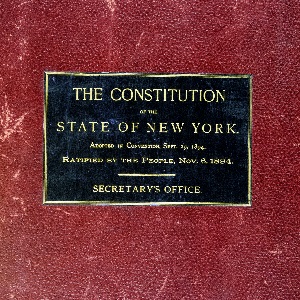
Image Citation: New York State Archives. New York (State). Secretary of State. Fourth constitution of the State of New York, 1894. A1807-78.

Writing to Read Democracy: Guided Document Analysis
Lesson 1
Writing to Read Democracy: Case Law Jigsaw
Lesson 3

Writing to Read Democracy: Case Law Jigsaw

in Writing to Read Democracy in New York State & The United States
Activity 3

Created by Prof. Seth Halvorson & Dr. Erica Kaufman
Bard College Institute for Writing & Thinking

NYS Common Core Grades 11 & 12:
United States History and Government Participation in Government and Civics

This document-based sequence of activities invites students to chart the dialog between the New York State Courts, the Federal Courts, and other State Courts regarding the scope of individual rights. Generally speaking, New York State Courts are more protective of individual rights than Federal Courts and more so than other State Courts as well. The central question is: How have the New York State Courts understood the scope of individual rights? 

Developed by psychologist Elliot Aronson, the “jigsaw” is a collaborative learning technique easily adaptable for students of all ages and levels. Students are organized into groups and given specific tasks so that each student is integral to the success (or understanding) of the entire class. What follows is a modification of the “jigsaw” that aims to foster critical reading and questioning across a range of different (and contrasting) primary documents that address New York State Shield Law and freedom of expression.

This unit plan meets the following guidelines of New York State’s Common Core Social Studies Framework (2017):


Lesson Overview PDF

IWT’s Core Writing (& Reading) Practices PDF

Document Packet PDF


Case Law Jigsaw Instructions & Activity PDF

Case 1: Shield Law Documents PDF


The Historical Society’s website contains a wealth of related resources related to this unit.

Hon. Victoria A. Graffeo
Court of Appeals Judge
Wrote the majority opinion of Holmes v. Winter

Hon. Jonathan Lippman
Court of Appeals Chief Judge
Concurred with majority opinion

Hon. Sheila Abdus-Salaam
Court of Appeals Judge
Concurred with majority opinion

Hon. Jenny Rivera
Court of Appeals Judge
Concurred with majority opinion

Hon. Robert S. Smith
Court of Appeals Judge
Dissented and affirmed in separate opinion

Hon. Eugene F. Pigott, Jr. 
Court of Appeals Judge
Dissented and concurred with Judge Smith’s opinion

Hon. Susan Phillips Read
Court of Appeals Judge
Dissented and affirmed for the reasons described in the Appellate Division’s opinion (110 AD3d 134)

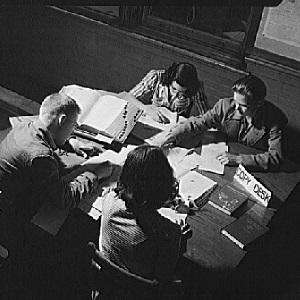
Image Citation: Library of Congress, Prints & Photographs Division, Farm Security Administration/Office of War Information Black-and-White Negatives, LC-USW3-033817-C.

Writing to Read Democracy: Written Conversations & Dialectical Notebooks
Collaborative Close Reading

Lesson 2
Writing to Read Democracy: Document-Based Essay in Miniature
Lesson 4

Writing to Read Democracy: Document-Based Essay in Miniature

in Writing to Read Democracy in New York State & The United States
Activity 4

Created by Prof. Seth Halvorson & Dr. Erica Kaufman
Bard College Institute for Writing & Thinking

NYS Common Core Grades 11 & 12:
United States History and Government Participation in Government and Civics

This document-based sequence of activities invites students to chart the dialog between the New York State Courts, the Federal Courts, and other State Courts regarding the scope of individual rights. Generally speaking, New York State Courts are more protective of individual rights than Federal Courts and more so than other State Courts as well. The central question is: How have the New York State Courts understood the scope of individual rights? 

Given that the “document-based question” (DBQ) appears frequently in high school history curricula, this activity and assignment aims to help students to understand the process of writing a DBQ, from understanding the assignment and documents to writing the essay itself. Most DBQ’s involve at least five primary documents, so this activity asks students to draw on any of the documents they’ve worked with thus far, as well as an additional three documents focused on “Stop and Frisk” (nine documents total).

This unit plan meets the following guidelines of New York State’s Common Core Social Studies Framework (2017):


Lesson Overview PDF

IWT’s Core Writing (& Reading) Practices PDF

Document Packet PDF


High School Document-Based Activity Packet PDF

Middle School Document-Based Activity Packet PDF

Case 1: Shield Law Documents PDF

Case 2: “Stop and Frisk” Documents PDF


The Historical Society’s website contains a wealth of related resources related to this unit.

Hon. Victoria A. Graffeo
Court of Appeals Judge
Wrote the majority opinion of Holmes v. Winter

Hon. Jonathan Lippman
Court of Appeals
Chief Judge
Concurred with majority opinion

Hon. Sheila Abdus-Salaam
Court of Appeals Judge
Concurred with majority opinion

Hon. Jenny Rivera
Court of Appeals Judge
Concurred with majority opinion

Hon. Robert S. Smith
Court of Appeals Judge
Dissented and affirmed in separate opinion

Hon. Eugene F. Pigott, Jr. 
Court of Appeals Judge
Dissented and concurred with Judge Smith’s opinion

Hon. Susan Phillips Read
Court of Appeals Judge
Dissented and affirmed for the reasons described in the Appellate Division’s opinion (110 AD3d 134)

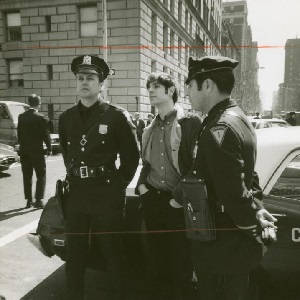
Image Citation: The New York Public Library, Manuscripts and Archives Division, Barbara Gittings and Kay Tobin Gay History Papers and Photographs.

Writing to Read Democracy: Case Law Jigsaw
Lesson 3
Rights and the Courts: Classroom Debates about Freedom of Religion
Lesson 5

Rights and the Courts: Classroom Debates about Freedom of Religion

in Writing to Read Democracy in New York State & The United States
Activity 5

Created by Prof. Seth Halvorson & Dr. Erica Kaufman
Bard College Institute for Writing & Thinking

NYS Common Core Grades 11 & 12:
United States History and Government Participation in Government and Civics

This document-based sequence of activities invites students to chart the dialog between the New York State Courts, the Federal Courts, and other State Courts regarding the scope of individual rights. Generally speaking, New York State Courts are more protective of individual rights than Federal Courts and more so than other State Courts as well. The central question is: How have the New York State Courts understood the scope of individual rights? 

Many cases have been decided by the New York State Courts that address the tension between liberty and security. Article 1 of the New York State Constitution includes the protection of key individual rights, the freedom of speech and the freedom of religion. Section 3, specifically notes that “The free exercise and enjoyment of religious profession and worship, without discrimination or preference, shall forever be allowed in this state to all humankind; and no person shall be rendered incompetent to be a witness on account of his or her opinions on matters of religious belief; but the liberty of conscience hereby secured shall not be so construed as to excuse acts of licentiousness, or justify practices inconsistent with the peace or safety of this state.” Yet, as life in a multicultural and diverse democracy shows, religious freedom has limits. The state’s respect for an individual’s rights can conflict with government interests in security.

Using Rivera v. Smith to ground this discuss, students will debate this resolution — Resolved: When in conflict, the exercise of religious freedom ought to be valued above the security interests of the government.

This lesson plan meets the following guidelines of New York State’s Common Core Social Studies Framework (2017):


Lesson Overview PDF

IWT’s Core Writing (& Reading) Practices PDF

Classroom Debate Rubric PDF


Student Handouts PDF


The Historical Society’s website contains a wealth of related resources related to this unit.

Hon. Hugh R. Jones
Court of Appeals Judge
Wrote the majority opinion of Rivera v. Smith

Hon. Lawrence H. Cooke 
Court of Appeals Chief Judge
Concurred with majority opinion

Hon. Matthew J. Jasen 
Court of Appeals Judge
Concurred with majority opinion

Hon. Bernard S. Meyer
Court of Appeals Judge
Concurred with majority opinion

Hon. Richard D. Simons
Court of Appeals Judge
Concurred with the majority opinion

Hon. Sol Wachtler 
Court of Appeals Judge
Concurred with the majority opinion

Hon. Judith S. Kaye
Court of Appeals Judge
Concurred with the result in a separate opinion

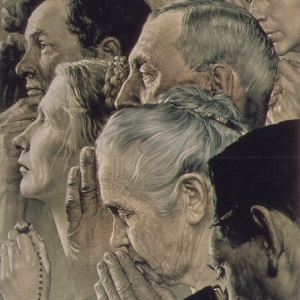
Image Citation: National Archives and Records Administration, World War II Posters, NAID 51537. Copyright held by Curtis Licensing, a division of The Saturday Evening Post Society.

Writing to Read Democracy: Document-Based Essay in Miniature
Lesson 4
 

Thinking Historically through Writing: Justice and the Law

Created by Rachel Cavell
Bard College Institute for Writing & Thinking

NYS Common Core Grades 11 & 12:
United States History and Government Participation in Government and Civics

Through a one-day professional development workshop, educator-participants engage with IWT’s writing-to-read strategies, and learn by doing. That is, participants engage in the work they would do with their students. This workshop has three sections: Writing to Read The Federalist Papers, Writing to Understand Bills of Rights and Case Law, and Believing & Doubting, Applying the Practices through Lesson Planning. Through these activities, educators will come away with a better understanding of how to utilize the foundational documents and case law in the classroom.

This lesson plan meets the following guidelines of New York State’s Common Core Social Studies Framework (2017):


Workshop Material Anthology PDF

IWT’s Core Writing (& Reading) Practices


The Historical Society’s website contains a wealth of related resources, including mini-biographies of lawyers and judges included in the lesson.

Writing to Read The Federalist Papers

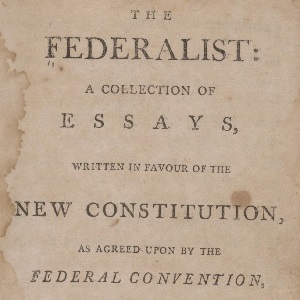
The Federalist Papers
Written by Hamilton, Madison, and Jay

Alexander Hamilton
Author of The Federalist Papers

John Jay
Author of The Federalist Papers

NY Ratification of the US Constitution 
Transcript

Writing to Understand Bills of Rights and Case Law

The New York State Bill of Rights
1787

Image citation: Library of Congress, Rare Book & Special Collections Division, KF4515.

Rights and the Courts: Classroom Debates about Freedom of Religion

in Writing to Read Democracy in New York State & The United States
Activity 5

Created by Prof. Seth Halvorson & Dr. Erica Kaufman
Bard College Institute for Writing & Thinking

NYS Common Core Grades 7 & 8:
History of the United States and New York State I & II

This document-based sequence of activities invites students to chart the dialog between the New York State Courts, the Federal Courts, and other State Courts regarding the scope of individual rights. Generally speaking, New York State Courts are more protective of individual rights than Federal Courts and more so than other State Courts as well. The central question is: How have the New York State Courts understood the scope of individual rights? 

Many cases have been decided by the New York State Courts that address the tension between liberty and security. Article 1 of the New York State Constitution includes the protection of key individual rights, the freedom of speech and the freedom of religion. Section 3, specifically notes that “The free exercise and enjoyment of religious profession and worship, without discrimination or preference, shall forever be allowed in this state to all humankind; and no person shall be rendered incompetent to be a witness on account of his or her opinions on matters of religious belief; but the liberty of conscience hereby secured shall not be so construed as to excuse acts of licentiousness, or justify practices inconsistent with the peace or safety of this state.” Yet, as life in a multicultural and diverse democracy shows, religious freedom has limits. The state’s respect for an individual’s rights can conflict with government interests in security.

Using Rivera v. Smith to ground this discuss, students will debate this resolution — Resolved: When in conflict, the exercise of religious freedom ought to be valued above the security interests of the government.

This unit plan meets the following guidelines of New York State’s Common Core Social Studies Framework (2017):

  • The Constitution in Practice: 7.5a
  • Domestic Politics and Reform: 8.9b, 8.9e


Lesson Overview PDF

IWT’s Core Writing (& Reading) Practices PDF

Classroom Debate Rubric PDF


Student Handouts PDF


The Historical Society’s website contains a wealth of related resources related to this unit.

Hon. Hugh R. Jones
Court of Appeals Judge
Wrote the majority opinion of Rivera v. Smith

Hon. Lawrence H. Cooke 
Court of Appeals Chief Judge
Concurred with majority opinion

Hon. Matthew J. Jasen 
Court of Appeals Judge
Concurred with majority opinion

Hon. Bernard S. Meyer
Court of Appeals Judge
Concurred with majority opinion

Hon. Richard D. Simons
Court of Appeals Judge
Concurred with the majority opinion

Hon. Sol Wachtler 
Court of Appeals Judge
Concurred with the majority opinion

Hon. Judith S. Kaye
Court of Appeals Judge
Concurred with the result in a separate opinion

Image Citation: National Archives and Records Administration, World War II Posters, NAID 51537. Copyright held by Curtis Licensing, a division of The Saturday Evening Post Society.

Writing to Read Democracy: Document-Based Essay in Miniature
Lesson 4
 

Cyberspace and the Law: What are Our Rights and Responsibilities?

The Document Based Question/essay prompt Cyberspace and the Law: What are Our Rights and Responsibilities? was prepared in 2013 and the resources have not been updated since that time. For more information about recent legal developments, consult national and state newspapers, legal databases, and your librarian.

Most people agree that modern society has benefited in countless ways from the development of the Internet and other digital technologies. Cyberspace is such a valuable part of our everyday lives that we seldom stop to think about how our constitutional rights are impacted by it. Nonetheless, we are at a defining moment in history and decisions made today concerning the application of our Federal and State constitutional rights to cyberspace will impact our lives and those of future generations for better or for worse.

This activity meets the following guidelines of New York State’s Common Core Social Studies Framework (2017):

  • The United States in a Globalizing World: 11.11b
  • Civil Rights and Civil Liberties: 12.G2d


Topic Background PDF


Below is a list of the 2013 resources in a searchable table. Search by theme of resource: cyberbullying, digital piracy, privacy in peril, or government surveillance.

United States v. Jones

565 U.S. 400 (2012) Read More ...

People v. Weaver

12 N.Y.3d 433 (2009) Evidence gathered by means of a GPS suppressed because the police had no search warrant for ...

Privacy, Law Enforcement, and National Security

The National Academies Press Chapter 9 of Engaging Privacy and Information Technology in a Digital Age focuses on electronic technology ...

From Jones to Drones: How to Define Fourth Amendment Doctrine for Searches in Public

Privacy Law Scholars Conference Scholars on this panel each had five minutes to present a constitutional test that would balance ...

Unwarranted! Privacy in a Technological Age

University of Southern California Gould School of Law Should law enforcement, without your knowledge and without a warrant, be able ...

Is GPS Tracking An ‘Unreasonable Search?

NPR Law enforcement says “give us the tools.” Privacy advocates argue that electronic surveillance threatens Fourth Amendment rights. Listen Now ...

The Roberson Privacy Controversy

Judicial Notice The Roberson Privacy Controversy tells the story of Abigail Roberson’s quest for justice as she sought protection of ...

Protecting Consumer Privacy in an Era of Rapid Change

The Federal Trade Commission The Federal Trade Commission’s final report setting forth best practices for businesses to protect the privacy ...

Expectations of Privacy in Social Media

Mississippi College Law Review Stephen Henderson examines expectations of privacy in social media such as weblogs (blogs), Facebook pages, and ...

Surveillance Society

National Center for Biotechnology Information David Shenk maintains that we are, without question, headed into a world in which—mostly by ...

I Know Who You Are and I Saw What You Did: Social Networks and the Death of Privacy

American Bar Association Jouranl ABA Journal web producer Lee Rawles talks with Lori Andrews, author of I Know Who You ...

Sounds of Science: Engaging Privacy and Information Technology in a Digital Age

The National Academies Press Explores how the threats to privacy are evolving, how privacy can be protected and how society ...

Sony BMG Music Entertainment et al. v. Tenenbaum

No. 10-1883 (1st Cir. 2011) Read More ...

The Future of Music in a Digital Age: The Ongoing Conflict Between Copyright Law and Peer-to-Peer Technology

Campbell Law Review This article explains the issues that have surfaced as a result of the development of new technology ...

Dimensions of P2P and Digital Piracy in a University Campus

Carnegie Mellon University Copyright industries are the main victims of illegal file sharing. Industry representatives claim that it costs billions ...

Statutory Damage Awards in Peer-to-Peer File Sharing Cases Involving Copyrighted Sound Recordings: Recent Legal Developments

Congressional Research Service While P2P file sharing technology could be used for legitimate purposes, P2P users most often copy and ...

International Online Piracy Panel

UCLA Burkle Center for International Relations Listen Now ...

Constitutionality of Cyberbullying Laws: Keeping the Online Playground Safe for Both Teens and Free Speech

Vanderbilt Law Review In the absence of cyberbullying laws, victims can resort only to tort law and certain criminal laws ...

How Public Schools Can Constitutionally Halt Cyberbullying: A Model Cyberbullying Policy that Survives First Amendment, Fourth Amendment, and Due Process Challenges

Wake Forest Law Review Even where States have passed legislation dealing with cyberbullying, little direction is available on the type ...

Cyberbullying: Emerging Realities and Legal Challenges – Video

Missouri Law School The first panel speaks broadly about cyberbullying. The second speaker, whose presentation begins at 43:00, discusses controlling ...

Who Watches the Watchers? Free Speech and Free Press in the Electronic Age

The Document Based Question/essay prompt Who Watches the Watchers? Free Speech and Free Press in the Electronic Age was prepared in 2014 and the resources have not been updated since that time. For more information about recent legal developments, consult national and state newspapers, legal databases, and your librarian.

The 1st Amendment to the United States Constitution protects both citizens’ rights of free speech and the power of the press to obtain information and publish it without government censorship. This supports the free exchange of ideas which is considered the bedrock of political democracy. Decisions of the U.S. Supreme Court have upheld the crucial role of free speech and free press in American society.

Recent revelations in the press and by whistleblowers have produced information about the existence of secret government initiatives that now routinely gather huge quantities of data on Americans. These disclosures reveal the activities of courts not subject to scrutiny in the press. Such courts have apparent jurisdiction to make determinations involving privacy, secrecy and surveillance. Recently, the 4th Circuit U.S Court of Appeals held that reporters may be compelled to disclose the names of sources who provide them with classified information

This activity meets the following guidelines of New York State’s Common Core Social Studies Framework (2017):

  • The United States in a Globalizing World: 11.11b
  • Civil Rights and Civil Liberties: 12.G2b, 12.G2f
Below is a list of the 2014 resources in a searchable table. Search by type of resource: articles, laws and cases, news reports, or video and audio.

Leaks and Freedom of the Press

C-SPAN Law professors and journals debated First Amendment freedom of the press rights versus national security interests in the age ...

Michael Hayden Remarks at Criminal Law, National Security, and the First Amendment

C-SPAN Michael Hayden gave the luncheon address at a First Amendment Center day-long discussion entitled, “Criminal Law, National Security and the First ...

Defense and Prosecution of Classified Information Cases

C-SPAN Panelists talked about investigating and prosecuting cases in which national security violations are alleged, concerns over privacy and free ...

Criminal Law, National Security, and the First Amendment

C-SPAN Panelists talked about the intersection of criminal law, national security, and the First Amendment. Major topics included the Pentagon ...

National Security Agency Data Collection Programs

C-SPAN Senior government officials involved with the National Security Agency (NSA) testified on the organization’s Internet and phone record data collection practices ...

National Security and Liberty

C-SPAN Panelists talked about the tension between a free press and national security. Among the topics they addressed were National Security Agency ...

Reforming the Foreign Intelligence Court

Harvard Law School Center on the Legal Profession Watch Now Read a Transcript ...

Klayman vs. Obama

U.S. District Court for the District of Columbia Hon. Richard J. Leon ruled that the NSA's program that systematically keeps ...

Electronic Communications Privacy Act of 1986

Public Law 99-508 -- 99th Congress Read More ...

Free Flow of Information Act of 2013

H.R. 1962 - 113th Congress Read More ...

Rules of Procedure for the U.S. Foreign Intelligence Surveillance Court

U.S. Foreign Intelligence Surveillance Court Read More ...

Saying No to the Surveillance State

History News Network Read More ...

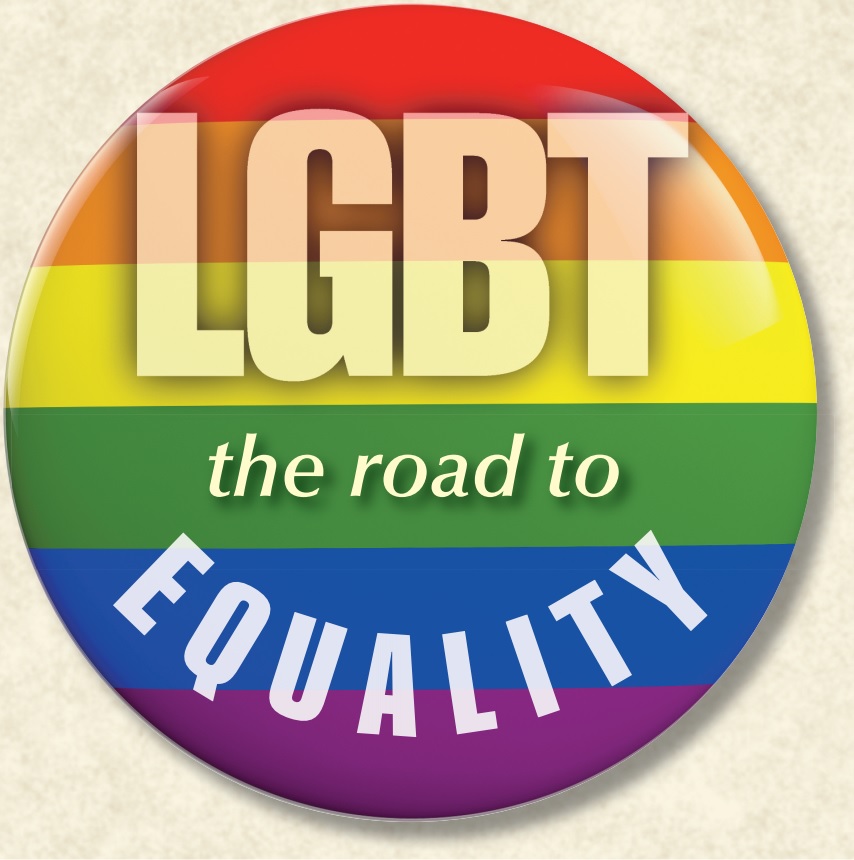
LGBT: The Road to Equality

The Document Based Question/essay prompt  LGBT: The Road to Equality was prepared in 2015 and the resources have not been updated since that time. For more information about recent legal developments, consult national and state newspapers, legal databases, and your librarian.

The New York courts and State Legislature have frequently been at the center of the debate over the rights of lesbian, gay, bisexual and transgender (LGBT) individuals. In this role they have taken many actions to consider the rights of this community, in particular in the areas of: Family, Employment and Criminal Law. How the courts and legislature have addressed these rights and what the impact of these actions have been?

This activity meets the following guidelines of New York State’s Common Core Social Studies Framework (2017):

  • Social and Economic Change/Domestic Issues: 11.10b
  • Civil Rights and Civil Liberties: 12.G2d
Below is a list of the 2015 resources in a searchable table. Search by theme of resource: criminal law, educational law, employment law, or family law.

People v. Uplinger

58 N.Y.2d 936 (1983) The New York Court of Appeals held unconstitutional the criminal prohibition on loitering "in a public ...

People v. Rice

41 N.Y.2d 1018 (1977) Though the issue was non-reviewable, attorney E. Carrington Boggan raised "novel and difficult constitutional questions ...

Lawrence v. Texas

539 U.S. 558 (2003) The U.S. Supreme Court overturned its 1986's Bowers v. Hardwick decision and ruled that "[t]he state ...

People v. Onofre

51 N.Y.2d 476 (1980) The Court of Appeals struck down New York's consensual sodomy statute as unconstitutional. Read More ...

Matter of Doe v. Rosa

159 Misc.2d 694 (1993) Read More ...

Levin v. Yeshiva University

96 N.Y.2d 484 (2001) The Court of Appeals held that same-sex couples may not be excluded from married student housing ...

Marriage Equality Act (2011)

A08354 - New York State Assembly Read More ...

Hernandez v. Robles

7 N.Y.3d 338 (2006) The Court of Appeals held that the New York Constitution did not "compel recognition of marriages ...

Matter of Jacob

86 N.Y.2d 651 (1995) The Court of Appeals held that the same-sex partner of a legal parent may adopt that ...

Braschi v. Stahl Assocs. Co.

74 N.Y.2d 201 (N.Y. 1989) The Court of Appeals construed the term "family" to include same-sex life partners for purposes ...

Employment Non-Discrimination Act of 2013

S.815 -- 113th Congress Read More ...

Sexual Orientation Non-Discrimination Act (2003)

New York State Office of the Attorney General Read More ...

Matter of Kimball

33 NY2d 586 (1973) Harris L. Kimball passed the New York State Bar exam, and the Committee on Character and ...

When Same-Sex Marriages End

The New York Times Read More ...

Civil Rights for Transgender People

The New York Times Read More ...

At the Cutting Edge of Gay Family Law

The New York Times Read More ...

Youth in Schools

Lambda Legal Read More ...

The New York State Dignity for All Students Act

New York State Education Department Read More ...
×
Product added to cart

No products in the cart.