The Document Based Question/essay prompt The New Netherland Legal System and the Law of Twenty-First Century New York was prepared in 2009 and the resources have not been updated since that time. For more information about recent legal developments, consult national and state newspapers, legal databases, and your librarian.
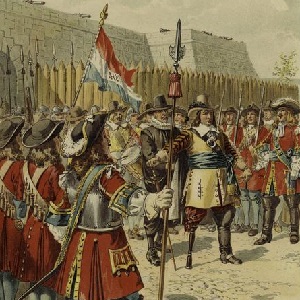
2009 marked the 400th anniversary of the Dutch discovery of New Netherland. The colony lasted for only half a century, but during those fifty years, the early settlers set up a vibrant community governed by Dutch law. New Netherland (now New York) and New Amsterdam (now New York City) were ruled by the Dutch West India Company, an armed commercial monopoly that operated under a charter from the Dutch government. Throughout the colony’s existence, its inhabitants sought to introduce the kind of representative government and legal system they had known in the Dutch homeland and, by 1653, they had largely succeeded.
This activity meets the following guidelines of New York State’s Common Core Social Studies Framework (2017):
The Document Based Question/essay prompt The Blue and the Gray: New York During the Civil War was prepared in 2012 and the resources have not been updated since that time. For more information about recent legal developments, consult national and state newspapers, legal databases, and your librarian.
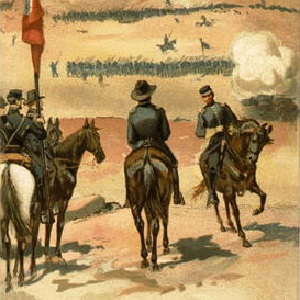
The Civil War was a defining moment in United States history. New York played a pivotal role in the war–it supplied more men, money, and materiel than any other state, North or South. The armies fought with newly invented weapons, many of them designed and build mainly in New York City. Technological developments in telegraphy (Western Union was a New York company) allowed war correspondents to speedily submit detailed reports from the battlefield, and newspapers published in New York influenced public opinion not only in this State but nationwide. New photographic processes allowed battlefield photographers, many of whom hailed from New York, to produce the first comprehensive photo-documentation of the war and brought home the reality of carnage and suffering on far away battlefields. With so many soldiers on the front lines, New York women became more involved in life outside the home, foreshadowing the suffrage and equal rights movements that would develop in the decades that followed.
This activity meets the following guidelines of New York State’s Common Core Social Studies Framework (2017):
Expansion, Nationalism, and Sectionalism: 11.3b, 11.3c
Library of Congress This exhibition features Civil War-era ambrotype and tintype photographs of Union and Confederate soldiers. The collection’s detailed ...
Frederick Phisterer New York State Library This six-volume set, compiled by Frederick Phisterer, provides detailed information on various aspects of ...
The New York Times The Disunion series in the New York Times revisits and reconsiders America's most perilous period. It will use contemporary accounts, ...
The Document Based Question/essay prompt The Evolution of Justice Along the Erie Canal was prepared in 2010 and the resources have not been updated since that time. For more information about recent legal developments, consult national and state newspapers, legal databases, and your librarian.
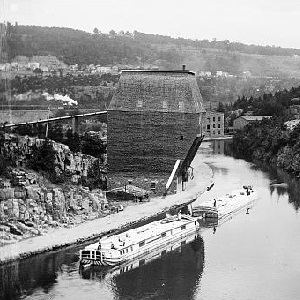
The Erie Canal proved to be the key that unlocked an enormous series of social and economic changes in the young nation. The Canal spurred the first great westward movement of American settlers, gave access to the rich land and resources west of the Appalachians, and made New York the preeminent commercial city in the United States.
This activity meets the following guidelines of New York State’s Common Core Social Studies Framework (2017):
The Document Based Question/essay prompt The Legal Legacy of the Triangle Shirtwaist Factory Fire was prepared in 2011 and the resources have not been updated since that time. For more information about recent legal developments, consult national and state newspapers, legal databases, and your librarian.
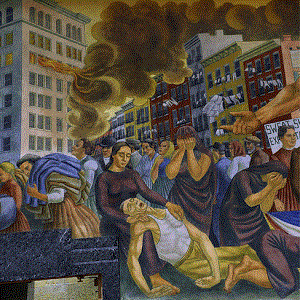
March 25, 2011 marked the centennial of the fire at the Triangle Shirtwaist Factory, a terrible tragedy that took the lives of 146 young people. Public outrage at the callous disregard the factory owners exhibited toward the dangerous conditions in their factory led to a movement that culminated in the groundbreaking New York State worker protection legislation of the second decade of the 20th century. This, in turn, influenced much of the New Deal Legislation enacted in the 1930s.
This activity meets the following guidelines of New York State’s Common Core Social Studies Framework (2017):
Image Citation: History of the Needlecraft Industry by Ernest Fiene, 1938. The mural was commissioned by the International Ladies Garment Workers Union (ILGW) and was painted on a wall of the auditorium in New York High School of Fashion and Industry, a collection of the New York City Department of Education. Public Art for Public Schools, NYC School Construction Authority.
in Reading and Writing Legal History: Privacy & Reproductive Rights Lesson 1
Created by Dr. Julia Rose Kraut, Inaugural Judith S. Kaye Teaching Fellow
NYS Common Core Grades 11 & 12: United States History and Government Participation in Government and Civics
In a series of lessons, taught together or individually, students will gain a greater understanding of the legal history of reproductive rights and privacy while also learning how to read and analyze court decisions and to incorporate law and legal history into future research projects.
The purpose of this lesson is to learn more about what the students think or know about privacy and reproductive rights and for students to feel comfortable discussing those topics.
This lesson plan meets the following guidelines of New York State’s Common Core Social Studies Framework (2017):
in Reading and Writing Legal History: Privacy & Reproductive Rights Lesson 2
Created by Dr. Julia Rose Kraut, Inaugural Judith S. Kaye Teaching Fellow
NYS Common Core Grades 11 & 12: United States History and Government Participation in Government and Civics
In a series of lessons, taught together or individually, students will gain a greater understanding of the legal history of reproductive rights and privacy while also learning how to read and analyze court decisions and to incorporate law and legal history into future research projects.
The purpose of this lesson is to analyze People v. Sanger and the Birth of Family Planning Clinics in America by Maria Vullo (Judicial Notice, Issue 13), while placing the case and the Birth Control Movement in historical context.
This lesson plan meets the following guidelines of New York State’s Common Core Social Studies Framework (2017):
in Reading and Writing Legal History: Privacy & Reproductive Rights Lesson 3
Created by Dr. Julia Rose Kraut, Inaugural Judith S. Kaye Teaching Fellow
NYS Common Core Grades 11 & 12: United States History and Government Participation in Government and Civics
In a series of lessons, taught together or individually, students will gain a greater understanding of the legal history of reproductive rights and privacy while also learning how to read and analyze court decisions and to incorporate law and legal history into future research projects.
The purpose of this lesson is to explore reading legal decisions and writing case briefs through Griswold v. Connecticut, a case dealing rights to privacy and due process, as well as make connections to People v. Sanger from previous classes to reinforce the role of Margaret Sanger in the legal history of reproductive rights and protections.
This lesson plan meets the following guidelines of New York State’s Common Core Social Studies Framework (2017):
in Reading and Writing Legal History: Privacy & Reproductive Rights Lesson 4
Created by Dr. Julia Rose Kraut, Inaugural Judith S. Kaye Teaching Fellow
NYS Common Core Grades 11 & 12: United States History and Government Participation in Government and Civics
In a series of lessons, taught together or individually, students will gain a greater understanding of the legal history of reproductive rights and privacy while also learning how to read and analyze court decisions and to incorporate law and legal history into future research projects.
The purpose of this lesson is to explore reading legal decisions and writing case briefs through Roe v. Wade, a case dealing rights to privacy and due process, as well as make connections to People v. Sanger from previous classes to reinforce the role of Margaret Sanger in the legal history of reproductive rights and protections.
This lesson plan meets the following guidelines of New York State’s Common Core Social Studies Framework (2017):
in Reading and Writing Legal History: Privacy & Reproductive Rights Lesson 5
Created by Dr. Julia Rose Kraut, Inaugural Judith S. Kaye Teaching Fellow
NYS Common Core Grades 11 & 12: United States History and Government Participation in Government and Civics
In a series of lessons, taught together or individually, students will gain a greater understanding of the legal history of reproductive rights and privacy while also learning how to read and analyze court decisions and to incorporate law and legal history into future research projects.
The purpose of this lesson is to make connections between People v. Sanger, Griswold v. Connecticut and Roe v. Wade, and examine what students have learned since the first lesson of the unit.
This lesson plan meets the following guidelines of New York State’s Common Core Social Studies Framework (2017):
in Reading and Writing Legal History: Privacy & Reproductive Rights Lesson 6
Created by Dr. Julia Rose Kraut, Inaugural Judith S. Kaye Teaching Fellow
NYS Common Core Grades 11 & 12: United States History and Government Participation in Government and Civics
In a series of lessons, taught together or individually, students will gain a greater understanding of the legal history of reproductive rights and privacy while also learning how to read and analyze court decisions and to incorporate law and legal history into future research projects. The purpose of this lesson is to use the experience reading and analyzing the Vullo article and case law in order to explore writing and researching legal history, and learn how to write about court decisions and legal precedent.
This lesson plan meets the following guidelines of New York State’s Common Core Social Studies Framework (2017):