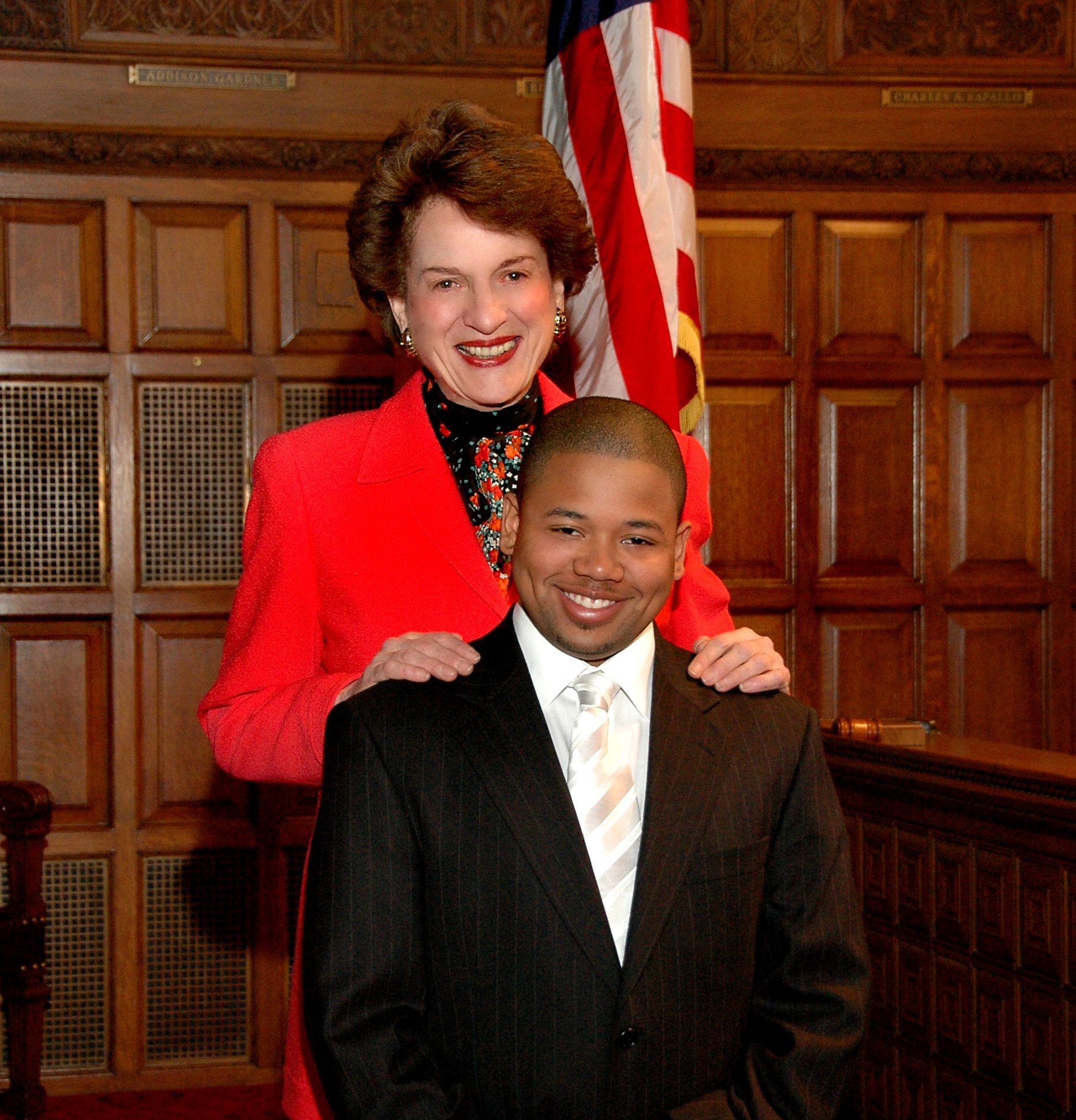
This blog entry was written by John Caher, the Unified Court System’s senior advisor for strategic and technical communications. It discusses his recent interview with Luisa Kaye, the daughter of our late Chief Judge Judith S. Kaye. Like both of her parents, Luisa is a commercial litigator in Manhattan and partner at Wrobel Markham Schatz Kaye & Fox. On Dec. 12, Ms. Kaye will introduce the inaugural event of a new series by The Historical Society of the New York Courts, Judith S. Kaye Program: Conversations on Women and the Law. This series, sponsored by Skadden, Arps, Slate, Meagher & Flom — where Chief Judge Kaye finished her career — will examine her legacy from the perspective of her clerks. The interview was converted into an “Amici” Podcast, one of a series produced by the court system and maintained at http://www.nycourts.gov/admin/amici/index.shtml.
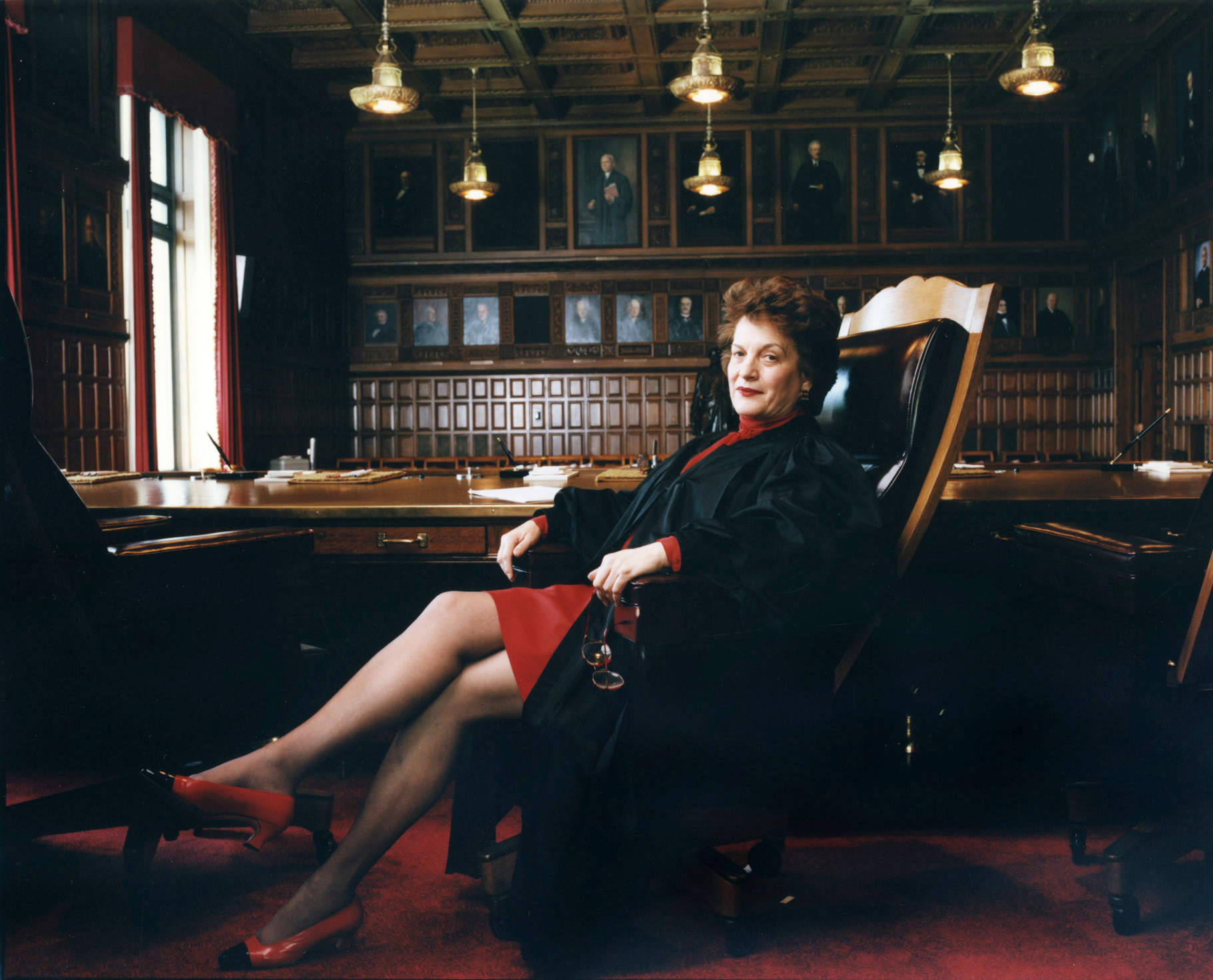
Photo: © Annie Leibovitz / Contact Press Images
I remember quite clearly many years ago when famed portrait photographer Annie Leibovitz photographed Chief Judge Kaye for Vanity Fair magazine. Judge Kaye told me that Annie basically drove her nuts, asking her to do this and that, and incessantly taking pictures, changing settings, and monopolizing more time than the Chief Judge had to spare. By the end of the session, Judge Kaye told me, she was willing to do just about anything if Annie would just go away and let her get back to work. It was then that Leibovitz got the picture — an uncharacteristically provocative photo — that would appear in Vanity Fair. In my recent interview with Luisa Kaye, I reminded her of that photo, which is on the invitation for the Dec. 12 event:
John Caher:
I got a kick out of the invitation because on the invitation is a briefly infamous and later famous photo of your mother by Annie Leibovitz, one of the greatest portrait photographers ever, in my opinion. In this photo, your mom is sitting at the bench wearing her trademark red shoes and her robe, and showing a bit of leg…
Luisa Kaye:
Yes. Actually, it’s a lot of leg (laughs)!
John Caher:
If I recall correctly, she was at first mortified when the picture appeared in Vanity Fair and then, if I remember what she told me correctly, she came to love it because of something you said. Can you tell us that story?