
1854-1931
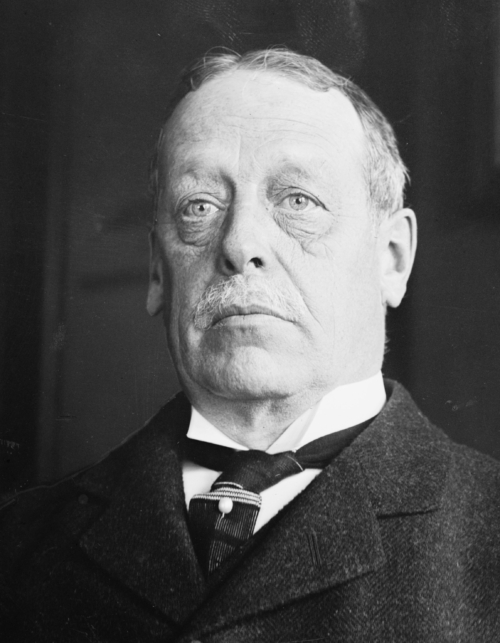 De Lancey Nicoll graduated from Princeton University in 1874 and Columbia Law School in 1876. In 1885 he was appointed an Assistant District Attorney under New York County District Attorney Randolph B. Martine. In 1885, Nicoll obtained a manslaughter conviction against an unscrupulous builder whose flimsy buildings had caused the deaths of several workmen. The New York Times hailed the conviction as “one of the most wholesome events that have occurred in this city for a long time.”[1] Nicoll successfully prosecuted a ring of City Aldermen for bribery and corruption in connection with their award of the Broadway streetcar franchise to one Jacob Sharp in 1884.[2]
Nicoll, a lifelong Democrat, was associated with the party’s anti-Tammany Hall and reform factions. In 1887, he accepted the Republican nomination for District Attorney and was defeated by his fellow Assistant District Attorney, John R. Fellows. In 1890, he accepted Tammany Hall’s nomination and was elected District Attorney.
In 1892, Rev. Charles Parkhurst, a prominent minister, launched a highly public attack on Mayor Hugh Grant, Tammany Hall, D.A. Nicoll and the entire police department, accusing them of “official and administrative criminality that is filthifying our entire municipal life, making New York a very hotbed of knavery, debauchery and bestiality.”[3] Nicoll brought Parkhurst before a grand jury and demanded that he produce evidence in support of his charges. Parkhurst was publicly humiliated when he was forced to admit that he had no evidence except for newspaper clippings. Parkhurst, however, responded by going undercover to methodically assemble evidence to back up his charges, leading to several investigations and prosecutions and, eventually, to a State Senate investigation of police corruption, headed by Senator Clarence Lexow. The Lexow Committee’s findings of police corruption, issued after Nicoll left office, contributed to the 1894 defeat of Tammany Hall’s candidates and the election of a reform Mayor, William L. Strong.
In 1910, Nicoll won a significant libel case before the U.S. Supreme Court relating to the New York World’s account of how a consortium of bankers and officials close to President Theodore Roosevelt and Secretary of War William Taft purchased French Panama for $4 million and resold it to the U.S. government for $40 million.[4]
After leaving public office, Nicoll served as Vice President of the New York City Bar Association and Chair of its Judiciary Committee, often speaking out against Tammany Hall. Nicoll served as a delegate to the State Constitutional Convention of 1894 and 1915.
[1] “Buddensiek’s Conviction, New York Times, June 16, 1885
[2] “De Lancey Nicoll, Noted Lawyer, Dies,” New York Times, Apr. 1, 1931.
[3] Edwin G. Burrows and Mike Wallace, Gotham: A History of New York City to 1898, Oxford Univ. Press, 1999, at 1167.
[4] “Supreme Court Ends Panama Libel Suite,” New York Times, Jan. 4, 1911.