
1854-1942
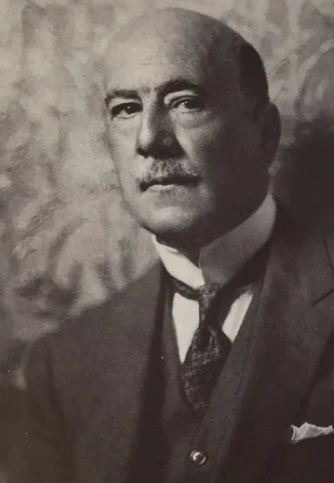 Francis L. Wellman, born in Massachusetts in 1854, graduated from Harvard College in 1876, and Harvard Law School in 1878, where was valedictorian of his class. He was admitted to the Massachusetts Bar in 1878. He taught at Boston Law School and, later, Harvard Law School.
In 1883, Wellman moved to New York City and took a position with the New York City Corporation Counsel where he oversaw jury trials involving the city. According to his obituary, “[d]uring his seven years as assistant the recoveries against the city were less than one-half of 1 per cent of the amounts claimed by the plaintiffs.”[1] In 1891, Wellman was named First Assistant District Attorney under De Lancey Nicoll. He went on to prosecute some of the most sensational criminal cases of the Gilded Age, including the wife-poisoning case of People v. Harris. On many occasions, such as People v. Stephani, Wellman did battle with one or both of the notorious criminal defense duo of William F. Howe and Abraham Hummel. During Wellman’s time as a prosecutor, he was credited with securing “more verdicts of murder in the first degree than had been obtained by any other prosecutor up to that time in the United States.”[2]
After leaving the District Attorney’s office in 1894, Wellman became chief trial counsel for the Metropolitan Street Railway Company. He also authored five books of court practice and practical skills for lawyers, the earliest and most influential of which was The Art of Cross Examination. First published in 1903, it has influenced generations of trial lawyers and remains in print today. In his book, Wellman highlighted William Fullerton’s excellent cross-examination of Rev. Henry Ward Beecher in the famous trial of Tilton v. Beecher, regarded as an instructive and “memorable struggle between two powerful intellects.”[3]
[1] “Francis Wellman, Lawyer, Author, 87,” New York Times, June 8, 1942.
[2] Id.
[3] “Cross-Examination: Francis L. Wellman’s Interesting New Book of Advice and Anecdote,” New York Times, Dec. 19, 1903.