
Director of Court Operational Services, New York State Office of Court Administration
Interviewed: 05/18/2010
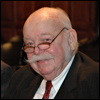
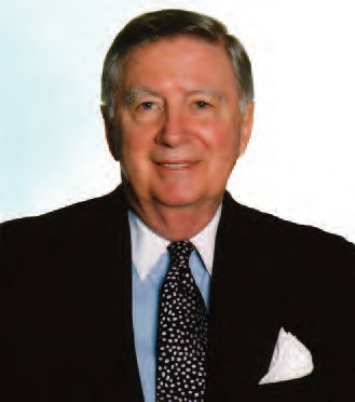
Roy was born the second son of Rita and John Reardon. Two more children were yet to come, another son and a daughter, and the family lived for decades in Astoria, Queens.
John, his father, was a printer by trade and worked for a financial newspaper until the depression caused it to fail. Then, like many others, he worked where he could find it, including for a time for the WPA on public construction projects, like digging ditches along what we know today as the Grand Central Parkway.
While times were hard, the Reardon children were happy and oblivious to the economic circumstances of their lives. All of the children attended public schools, each ultimately graduating from William Cullen Bryant High School. Roy’s mother Rita, a tiny woman, was the dominant figure in the household, particularly after the untimely death of her husband at age 47, and instilled in the children a commitment to the church, the family, and to making a life for themselves that would be better than hers had been.
Roy, with the encouragement of his father, was driven to sports, particularly basketball. He was on the varsity basketball team at Bryant High and upon graduation received a full athletic scholarship to St. Francis College in Brooklyn. St. Francis was then located in South Brooklyn and had been founded by a religious order of Franciscan Brothers. St. Francis offered no campus with ivy-covered buildings, handsome dormitories or grassy lawns. The students all commuted to school by public transportation – the bus or subway – and most worked to get by and pay the modest tuition. What St. Francis may have lacked in the way of a traditional campus setting, it made up for with an excellent college education and the ability to instill in its students a unique discipline and dedication to achievement under less than ideal conditions. Today St. Francis can be found in the Brooklyn Heights/Borough Hall section of Brooklyn in an impressive array of buildings that is largely the work of Dr. Frank J. Macchiarola, its President for two decades and a great man.
Basketball became Roy’s life at St. Francis. In his senior year he was co-captain of the varsity team and became the highest scoring player in the history of the school. At the end of his last season, he was drafted by the Syracuse Nationals of the NBA (now the Philadelphia 76’ers). A dream come true. But something else had come into Roy’s life that offered a potentially desirable long-term alternative.
That something was law school. This interest was sparked in an unusual way. There were no Reardon lawyers in the family or any other professionals. But Roy had a close pal named Tony who was also a basketball player at St. Francis. One day Tony invited Roy to watch trials in the criminal courthouse in Borough Hall, Brooklyn. Perhaps it was the competitive nature of what Roy saw, but he and Tony thereafter regularly went to the courthouse and they enjoyed it. In his senior year, Roy applied to St. John’s Law School (then located in Brooklyn) and was accepted. And so the first real crossroads decision was presented – go to training camp with the Syracuse Nationals in September or go to law school. He could not do both. It was an easy decision. If he went to training camp and did not make the team he would have given up his chance to enter law school. Too big a price to pay.
So he decided to go to law school and to play basketball for the Saratoga Yankees in the Eastern League – three games a week from November to April at $40 a game – more money than he had ever seen. But the final cost of doing both was a C+ in contracts in his first semester. And so the dominance of basketball in Roy’s life ended and the law took over, never to yield but for family.
Getting through law school quickly and into the profession became Roy’s next priority. Under an accelerated program, he finished law school in 2 ½ years and then met a delay in getting started as a lawyer. He was drafted. There he served for two years as a Special Agent in the Counter Intelligence Corp., rising to the rank of Corporal. While in the Army he married Teresa Steele. They had met in law school. Teresa was number one in her class, and upon graduation became an Assistant U.S. Attorney in the Southern District of New York in the office of the legendary J. Edward Lumbard, later to become a Judge on the Second Circuit.
Toward the end of his service in the Army, Roy applied to Simpson Thacher & Bartlett (“ST&B”) for an Associate position. He wanted to litigate, without having a full appreciation of what that meant at a firm like ST&B. The firm had less than 100 attorneys and its litigation department was led by Whitney North Seymour, a leading figure of his time in litigation. Unlike today, with its elaborate recruiting staff and a team of lawyers to go with it, the procedure when Roy applied was to be brought to the office of one partner, and there to be visited by every partner who was in the office that day. On the day of Roy’s visit, he saw almost every partner in the firm. He met Whitney Seymour, who had already served as President of the City Bar and later became President of the ABA. He also met Cyrus R. Vance who had just become a partner. Vance would soon become General Counsel to the Defense Department, Secretary of the Army, and Assistant Secretary of Defense in the Kennedy/Johnson years, and later Secretary of State in the Carter administration. Whitney and Cy were models of what a lawyer should be and were key to molding Roy’s professional life. Roy got the job and has remained with the same firm for 55 years.
Roy found the firm offered young lawyers a great discipline. Every task should produce your best product. That was what the clients who came to the firm expected and that is what they received, whether they were pro bono or paying clients. His standard joke was that the firm never turned the office lights out on its lawyers and associates would get fresh water and sawdust under the door of their offices every morning whether they needed it or not. A great environment for associates to grow in.
It is natural that cases young litigators get to work on tend to shape their choice of a career path. In his second year at ST&B, Roy became deeply involved in such a case. It was a pro bono case, USA v. Vito Genovese et al. involving narcotics conspiracy brought in the Southern District with 19 of the more than 30 defendants going to trial at Foley Square. Roy was appointed to represent one of the indigent defendants. The case was tried for three months. Roy stayed with the case for three years, through several appeals to the Supreme Court. The trial lawyers for the solvent defendants were some of the best and most prominent lawyers of the day, including Edward Bennett Williams. It was a great learning experience for Roy to watch how great lawyers tried a jury case. It was surely the biggest case Roy had been in up to that point and for a long time thereafter everything he did looked small. The experience persuaded Roy he wanted to be a trial lawyer and he never changed his mind.
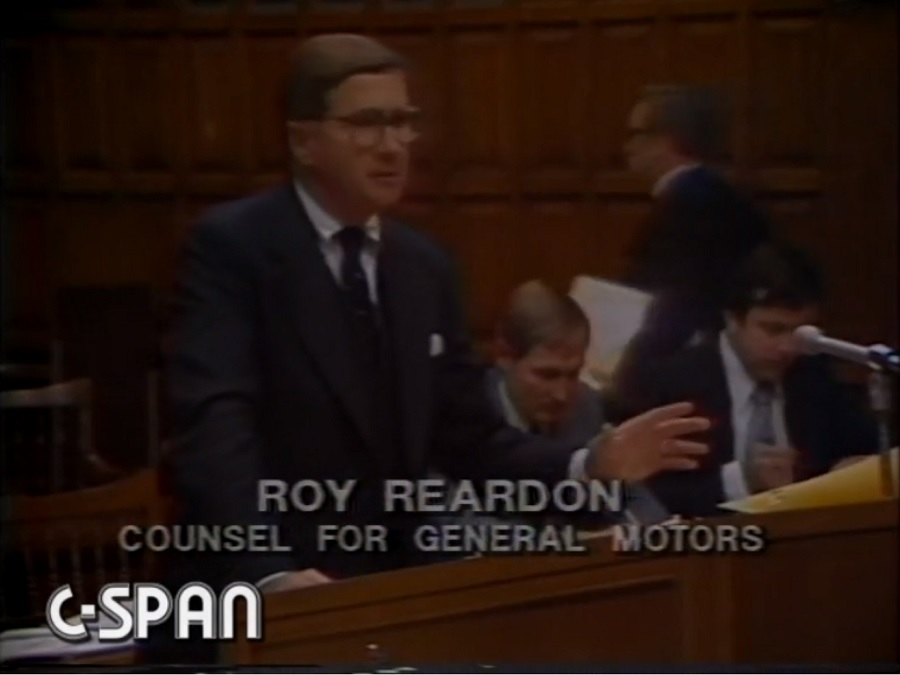
Roy got his wish when General Motors asked ST&B to assume the defense of all of its product liability cases in the New York area. At that time, Roy was a young partner involved in the handling of commercial litigation, including bank litigation and antitrust and securities cases. Whitney Seymour asked Roy to take on the new GM representation and he assembled a team to handle a huge flow of cases – all jury cases. It was in this period that the litigators at ST&B developed their great respect for the jury system and the ability of a jury to apply its cumulative judgment to consistently return fair verdicts – even for a Fortune 100 company.
Building on a successful record, ST&B went on to represent GM in other types of civil litigation. One such case was State of New York v. General Motors. It became known as the “Engine Switching Case.” There GM was charged by the New York Attorney General with consumer misrepresentations (e.g., selling Oldsmobile Division cars with Chevrolet Division engines). Roy handled the case for GM and summarily lost at the trial level and in the Appellate Division, with a lone dissent by Justice Samuel J. Silverman, a superb Judge who had earlier been a partner at Paul Weiss, sufficient to bring it to the Court of Appeals.
While the case was wending its way to the highest court in Albany, Chief Judge Lawrence H. Cooke announced that his Court would televise for the first time one day of arguments so as to examine whether cameras in the court, at least at the appellate level, would in any way interfere with or modify adversely the proceedings. The Engine Switching Case found its way on the calendar for that “one day.” The experiment worked, showing that televising the Court’s arguments in no way interfered with the proceeding or the dignity of the Court. The Court of Appeals thereafter began to televise all of its arguments and continues to do so. The experiment also worked for GM when the high court reversed the Appellate Division in a 5-2 decision and sent the case back to the trial court for a full hearing. It was the “hottest court” he ever argued before. The argument was later part of a public television show narrated by Professor Charles Nesson of the Harvard Law School Cameras in the Courtroom?
Roy’s jury experience proved invaluable in another case he later tried for GTE in the state court in Clearwater Beach, Florida. There, Home Shopping Corporation (“HSC”) which sells merchandise nationally to consumers via its television show, sued GTE for $1.5 billion in damages claiming that GTE’s telephone system was unable to handle the huge traffic generated by the television show. GTE counterclaimed for trade libel, based on the derogatory statements HSC made about GTE, its local subsidiaries, and employees.
After a three-month trial, the jury returned a verdict denying HSC any recovery. In his summation, Roy told the jury that he did not come down to Clearwater for money, but rather to vindicate the integrity of GTE and its employees. The jury nonetheless awarded GTE $100 million on its counterclaims. The New York Times described the result as an “Elephantine Verdict.”
But it was in a pro bono case that Roy achieved his most satisfying result – Casey Martin v. PGA Tour. Casey was a gifted golfer who played on the Stanford team with Tiger Woods. Casey had a congenital condition in one of his legs preventing him from “walking the course” – he needed the use of a golf cart. As a result of this handicap, the PGA denied Casey’s request after college to play his way onto the PGA Tour with a cart.
Casey’s challenge to the PGA’s position was bottomed on the Americans with Disabilities Act (the “Act”) that was designed to permit those with disabilities to participate in the cultural, economic, educational, political and social mainstream of America. Casey’s basic claim was that the PGA Tour was obligated to accommodate his disability since to do so would not alter the nature of tournament competition and give him a competitive advantage.
Casey won in the trial court. ST&B and Roy entered the case when the PGA Tour appealed to the Ninth Circuit. The Circuit affirmed and the PGA sought and obtained the right to appeal to the Supreme Court. The Supreme Court affirmed (7-2), denying the PGA’s argument that permitting Casey to use a cart would fundamentally alter the PGA Tour. The result: Casey could play on the Tour with a cart – a victory for the disabled.
Over the course of his years at ST&B, Roy has been involved in almost every kind of case that is out there. He has won some and lost some. But he has never lost his enthusiasm for his chosen area of the profession and the challenges and excitement it provides every day.
Roy and his wife Teresa had four children and raised them in Nassau County. The children all live in the New York Metropolitan area with their children – eleven grandchildren in all. In 1989, after almost 35 years together Roy lost Teresa to breast cancer.
In 1993, Roy married Patricia M. Hynes, a talented and well-known lawyer. They live happily together in Manhattan.
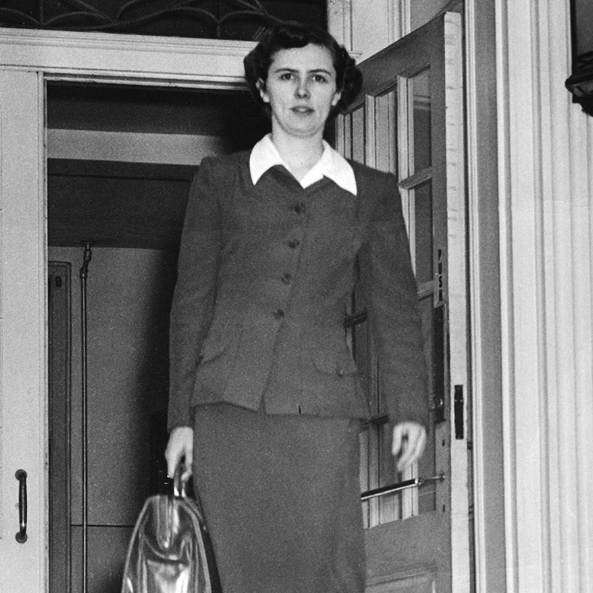
The following is an excerpt from The New York State District Attorneys Association: An Illustrated History by Albert M. Rosenblatt. We reproduce it here in memory of Ms. Smallwood-Cook, who passed away on January 26, 2013.
New York’s First Woman District Attorney
The June 1950 newsletter contained an interesting item relating to Charlotte Smallwood. It read: “D.A. Charlotte Smallwood’s record is becoming as attractive as her appearance (Wyoming County). There was no mention of it, but she was the first woman District Attorney in New York State. She appears as District Attorney in People v. Wojcik.114
The comment regarding her attractiveness should not today surprise anyone who was around in 1950. What is surprising is the minuscule nature of the mention of New York State’s first woman District Attorney. Today a comment of that tenor would be unthinkable; in 1950 it would have been considered gallant, at least by the other (male) prosecutors. Charlotte Smallwood … provides us with some of her reminiscences of those years:
The January, 1950 meeting of the New York State DA’s Association was my introduction to District Attorneys from around the State. Wallace Stakel, Genesee County’s DA, warned me that I would be heckled and hazed. He advised me to pay no attention and to be myself.
The meeting has held in a ballroom. I was seated near Frank Hogan and “Mr. District Attorney of the Air.” We were two white elephants indeed.
Looking out on the assemblage, I was amazed at the number of attendees. I had expected to find one District Attorney from each County. There seemed to be hundreds.
Each person was provided with a full bottle of liquor. That seemed like overkill, but by the time it was my turn to speak, the men all seemed to be in high gear.
Following Wally Stakel’s advice, I ignored the whistles and shouts and addressed them seriously, briefly and with as much dignity as a 26 year old country girl could muster.
The next DA Association meeting I attended was held in Cooperstown. A large company, perhaps the Reader’s Digest, had supplied enough door prizes for each person there. By this time I was accepted by the others as a viable DA. The only incident which pointed up my gender occurred when my door prize number was called. It matched a beautiful briefcase. The Master of Ceremonies ceremoniously announced that they were substituting a beautiful set of luggage for the DA from Wyoming County. I stood up, thanked them for their generosity, but said I would prefer the briefcase. I proudly carried that briefcase for over 20 years until the people in my office caused it to mysteriously disappear.
One interesting observation I made at the DA meetings was that one of the main topics of conversation among elected District Attorneys was: “What is the number of your DA license plate?” Apparently, as various District Attorneys were elected to judgeship, died or were not re-elected, the other District Attorney’s plate numbers were decreased. Some professed shock to learn that I had never bothered to get a DA plate.
My attendance at future meetings was curtailed when, in the middle of my three-year term as District Attorney, a Wyoming County man shot his wife and brother to death. The first 1st Degree Murder prosecution in our county in about 40 years resulted. The jury found the defendant guilty. This resulted in an automatic death sentence. I prepared the Appellate Briefs and at the request of the new District Attorney, argued the case before the Court of Appeals in January, 1953. The lower court’s verdict was affirmed.
My husband, Ned Smallwood, died in February, 1952 leaving me with two children to support. The DA’s part-time salary of $3,000 for what turned out to be practically a full-time job was not feasible in my situation. I did not run for re-election.
I am now completing my 50th year of trial practice in Wyoming County and treasure every minute of it.
Running for District Attorney of our County started out with a reading of the Election Law. It sounded simple enough: You simply got petitions signed by enough registered voters, filed them and you were on the ballot.
It turned out not to be simple at all. The Republican Party Machine which had controlled every County appointment and political job for over 40 years quaked at my temerity. No way would a primary election be tolerated. Since no Democrat had been elected to County Office in Wyoming County in the memory of man, this edict was equivalent to the denial of the right to run for office. I picked up the gauntlet.
It was an introduction to dirty tricks politics. Each underhanded power play by those in power heated up our campaign. I went from door to door, barn to barn, picnic to picnic. When I was nominated, everyone was shocked, including me.
With me running as a Republican, the Democrats saw their golden opportunity. The Party rift and the fact that I was a 26 year old female created a unique opportunity for the election of a Democrat. We were off on another campaign. The Democrats circulated rumors and even announced in the press that my purpose in running was to close bars and liquor stores and “dry up” the County. My husband, Ned, and I talked it over. He sent me out to the County bars during the quiet hours. I would sit at the bar and talk to the bartender while sipping a brew. I was not a drinking woman so covering many bars a day with a few sips at each was perilous, but it achieved its purpose. The bartenders squelched all talk of my tea-totaling ambitions. Meanwhile, I spoke to church groups, women’s clubs, men’s clubs and veteran’s clubs. My message was always the same — the District Attorney’s job was to enforce the law and to not make it. I would enforce the laws as I found them.
On election night pandemonium broke out. During the excitement, it suddenly occurred to me that the battle was over and that now I must actually be the District Attorney.
For a while it was chaos. Newspapers from around the world phoned me. Reporters and photographers flocked in. It was a little overwhelming and disturbing. I had run as a lawyer and a person, not as a woman. Now my only recourse was to do the best possible job in my new office.
Just before midnight on New Year’s Eve, 1949 I took the oath of office before a very tipsy County Clerk on his front porch. I had learned that evening that if an elected official wasn’t sworn in before January 1st, it would create a vacancy which the Democratic Governor could fill by appointment.
The District Attorney’s job was a part-time job and there being no assistants I had to prosecute all crimes in both County Court and Justice Courts. There followed three years of challenge and adventure including cases of attempted murder, murder, DWIs, manslaughter, trials of pinball machines, burglary, larceny, rape, sodomy, and assault.
To add to the challenges, my daughter Suki, was bom on February 11, 1951 on the day before I was scheduled to commence a manslaughter trial. The trial was simply adjourned. The baby refused adjournment.
In late 1951 a man shot to death his wife and brother-in-law. This meant a full-time investigation. Then in February, 1952 my husband died suddenly leaving me with a seven year old son and a one year old daughter. The District Attorney’s salary at the time was $3,000 a year. Our private practice had begun to take root. It was a trying time. However I had no choice but to continue preparing for and trying the first-degree murder charges.
As I walked towards the courtroom, I heard a County Officer remark “Now we’ll see what kind of a District Attorney we have!” That remark sustained me through around-the-clock work and sleepless nights.
I did not run for re-election.
After my three-years, I concentrated on my private practice. I have been greatly blessed by having brilliant associates and clients who have given me their trust.
This is a remarkable account by a person of uncommon accomplishment, good nature, and humility. Being a woman District Attorney in 1949 was no ordinary feat. It was the very year in which Harvard Law School Dean Erwin Griswold announced that the Law School would open its doors to women the following year.115 Many of the country’s most prestigious law firms had no women at all, let alone as partners.
To put it all in further historical context, the United States Supreme Court in 1873 ruled against Myra Bradwell when it rejected her argument that the privileges and immunities clause of the Constitution guaranteed her the right to practice law.116 New York’s first women lawyer, Kate Stoneman, was admitted in 1886, Delaware’s first women lawyer was admitted in 1923, and Alaska’s in 1950.117 Birdie Amsterdam was the first woman to be elected as a New York State Supreme Court Justice in 1958.118 Judith S. Kaye was confirmed as New York’s irst woman Judge of the New York Court of Appeals on September 12,1983, and was sworn in as the first woman Chief Judge on March 23,1993. Charlotte Smallwood takes her place among these pioneers.
In addition to Charlotte Smallwood who is seated at the dais, the 1950 luncheon photo shows two women. They are unidentified. Considering that they are unique, one may be tempted to say that the first women Assistant District Attorneys appeared in that era. However, according to Thurston Greene, one of Tom Dewey’s aides, Dewey hired Eunice Carter, a black woman, as one of his Assistant prosecutors, who served with Greene in 1937.119 Carter is pictured in the December 1941 photo in which Dewey’s staff is bidding him farewell. Also, there is record evidence of an Assistant District Attorney in New York County named Bessie Hamburger. Her article entitled “Abandonment!” appears in the summer 1936 issue of The Human Side of the People’s Case, a quarterly put out by the New York County District Attorney’s office. She wrote the article as an Assistant District Attorney in 1936, and may have been hired before 1936. She may not have been the first Assistant District Attorney in New York State, but there were not many, if any, before her. In addition to Eunice Carter, the 1941 Dewey group photo shows Isabel Walsh, who also served as an Assistant District Attorney in Dewey’s ofice. In the photograph, a third woman, who is partially blocked, is not identiied.
ENDNOTES