
1871
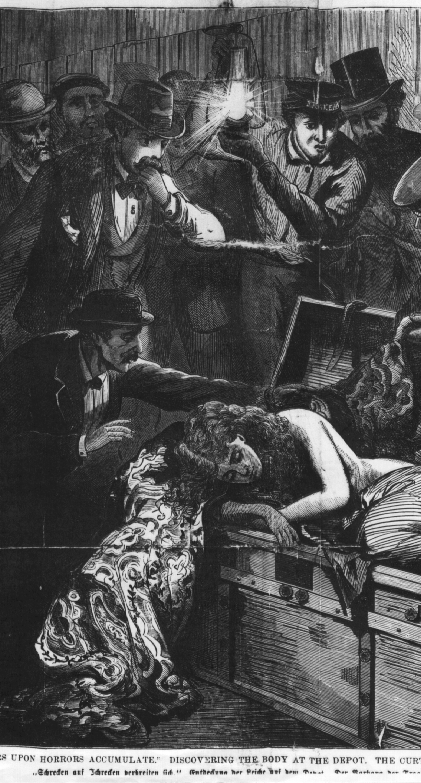
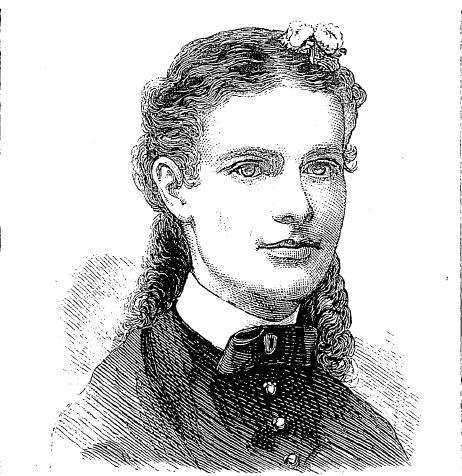 On August 26, 1871, a naked young woman was found stuffed inside a trunk at the Hudson River Railroad Depot. The coroner determined that she had died of acute peritonitis, the victim of a botched abortion. The trunk was traced back to 687 Second Avenue, home of “Doctor” Jacob Rosenzweig, a recent immigrant from Russian-ruled Poland and a known abortionist who also practiced under the name of Dr. Ascher, placing advertisements in the New York Herald under the heading “MEDICAL”: “Dr. Ascher. Ladies in trouble guaranteed immediate relief, sure and safe; no fees required until perfectly satisfied; elegant rooms and nursing provided.”[1]
The body in the trunk, described as “lovely and petite,” was identified as Miss Alice Augusta Bowlsby, a dressmaker from Paterson, New Jersey.[2] Ms. Bowlsby had sought Rosenzweig’s services upon becoming pregnant by Walter F. Conklin, the well-to-do son of a Newark Alderman and silk mill owner, who soon compounded the tragedy by fatally shooting himself in the neck on August 31st.
The New York Times’ Anti-Abortion Crusade
The exact timing of the botched abortion was never ascertained, but it may well have occurred on August 23rd, the very same day the New York Times launched a crusade against the city’s thriving abortion industry. “There is a systematic business in wholesale murder conducted by men and women in this city that is seldom detected, rarely interfered with, and scarcely ever punished by law.”[3] In an article titled “The Evil of the Age,” the Times dispatched undercover reporters to expose some of the city’s worst practitioners, even devoting a paragraph to Rosenzweig/Ascher.
The Times’ anti-abortion campaign coincided with its ongoing efforts to bring down Boss Tweed and his corrupt regime, which the paper believed was complicit in protecting the thriving abortion trade.[4] Public indignation reached a fever pitch when the discovery of Bowlsby’s body was followed by three more abortion-related deaths between August 30 and September 4. Rosenzweig, now labeled the “Fiend of Second Avenue,” barely escaped lynching by large crowds of hissing and screaming New Yorkers.[5]
The Trial
 Rosenzweig hired the law firm of Howe & Hummel to defend him. The odd pair — Howe, the “master showman” who favored diamonds and “gaudy attire,” and Hummel, the “small, tidy and precise” master of “subtle legal maneuvers” — were on their way to becoming the most famous criminal lawyers of the Gilded Age.[6] The trial started on October 26, 1871, in the Court of General Sessions before Recorder John K. Hackett. In his opening statement, District Attorney Samuel B. Garvin lamented that second degree manslaughter, with a maximum penalty of seven years, was the only charge that could be brought under the law for the taking of the lives of Bowlsby and her unborn child.[7] The prosecution presented extensive evidence of Rosenzweig’s guilt, even calling a Ms. Nellie Willis to testify that Rosenzweig had performed an abortion on her that went badly and caused her to be hospitalized.[8]
The defense’s theory at trial was that the body in the trunk was not Ms. Bowlsby, and even if it was her, it was Conklin who had somehow procured her death and shipped her to Rosenzweig’s office to conceal his guilt. When the prosecution put into evidence a lady’s handkerchief found in Rosenzweig’s house embroidered with the name “A. A. Bowlsby,” Howe countered by calling a Ms. Cornelia Bowlsby of Brooklyn to testify that she and her daughter, Anna, had known and visited the Rosenzweigs for years and left the handkerchief behind during one of their visits. According to Howe and Hummel’s biographer, “[t]he firm was known to have a stable of witnesses on demand; in this case, it appears they went out and bought one.”[9] Rosenzweig took the stand but did not do well. His testimony was confusing, and he was impeached on cross examination after claiming that he did not represent himself as Dr. Ascher.[10]
The Verdict and Sentence
In his closing statement, District Attorney Garvin emphasized the case’s “vast importance to the public,” involving “not merely the life of two human beings,” but the “condition of social life and the morals of the entire community.”[11] Garvin “wished to God the Legislature would make enactments whereby the indictment for this offense shall be murder, and not manslaughter.”[12] After an hour and fifty minutes, the jury returned a verdict of guilty with a recommendation of “mercy,” made at the insistence of two jurors who otherwise refused to convict. Recorder Hackett imposed the maximum sentence of seven years of hard labor.
Ordinarily I would mind the recommendation of the jury to mercy, but in this case I must ignore it, for you deserve no mercy. In my view of the law . . . on the evidence given in this case, you stand today in the attitude of a murderer. You sent two human beings to their last account, deliberately, willfully, murderously. That is the law, and under that construction an indictment should have been found against you for murder in the first degree. You would stand now in the attitude of a murderer, and the sentence I would pronounce against you would be death.[13]
Appeal and Motion to Discharge
In April 1872, following the trial and several highly publicized abortion-related deaths, the legislature substantially increased the penalties for performing abortions, and made the abortion-related death of a fetus or woman punishable by up to twenty years in prison. Thus did District Attorney Garvin get the wish expressed in his opening statement, but it would lead, cruelly, to Rosenzweig’s freedom.
Howe, meanwhile, was busy demonstrating that he was not merely a colorful courtroom persona. He successfully appealed to the General Term of the Supreme Court in the First Department and obtained a new trial for Rosenzweig. He was vindicated on the point that Ms. Willis’s testimony about her past abortion should not have been allowed since it improperly alleged a second uncharged crime against Rosenzweig. Despite his success, Howe was not about to risk a second trial. Instead, he argued that Rosenzweig could not be retried at all. Since the April 1872 abortion act had repealed the previous abortion law under which Rosenzweig had been prosecuted, and Ms. Bowlsby’s death predated the new law’s effective date, there was no longer any law on the books under which Rosenzweig could be prosecuted.
Howe moved before Recorder Hackett to discharge Rosenzweig from prison. Hackett denied the motion and directed the finding of an indictment for murder in the first degree, but as the New York Times later reported: “It is understood, however, that such an indictment could not be found.”[14] The motion to discharge was renewed before Judge Josiah Sutherland of the Court of General Sessions. At this point, Ira Schafer, a former District Attorney of Albany County, entered the case to argue the motion (his association to Howe is unclear). Judge Sutherland conceded that Rosenzweig was a “notorious criminal” but found himself compelled to grant the motion “in view of the express repealing words in the act of 1872,” which made clear, “without any qualification, exception or saving clause,” that the “latter act repealed the former act as to offenses committed before the passage of the latter act.”[15]
Freedom
Rosenzweig was freed after spending less than a year in Sing Sing prison. The New York Times reported:
Rosenzweig was thereupon discharged, to his very apparent satisfaction. He was immediately surrounded by his wife and daughter, and a number of friends, who cordially congratulated him on his good fortune. After a five minutes’ levée, in which Rosenzweig was honored with a vigorous handshaking from his counsel and sympathizers, the murderer of Miss Augusta Bowlsby triumphantly left the courtroom a free man.[16]
Rosenzweig makes no further appearances in the historical record. According to one author, he left the country “without a trace.”[17]
[1] “The Evil of the Age,” New York Times, Aug. 23, 1871.
[2] Cait Murphy, Scoundrels in Law, Smithsonian Books, 2010, at 18.
[3] New York Times, Aug. 23, 1871.
[4] Edwin G. Burrows and Mike Wallace, Gotham, at 1017.
[5] Murphy, at 19, 23.
[6] Burrows and Wallace, at 1000-01.
[7] Richard H. Underwood, Gaslight Lawyers, at 22.
[8] “The Trunk Mystery . . . Rebutting Evidence Upsets Rosenzweig’s Defense, New York Times, Oct. 28, 1871.
[9] Murphy, at 25.
[10] Underwood, at 22.
[11] “Rosenzweig: Sentence of the Abortionist to Seven Years’ Imprisonment,” New York Times, Oct. 29,1871.
[12] Id.
[13] Id.
[14] “The Rosenzweig Case,” New York Times, Sept. 28, 1873.
[15] “The Rosenzweig Case: Important Decision of Judge Sutherland,” New York Times, Nov. 13, 1873; “The Rosenzweig Case: The Notorious Criminal Let Loose on the Community,” New York Times, Nov. 14, 1873.
[16] New York Times, Nov. 14, 1873.
[17] Eddy Portnoy, “Jewish Abortion Technician,” Tablet Magazine, Aug. 20, 2009.